Twin Fin Surfboard Guide
Pull the centre fin out of the equation and a surfboard stops braking. That is the whole appeal of a twin: no trailing fin dragging behind the tail, so the board keeps running through the flat sections that stall a thruster. The catch is that two fins hold differently, sit further back under your rear foot, and want a different board size than the one you already ride. Get those three things wrong and the twin sits in the garage. This guide pulls published sizing rules, fin templates and wave ranges from shaper and coaching sources into one place, then lists the twins Surfex tracks with their aggregate scores. Southern hemisphere spring swells and the small, soft weeks either side of a northern summer are exactly the conditions these boards were drawn for.
Surfex is an aggregator. Every number here comes from a published guide linked in the sources section, and every board score comes from ratings collected across retailers and editorial outlets.
| Twin style | Length vs everyday board | Volume | Design markers |
|---|---|---|---|
| Performance twin | Same to 2" shorter than your everyday board | Same volume, up to +2 L | Narrower tail, more rocker, built for waves with push |
| Classic twin or fish | 3" to 5" shorter | +2 L to +5 L | Wide parallel outline, low rocker, made for weak surf |
Length and volume bands published by 1974 Surfboards.
Why two fins feel faster
A thruster's centre fin is doing two jobs: it tracks the board straight and it slows the board down. Take it away and the drag goes with it, which is why SurfScience describes the twin as fast down the line and able to turn almost on the spot, with one fin acting as a pivot while the other swings around it.
The trade shows up when the wave has real power. Under a hard bottom turn a twin can break loose, and it is difficult to keep tracking inside a barrel. That is the honest boundary of the design, and it is the reason most surfers keep a twin alongside a thruster rather than instead of one.
Sizing: shorter, wider, more foam
1974 Surfboards gives the clearest published rule. For a performance twin, stay at your everyday board length or come down an inch or two, and keep the volume the same or add up to two litres. For a classic twin or fish, drop 3 to 5 inches and add 2 to 5 litres. The width and the flatter rocker replace the length you gave up.
Ignore that second rule and you end up on a short board with nothing to paddle. If you are not sure what litres you should be on in the first place, run the numbers through the surfboard volume calculator and treat the twin figure as that number plus the fish adjustment.
Fin placement changes the feel more than the board
Twin fins are noticeably larger than thruster side fins and sit further back, usually directly under the back foot. 1974 Surfboards describes the result as a locked-in tail with more drive, storing pressure between manoeuvres and releasing it as projection. SurfScience adds that the common placement is close to the rail about a foot up from the tail, with moderate toe and cant, though shapers have run every variation from near-stringer placements to fully vertical fins.
The practical consequence for a thruster rider is a half-beat delay in response the first few waves. That settles quickly. What does not settle is the wrong fin template, which is why the surfboard fin guide is worth reading before you buy a set.
Keels or upright twins
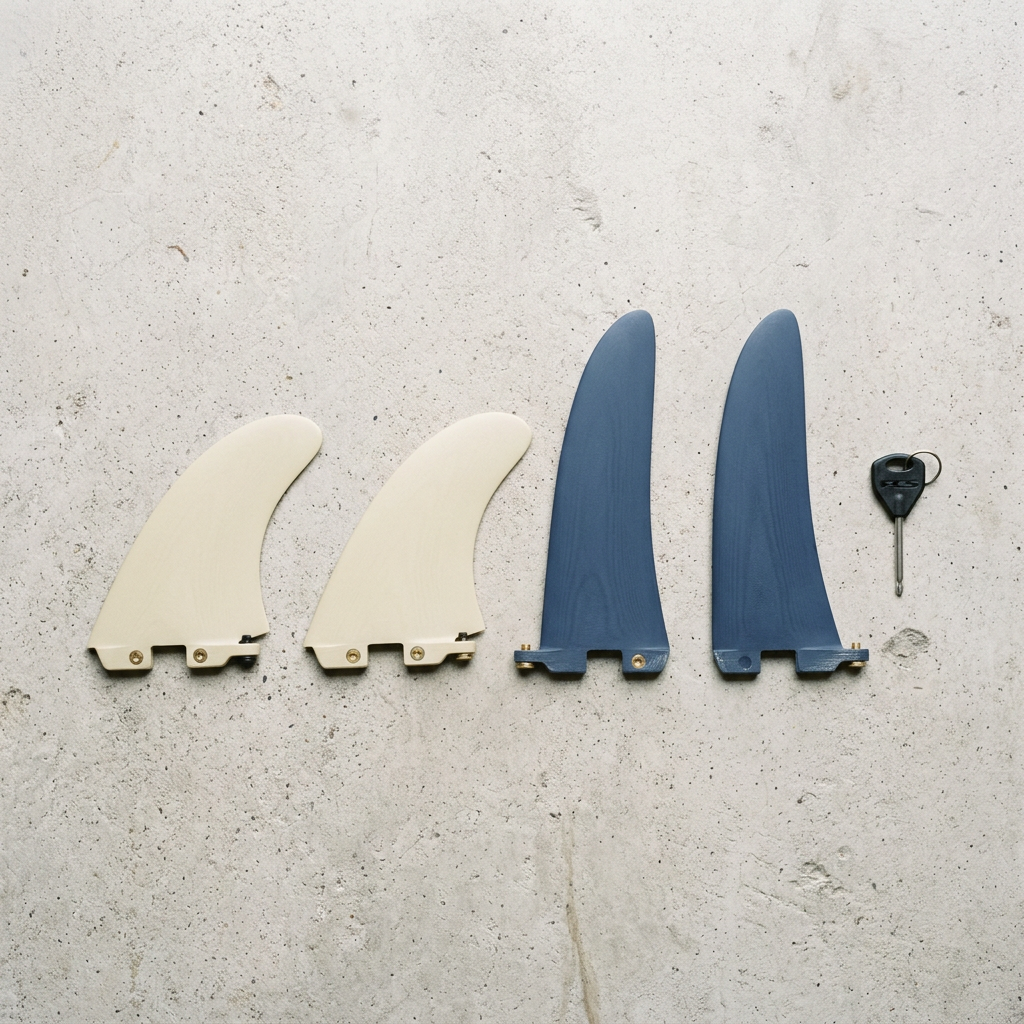
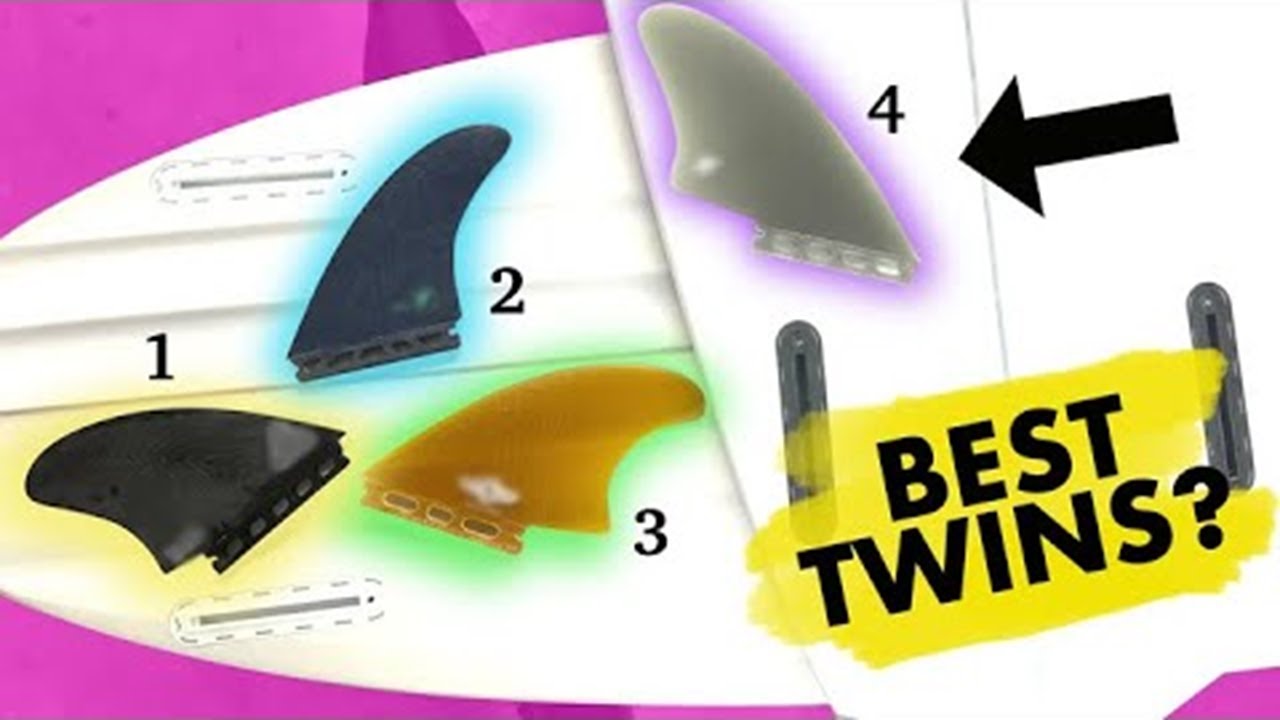
Eveley Surf frames the modern twin market as two families, and matching the family to the tail is most of the decision. Keels have a wide base and shallow depth, so they draw long linear lines with heavy drive and little pivot, which is what a wide swallow tail fish wants in soft surf. The FCS II Modern Keel and the Futures Rasta Keel both sit here.
Upright twins are taller and less raked, so they pivot faster off the tail and hold better as the face steepens. The FCS MR Twin is the reference template, drawn from the Mark Richards era. If you want the speed without giving up all the hold, a stabiliser like the FCS II Power Twin set is the middle ground, and the full fins category lists what current templates score.
Which twin for which wave
SurfScience puts the working range at 1 to 6 ft and calls 2 to 4 ft the strongest band, with sloppy small surf a particular strength. That matches how the boards get used: a keel fish for gutless beach break days, a narrower performance twin like the JS Industries Big Baron when the swell has some shape.
If your whole quiver is aimed at small days, the small wave surfboard guide covers grovelers alongside twins so you can see where the two overlap.
Where the design came from
Mark Richards is the reason the twin fin has a competitive record rather than just a retro following. He told SurfScience that the extra tail width gave him flotation and the twin configuration produced a faster, looser, more responsive board that let him attack a wave. Four world titles followed.
Modern shapers took the outline in two directions from there: back toward the 1970s fish, and forward into performance shapes with more rocker and pulled tails. Brands like Lost, Firewire and Album each run models on both sides of that line.
Mistakes that waste the purchase
- Buying a classic fish at your normal shortboard volume, then struggling to catch anything.
- Running keels in a narrow performance tail and wondering why it will not turn tight.
- Judging the board on the first two waves before the back foot adjusts to the fin position.
- Taking a twin out in solid overhead surf and blaming the design when the tail slides.
- Ignoring the rear box on a five box board, which is the cheapest way to add hold.
Twin fins reviewed on Surfex
Aggregate scores collected from retailer and editorial ratings, shown on a 10 point scale.
| Board | Style | Aggregate score |
|---|---|---|
| JS Industries Big Baron | Performance twin | 9.4 |
| Lost RNF 96 | Modern fish | 9.2 |
| Lost Pisces | Mason Ho twin | 9.1 |
| Firewire Seaside | Keel fish | 9.0 |
| Album Twinsman | Asymmetric leaning twin | 9.0 |
| Channel Islands Twin Pin | Pin tail twin | 9.0 |
| Pukas Magnetic | Mid length twin | 8.8 |
| Haydenshapes Love Buzz | Retro outline | 8.6 |
Twin fin sets reviewed on Surfex
| Fin set | Type | Aggregate score |
|---|---|---|
| FCS II Split Keel Quad | Keel split into a quad | 10.0 |
| FCS MR Twin | Upright twin template | 8.9 |
| FCS II Modern Keel | Keel | 8.9 |
| Futures Rasta Keel | Wood keel | 8.9 |
| FCS II Power Twin | Twin with stabiliser | 8.8 |
Sources
| Source | What it contributes |
|---|---|
| 1974 Surfboards — How to Choose a Twin Fin | Publishes the sizing rule this guide leans on: performance twins ride the same size to 2 inches shorter than your everyday board at similar volume, classic twins 3 to 5 inches shorter with 2 to 5 litres added. |
| SurfScience — The Twin Fin Setup | Sets the working wave range at 1 to 6 ft with a 2 to 4 ft sweet spot, and quotes four time world champion Mark Richards on why extra tail width and two fins suited his surfing. |
| Eveley Surf — Twin Fin Surfing Guide | Separates classic keels from modern upright twins and treats fin size as the most misread variable in the setup. |
| WYVE — The Complete Guide to Twin Fin Surfboards | Shaper-side overview of twin fin outlines and where the design sits against thrusters and quads. |
Video guides
Related reading
FAQ
What size twin fin surfboard should I buy?
1974 Surfboards splits it by style. A performance twin runs the same length as your everyday board or up to 2 inches shorter, at the same volume or up to 2 litres more. A classic twin or fish goes 3 to 5 inches shorter with 2 to 5 litres added, because the extra foam and width replace the length you dropped.
What waves are twin fins good for?
SurfScience puts the working range at 1 to 6 ft, with 2 to 4 ft the strongest band and sloppy small surf a particular strength. Above head-high the setup starts to slide out in hard bottom turns and is hard to hold inside a barrel, so most riders switch to a thruster or quad at that point.
Are twin fins harder to surf than thrusters?
Not harder, different. 1974 Surfboards notes that the twin's larger fins sit further back, usually under the back foot, so the response feels slightly delayed at first to anyone used to a thruster. The adjustment is normally quick, and the payoff is more drive between turns and a slingshot feel out of them.
Keel fins or upright twins?
Keels have a wide base and low depth, so they hold a long linear line with plenty of drive and little pivot, which suits wide swallow tail fish in soft waves. Upright twins are taller and less raked, so they change direction faster off the tail and work better on narrower outlines and steeper faces.
Can you put a trailer fin in a twin fin board?
Yes, if the board has a rear box. A small stabiliser keeps most of the speed while adding hold, which is why it is a common first move for surfers stepping across from a thruster. Boards with only two boxes are a straight twin, and swapping to a smaller front fin is the only adjustment available.
Who invented the twin fin surfboard?
Two fin boards existed well before the 1970s, but Mark Richards is the rider who made the design a competitive weapon. He told SurfScience that the extra tail width gave him flotation and the twin setup gave him a faster, looser, more responsive board that let him attack a wave, and he won four world titles on it.
Once you know the outline and fin template you want, the twin fin reviews section ranks current models by scores collected across retailers and editorial sources.