The quick answer
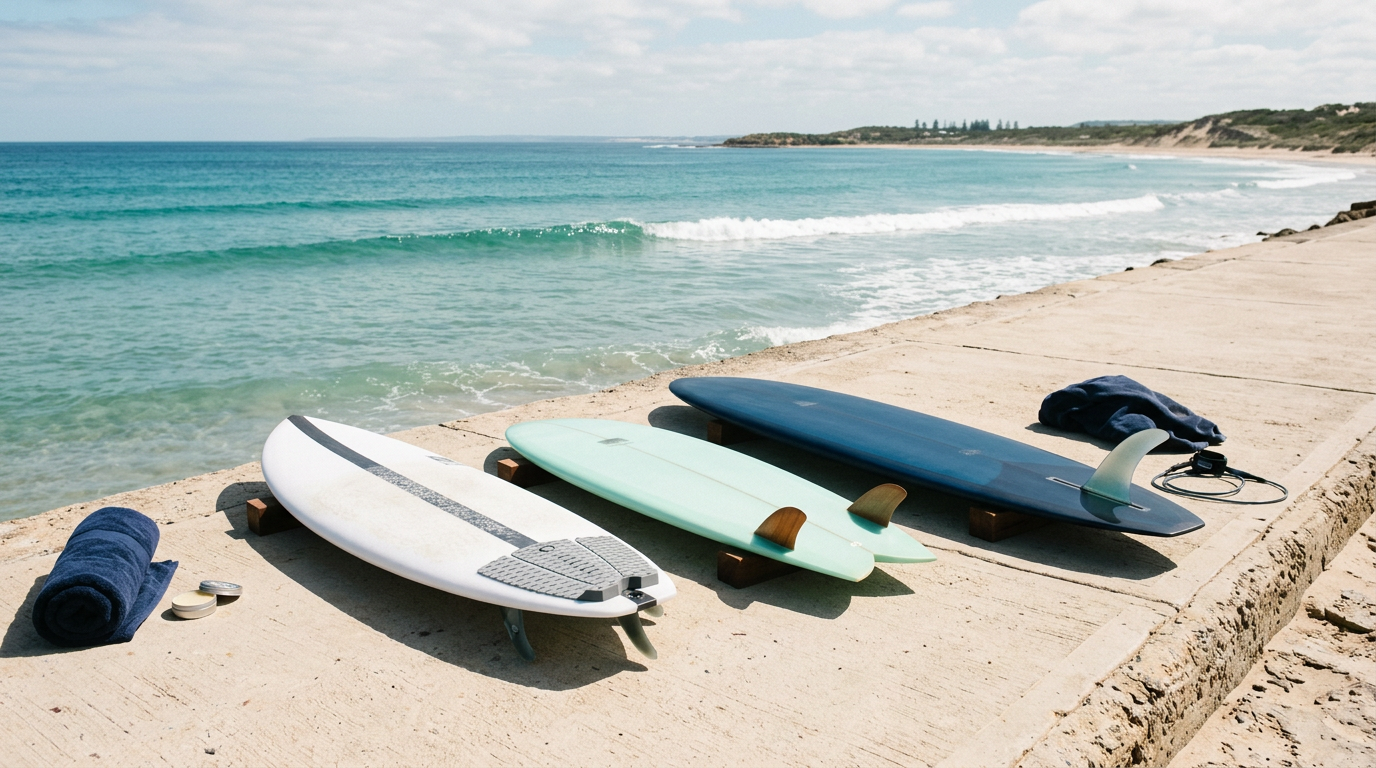
Pick a groveler for shortboard-style turns, a fish for effortless speed, a hybrid for broader versatility, or a longboard for the highest wave count.
NSP's volume guide confirms that smaller, slower waves usually need more volume to maintain speed and stability. SurferToday likewise recommends a larger board, funboard, longboard or high-volume shortboard in two-foot rollers.
Four board types compared
| Type | Best for | Key design | Tradeoff |
|---|---|---|---|
| Performance groveler | Intermediates who want shortboard turns in weak surf | Wide outline, flat rocker, concentrated volume | Less glide than a fish or longboard in near-flat conditions |
| Fish or twin fin | Surfers who value effortless speed and long lines | Wide nose, parallel rails, swallow tail, two large fins | Looser hold and a less vertical turning arc |
| Hybrid shortboard | One-board-quiver buyers who also surf better days | Extra width and foam with a refined shortboard tail | Not as specialized at either end of the wave range |
| Mid-length or longboard | Maximum wave count, glide and early entry | Long rail line, generous planing area, high volume | Slower direction changes and more board to transport |
Shape matters more than one number
Liters tell you how much foam is in a board, not where it sits or how the board releases water. NSP notes that a fish and funboard with equal volume can feel very different because their shapes differ. For weak surf, look for useful foam under the chest, width through the planing surface and a rocker flat enough to preserve speed.
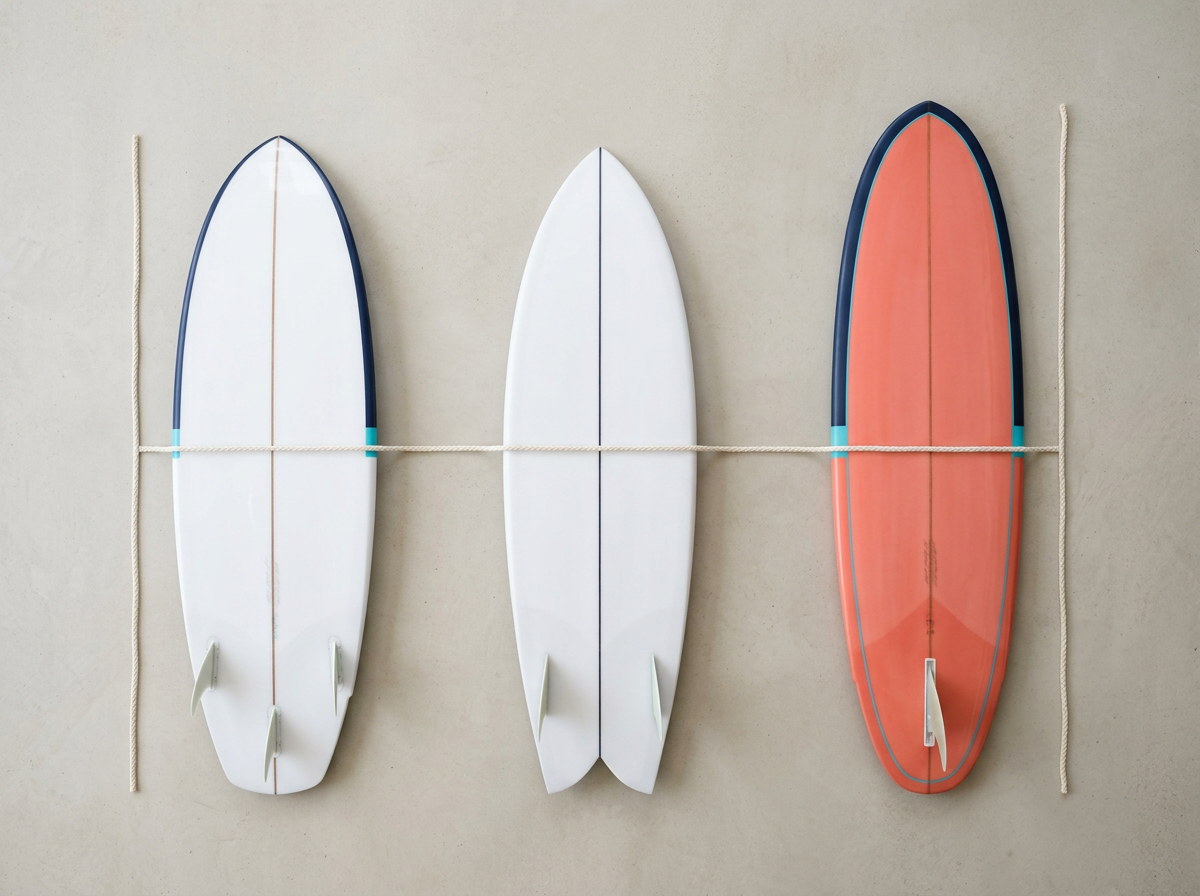
Tail and fin choices then tune the feel. A swallow-tail fish with large twins favors drive and release. A squash-tail groveler with a thruster setup feels more familiar under a shortboard surfer. A quad can reduce center-fin drag and help the board run through flat sections. The Surfboard fin guide explains those setups in detail.
Match the board to your surfing
Album Plasmic
Performance grovelerPublished range: Knee-high to head-high. Deep double-barrel concave and a low rocker prioritize speed in weak surf.
Read the verified review…Lost Puddle Jumper HP
Performance grovelerPublished range: Ankle to head-high. A wide, flat platform with a pulled-in tail for tighter turns.
Read the verified reviewFirewire Seaside
Fish-inspired quadPublished range: Ankle to shoulder-high. A broad planing area and quad-specific bottom are built around speed and carve.
Read the verified review…Lost RNF '96
Performance fishPublished range: Knee-high to head-high. Fish glide with a relatively pulled-in tail for more control through turns.
Read the verified reviewFirewire Dominator 2.0
Hybrid shortboardPublished range: Average everyday surf. Extra width and forward foam add paddle power without abandoning a shortboard outline.
Read the verified reviewA practical sizing method
- 1.Find your current comfortable volume with the Surfboard volume calculator.
- 2.Choose the design family based on desired feel: groveler, fish, hybrid or longboard.
- 3.Use the maker's size chart. Do not transfer a length rule from one model to another.
- 4.Stay near familiar liters if you are confident, or move slightly up for easier paddling and earlier entry.
- 5.Check the published wave range and intended fin setup before ordering.
Mistakes that waste small-wave sessions
- Chasing length alone. Width, rocker and foam distribution can matter more than two extra inches.
- Oversizing a performance shape. Too much rail and foam can make a board hard to engage through turns.
- Buying a fish for thruster surfing. A fish rewards a flatter, more lateral line and a different turning rhythm.
- Ignoring the true low end. Knee-high surf and barely breaking surf may call for different boards.
Verified sources
Every external page below loaded successfully and was checked for relevant design or technique information on August 4, 2026.
- NSP Surfboard Volume & Model Guide
How volume, ability, board type and wave size interact.
- Firewire Seaside model page
Quad-specific design, refined tail area and current model details.
- …Lost Puddle Jumper HP model page
Flat rocker, generous width, central concave and model dimensions.
- Channel Islands Happy Everyday
Brand classification of step-down and groveler designs.
- SurferToday small-wave technique guide
Board area, entry speed and technique for two-foot surf.
- Boardcave fish surfboard guide
Fish outlines, tail shapes and fin configurations.
- Boardcave hybrid surfboard guide
How hybrid boards combine traits from different design families.