Surfboard Travel Bag Guide
A snapped nose on arrival ends a surf trip before the first paddle out, and the bag is the only thing between your board and a conveyor belt. The specs that decide the outcome are unglamorous: foam thickness, how much extra sits in the nose and tail, whether the bag has dividers, and whether it fits the length your airline accepts. Published specs from Cleanline Surf and The Inertia settle most of the padding question, and airline documents settle the rest. Northern hemisphere trip season is running now and Indonesian dry season peaks through August, so this is the window where bag choices get tested hardest.
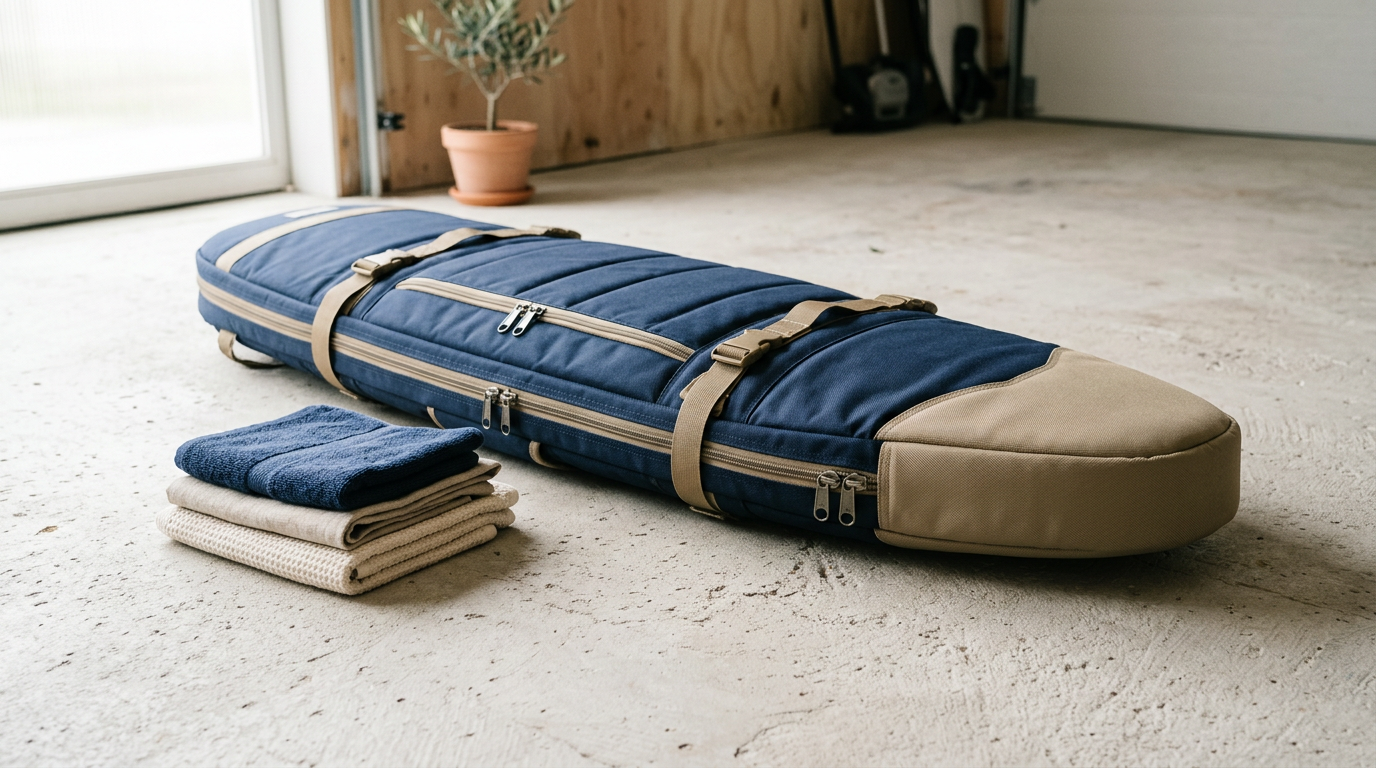
Original Surfex illustration.
Surfex aggregates published retailer specs, editorial reviews and airline baggage documents, and normalises every score to a /10 scale. Every source links to its original page.
The short version from five sources: buy 10mm of padding for anything that gets checked, add three to six inches of length over your longest board, take dividers seriously when two boards share a bag, and confirm the airline length limit before you spend $500 on a coffin.
Padding is the whole product
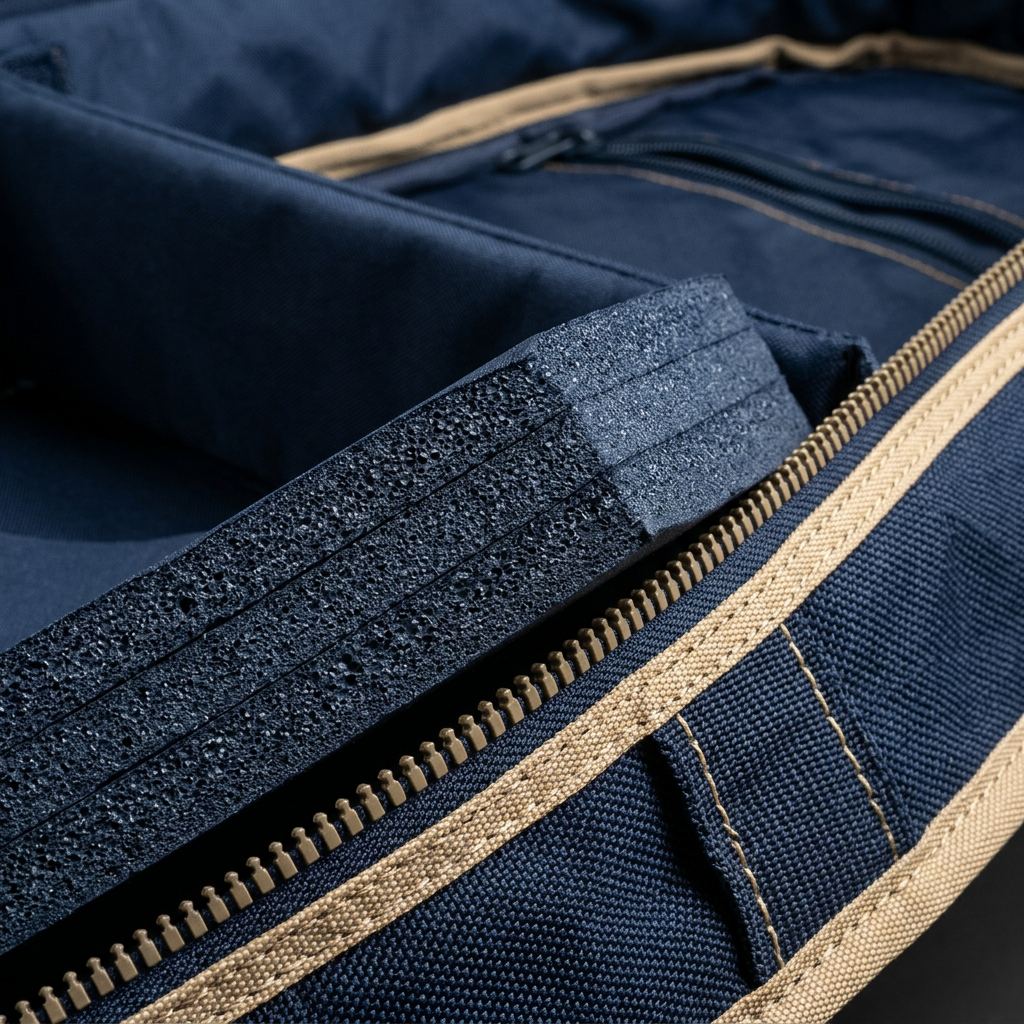
Every serious travel bag sits on the same number. Cleanline lists 10mm of closed-cell foam on the Pro-Lite Rhino, the Channel Islands Traveler and the FCS Travel covers, with the FCS bags adding 5mm in the nose. Dakine goes further on the Regulator Triple with 10mm through the body and 14mm on the ends.
Ends matter because of how bags get handled. A board bag stood on its tail and dropped takes the whole load through one point, which is exactly where a tail ding starts. That is why the VEIA 3/2 uses 20mm on the bottom and reinforced plastic end caps rather than spreading foam evenly.
Sizing: three to six inches, then check the airline
A bag should be long enough that the board's nose and tail sit inside the padded blocks, not pressed against the zip. Sizing runs by board type as much as length, which is why Pro-Lite splits the Rhino into shortboard, fish and hybrid, and longboard versions from 6'0 to 10'6. Wide fish outlines need the wider cut even when the length matches.
The ceiling comes from the airline, not the shaper. Qantas accepts a surfboard bag up to 277cm and 32kg, dropping to 240cm on QantasLink Dash 8 aircraft, and sends anything longer to freight. A 9'6 log in a padded bag can pass 277cm, so check before booking a trip around a longboard.
How many boards, and what airlines count
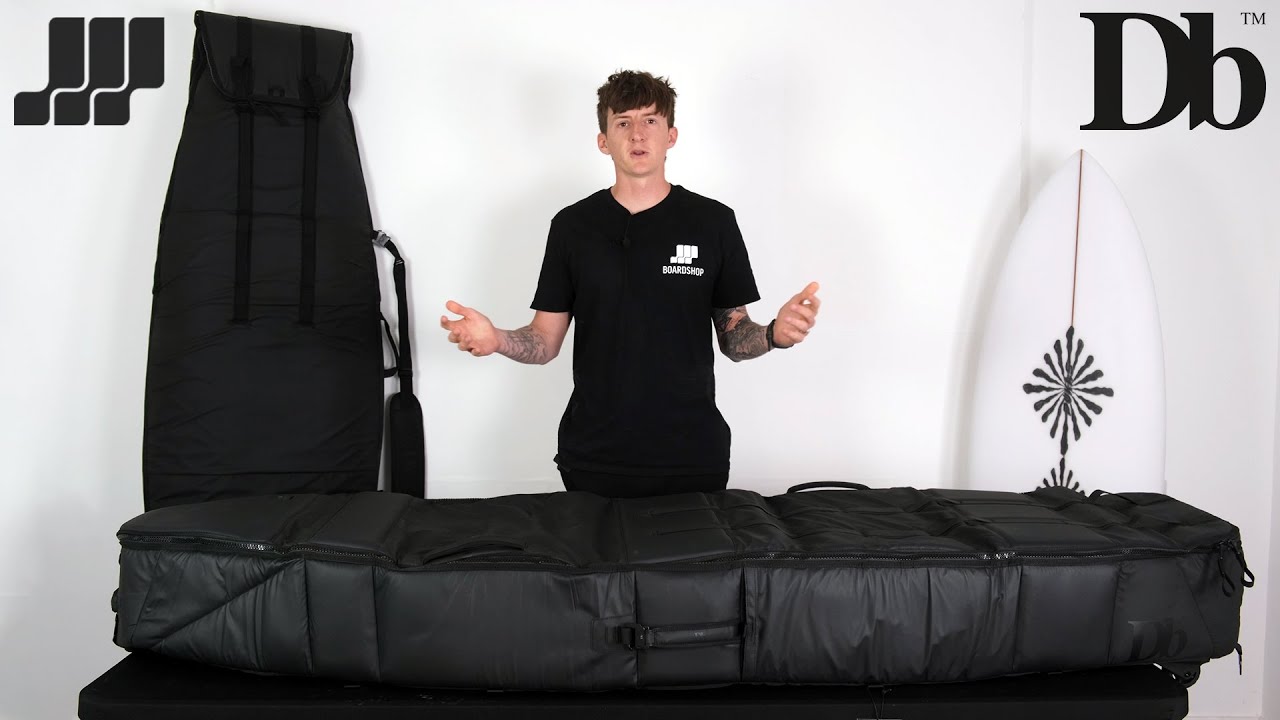
Capacity naming is fairly honest across brands. Single and double bags cover a week away, triples like the Channel Islands Traveler take three, and coffins such as the Db Surf Pro hold three to four with semi-rigid ribs holding shape.
The catch is the carrier rule. The Inertia notes that many airlines allow only two boards per bag, which is the reason Pro-Lite built a false bottom into the Smuggler so a third board is not obvious at check-in. Before you pay for a quad coffin, read what your airline actually counts as one piece.
Wheels, weight and the 32kg problem
Wheeled bags solve airport transfers and nothing else. FCS charges roughly $130 more for the Travel 3W wheelie over the equivalent non-wheeled cover, and the wheels themselves add weight to a bag already fighting a 32kg per-piece limit.
For one or two boards plus a wetsuit, a padded shoulder strap keeps you well under. For three or four boards on a long-haul connection, wheels pay for themselves the first time you cross a terminal.
Price bands worth knowing
Budget starts near $86 with the Curve Boost, which pairs a 7mm core with 20mm nose and tail zones and is honest about being light through the body. The main travel band runs $250 to $360: the Pro-Lite Smuggler at $250, the Rhino at $280, the Channel Islands Traveler at $255 and the FCS Travel 2 at $334.
Above that you are buying capacity and hardware. The VEIA 3/2 Convertible sits at $349.95, the Dakine Regulator Triple at $444, and the Db Surf Pro coffin at $499. Set that against board prices in our shortboard reviews and the maths is quick.
Packing mistakes that cost boards
- Leaving fins in. Qantas asks for them removed or taped, and a fin box levers hard against a neighbouring deck.
- Stacking two boards deck-to-deck with nothing between them.
- Packing a half-empty bag, so boards slide the length of it on every handover.
- Flying a 5mm day cover because it fits, then paying for a repair on arrival.
- Storing the bag damp between trips, which is why FCS builds its covers from moisture-repelling nylon.
What to buy for your next trip
One or two boards, one flight a year: a 10mm double in the $250 to $300 band covers it. Three or more boards, or repeat trips to reef breaks where a broken board ends the week, justifies a coffin with dividers and reinforced ends. Either way, pack a repair kit alongside the bag using the method in our ding repair guide, and size the boards themselves with the volume calculator before you commit to a quiver for somewhere like the Mentawais.
What the sources say
| Source | Score | Key takeaway |
|---|---|---|
| Cleanline Surf — The 7 Best Surfboard Travel Bags for 2026 | 9.3 / 10 | "The Rhino has 10mm of protective padding and an extra reinforced nose, typically found only on bags twice its price." |
| The Inertia — The Best Surfboard Bags for Daily Use and Surf Travel | 9.0 / 10 | "Many airlines only allow you to travel with two boards per bag, and the folks at Pro-Lite are well aware of this rule." |
| Qantas — Sporting equipment baggage rules | 8.8 / 10 | "Only accepted if enclosed in a surfboard bag and does not exceed 32kg (70lb) in weight and 277cm (109in) in length." |
| FCS — Travel cover range | 8.6 / 10 | "Travel 2 and Travel 3 covers are built on 10mm padding with an extra 5mm in the nose and a heavy-duty nylon outer." |
| The Surf Star — How to travel with a surfboard on a plane | 8.2 / 10 | "Between confusing airline policies, oversized baggage fees, and the ever-present risk of dings, planning a surf trip can feel more stressful than paddling into overhead sets." |
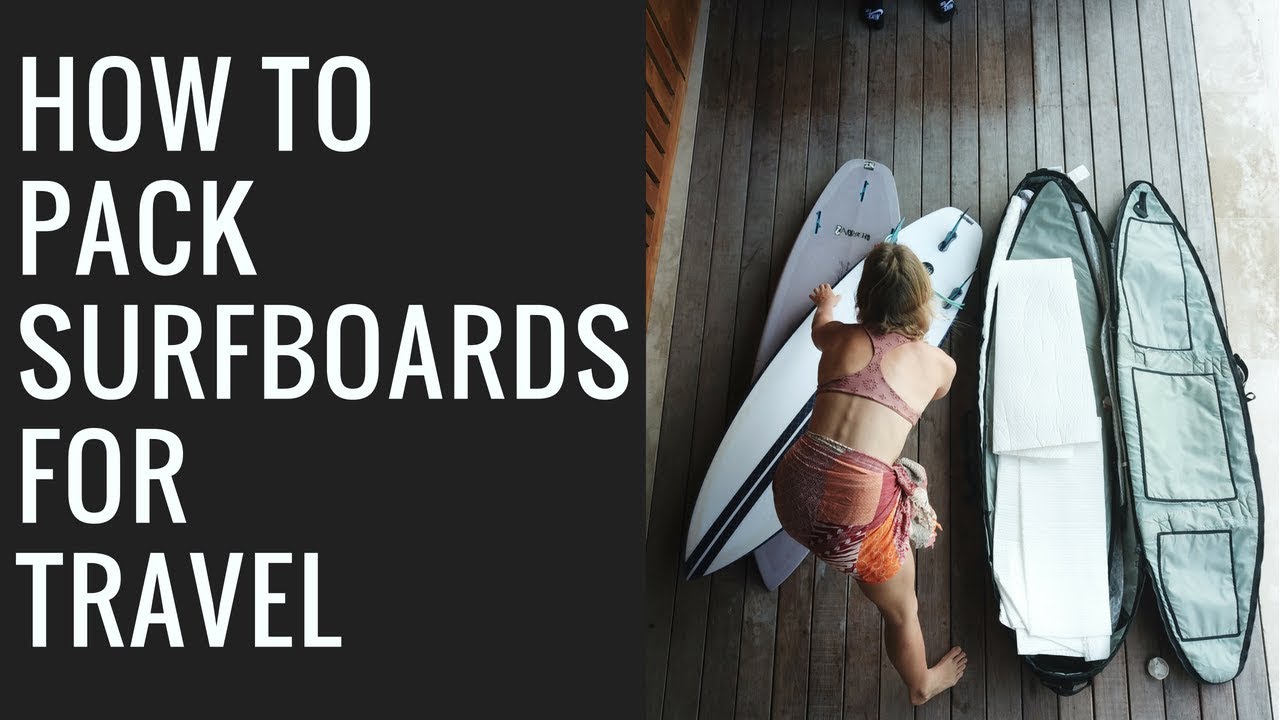
Packing sequence
- 1Strip the boards down
Remove fins and pack them in the accessory pocket or tape them to the deck. Qantas requires fins removed where possible and paddles taped down before a board is accepted as checked baggage.
- 2Wrap nose and tail first
Bubble wrap or a folded towel around each nose and tail covers the two points that break. Pipe insulation foam over the rails adds a second layer for boards riding in a thin bag.
- 3Stack decks facing in
Put the heaviest board on the bottom with its deck facing up, then lay the next board deck-to-deck. Dividers, or towels where the bag has none, stop the two decks pressure-denting each other.
- 4Fill every void with clothing
Wetsuits, boardshorts and towels packed along the rails turn dead space into padding and cut the number of separate bags you check. Keep the total under the 32kg piece limit most carriers apply.
- 5Compress and tag
Pull the internal seat-belt straps tight so nothing slides, then cinch the external compression straps. Attach a fragile tag at check-in and sign the limited release portion of the baggage tag if the airline asks for it.
- 6Check the length limit before you book
Qantas caps surfboard bags at 277cm on most routes, dropping to 240cm on QantasLink Dash 8 aircraft. Anything longer travels as freight, which is worth knowing before you buy a 9'6 log bag.
Video guides

Related reading
FAQ
How much padding does a surfboard travel bag need for flying?
10mm of closed-cell foam is the working standard for checked flights, which is what the Pro-Lite Rhino, the FCS Travel covers and the Channel Islands Traveler all use. Bags aimed at multiple boards add more at the ends, such as the Dakine Regulator Triple with 14mm on the nose and tail. A 5mm day cover is for beach transport, not baggage handlers.
What size surfboard bag should I buy?
Add roughly three to six inches to your longest board so the nose and tail sit inside the padded end blocks rather than pressing against the zip. Then check the airline ceiling: Qantas accepts surfboard bags up to 277cm on most routes and 240cm on QantasLink Dash 8 aircraft, with anything longer going as freight.
How many boards fit in one travel bag?
Bag names usually describe capacity honestly. A 1-2 board bag such as the Rhino swallows two shortboards plus clothing, triples like the Channel Islands Traveler take three, and coffins such as the Db Surf Pro carry three to four. Many airlines only count two boards per bag, so read the carrier rule before stuffing a quad.
Do I need wheels on a surfboard travel bag?
Wheels earn their weight on long airport transfers and multi-board coffins, which is why the FCS Travel 3W and 4W wheelie covers sit at the top of the range. For a one or two board trip the extra kilos count against a 32kg piece limit, and a padded shoulder strap moves the bag fine.
How do you pack a surfboard so it does not get damaged?
Take the fins out, wrap the nose and tail of each board, stack decks facing each other with dividers or towels between them, then fill the rails and gaps with wetsuits and clothing. Tighten the internal straps so nothing moves, and add a fragile tag at check-in.
Is a cheap surfboard bag worth it for air travel?
Budget bags like the Curve Boost start near $86 and use a 7mm core with 20mm boosted nose and tail zones, which is enough for a road trip but thin through the body for a flight. Compare that against the cost and downtime of a repair covered in our ding repair guide before deciding.
Aggregated from 5 independent published sources and 3 video guides.