Surfboard Volume Calculator
Every major shaper publishes a volume calculator, and every one of them uses a version of the same formula: body weight × ability factor. This guide aggregates the multipliers from Firewire, Lost, JS Industries, Rusty and NSP, then hands you the range in liters.
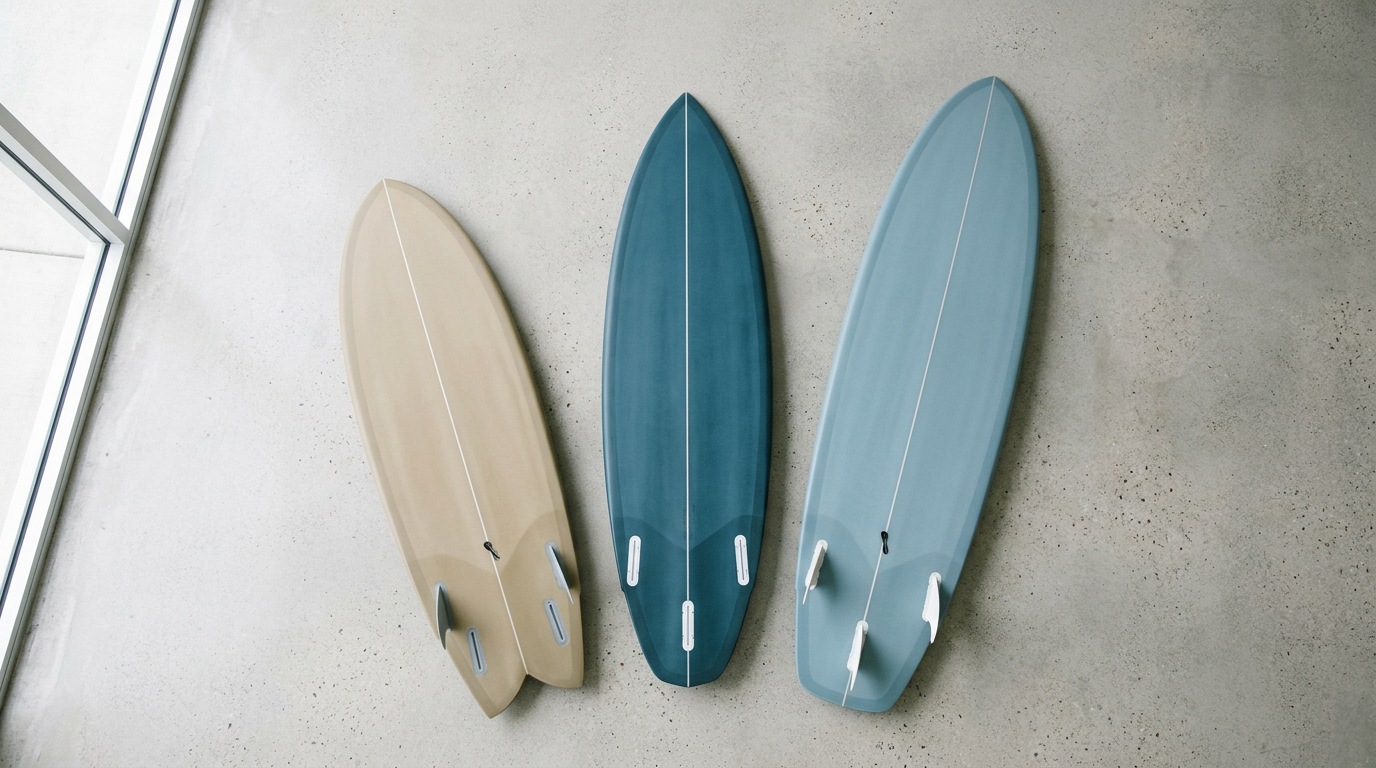
Original Surfex illustration.
Surfex is a review aggregator. We don't accept payment for placement, and every source above links to the shaper's own published calculator.
Riding unbroken waves both directions, working on turns and cutbacks.
75 kg × 0.38–0.42 (intermediate factor). Lean low in warm, clean surf. Lean high in cold water, thick wetsuits, or crowded lineups.
What surfboard volume actually is
Volume is the amount of foam inside your board, measured in liters. It is the single most honest number on the spec sheet, because length, width and thickness can each flatter a bad shape but volume cannot. A 30 L board floats a fixed weight of water no matter how it is dressed.
Every major shaper publishes a calculator based on the same idea: multiply your body weight in kilograms by an ability factor. The factors differ slightly between brands, but the spread is tight — inside a two-liter window at almost every weight class.
The formula, plain and simple
Volume (L) = body weight (kg) × ability factor. A 75 kg intermediate lands on 75 × 0.40 = 30 L. A 75 kg beginner lands on 75 × 0.60 = 45 L. Same rider, different phase of the learning curve — a 15 L gap.
Firewire recommends the widest range at the top end for beginners because more foam means more waves caught, and wave count is the fastest driver of progression. Lost, JS and Rusty all narrow the range once you are riding green waves consistently.
When to lean low, when to lean high
Every shaper's calculator gives you a range, not a single number. Lost put it best: warm water and clean waves push you low, cold water and hassle push you high. The variables that actually move the needle:
- Cold water and a 4/3 wetsuit — add 1–2 L for the extra buoyancy of neoprene and the paddling drag it creates.
- Crowded lineups where you fight for waves — add 1–2 L for paddle speed off the mark.
- Age 40+ or low paddling fitness — add 2–3 L per decade.
- Warm water, chest-high peelers, empty lineup — take 1–2 L off. Every liter you shed sharpens turns.
Where volume misleads you
Two boards at the same liters can feel completely different. A performance shortboard carries most of its foam under the chest to help you paddle without slowing turns. A groveler spreads that foam through the tail and rails to plane in mush. Same 30 L on the tag — one feels like a paddling board, the other feels like a skimboard.
Rocker matters too. A flatter rocker at the same volume paddles noticeably faster than a curvier one. This is why shapers pair their volume calculators with per-model recommendations — the volume that suits a Firewire Happy Everyday groveler is not the volume that suits a Pyzel Ghost step-up.
Common sizing mistakes
- Buying the volume you had five years ago instead of the volume you need now. Volume needs shift with fitness, age and how often you surf.
- Copying a pro's dimensions. A 65 kg CT surfer riding 25 L means nothing for an 85 kg weekend surfer.
- Ignoring the model-specific range. Firewire, Lost and JS all publish per-shape recommendations for a reason.
- Sizing down for style. If you catch two waves an hour instead of eight, the extra "performance" is theoretical.
From liters to a real board
Once you have your range, the shopping is easy. For all-round shortboards in your range, start with the Surfex shortboard review index. For grovelers and everyday boards that carry a few extra liters, the Happy Everyday, Hypto Krypto and Dominator 2 are the three most-reviewed benchmarks. Beginners should start on a soft-top or mini-mal at the top of the beginner range before shrinking down.
What the shapers say
| Source | Score | Key takeaway |
|---|---|---|
| Firewire — Prestige Surfboard Volume Calculator | 9.4 / 10 | "Volume alone won't make you a better surfer, but the wrong volume for your weight and ability will hold you back on every wave." |
| Lost Surfboards — Volume Calculator (Mayhem) | 9.2 / 10 | "If you're in warm water and good waves, lean to the low end of the range. Poor conditions, crowds or thick wetsuits — lean high." |
| JS Industries — Accurate Surfboard Size Volume Calculator | 9.0 / 10 | "Age, fitness and the waves you actually surf on a regular week change the answer as much as your weight does." |
| Rusty Surfboards — Volume Calculator | 8.9 / 10 | "Litres is the honest number. Length, width and thickness can flatter a bad shape, but volume never lies about how the board will paddle." |
| NSP — Surfboard Volume & Model Guide | 8.7 / 10 | "Use volume as your starting point, then pick the outline that matches the waves you ride most, not the waves you ride twice a year." |
Video guides


Related reading
FAQ
How do you calculate surfboard volume?
Multiply your body weight in kilograms by an ability factor: roughly 0.55–0.70 for beginners, 0.38–0.42 for intermediates, 0.34–0.36 for advanced surfers, and 0.30–0.32 for pros. The result is your ideal volume in liters. This is the same formula Firewire, Lost, JS Industries, Rusty and NSP all publish on their own calculators.
What surfboard volume do I need as a beginner?
For a 70 kg (154 lb) beginner the consensus range is 39–49 liters, which usually means a soft-top or mini-mal in the 7'6"–8'6" range. Err high while you're still learning to pop up — extra flotation buys wave count, and wave count is what makes you improve.
Is more surfboard volume always easier?
For paddling and catching waves, yes. For turning and duck-diving, no. Over-volumed boards float over the wave face instead of biting into it, and they push water on rail-to-rail transitions. The right answer is the smallest volume you can still comfortably catch waves on.
Does age or fitness change my ideal volume?
Yes. JS Industries and Lost both call this out explicitly. Add roughly 2–3 liters for every decade past 40, and another 2–3 liters if your paddling fitness is low. Long flat spells, back injuries, or thick winter wetsuits also push the number up.
Should I use the same volume for a shortboard and a groveler?
No. Grovelers, hybrids and step-ups all use different volume assumptions. A groveler for small mush usually sits 3–5 liters above your shortboard number; a step-up for overhead surf sits 1–2 liters below it. Firewire's calculator recommends per-model ranges for exactly this reason.
Why do two boards with the same volume feel different?
Because volume is distribution, not just quantity. A 30 L shortboard with volume concentrated under the chest paddles like a bigger board but surfs like a smaller one. A 30 L groveler spreads volume through the tail and rails. Same liters, different feel.
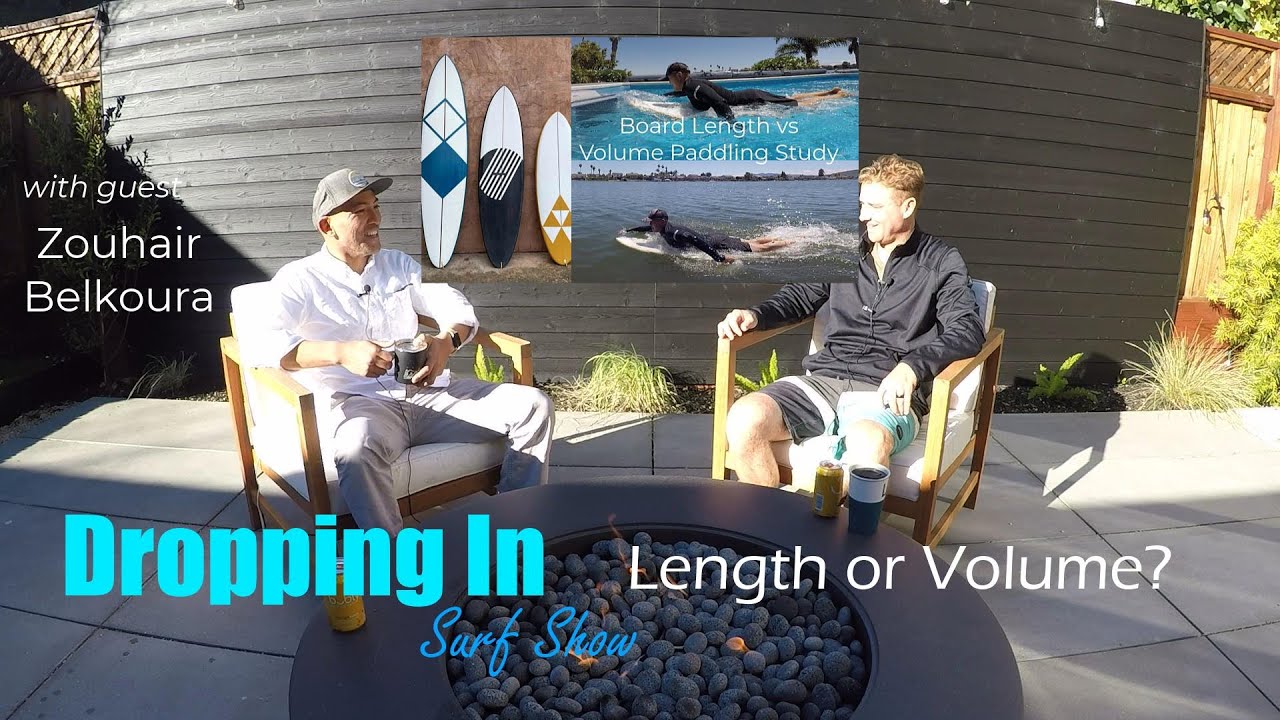
Aggregated from 5 independent brand calculators and 3 video guides.