Wing Foil Gear: How to Size Your First Setup
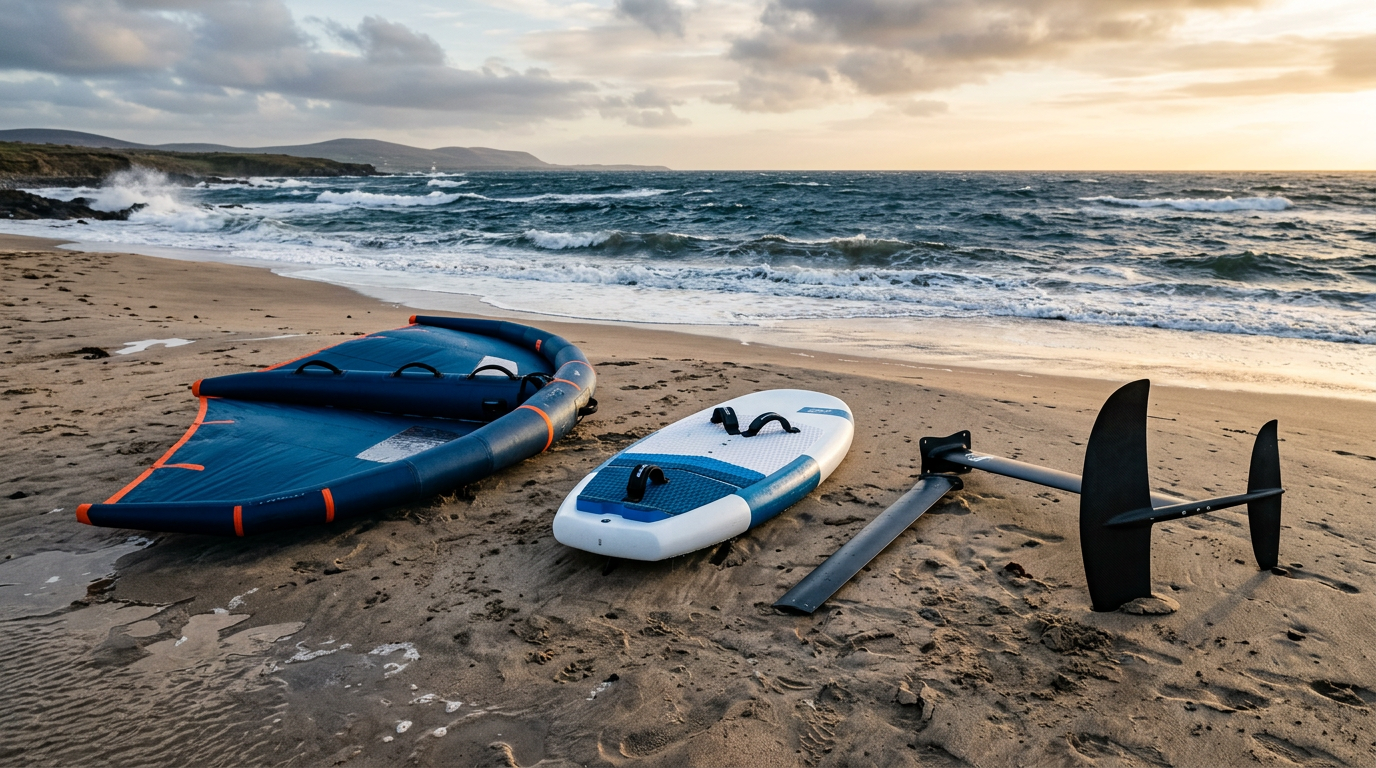
Surfex aggregates published buying guides rather than testing gear. Every figure on this page links back to the guide it came from.
| Rider | First board volume |
|---|---|
| 65 kg rider | 85 – 105 L |
| 75 kg rider | 95 – 115 L |
| 85 kg rider | 105 – 125 L |
| 95 kg rider and above | 120 L+ |
A wing foil setup is four purchases pretending to be one. Board, hand wing, foil and mast each have their own sizing logic, and getting any single one wrong makes the other three feel broken. That is why so many first sessions end with a rider swimming their board back to the beach convinced the sport is beyond them.
The good news is that the published advice has converged. Three buying guides we fetched for this piece, from a UK retailer, a US foil shop and a rider-run blog, land on close to the same numbers for board volume, hand wing area and front foil size. This page pulls those figures into one place, shows where the guides disagree, and points to the hydrofoil reviews that fall inside the recommended ranges.
Start with the board, not the wing
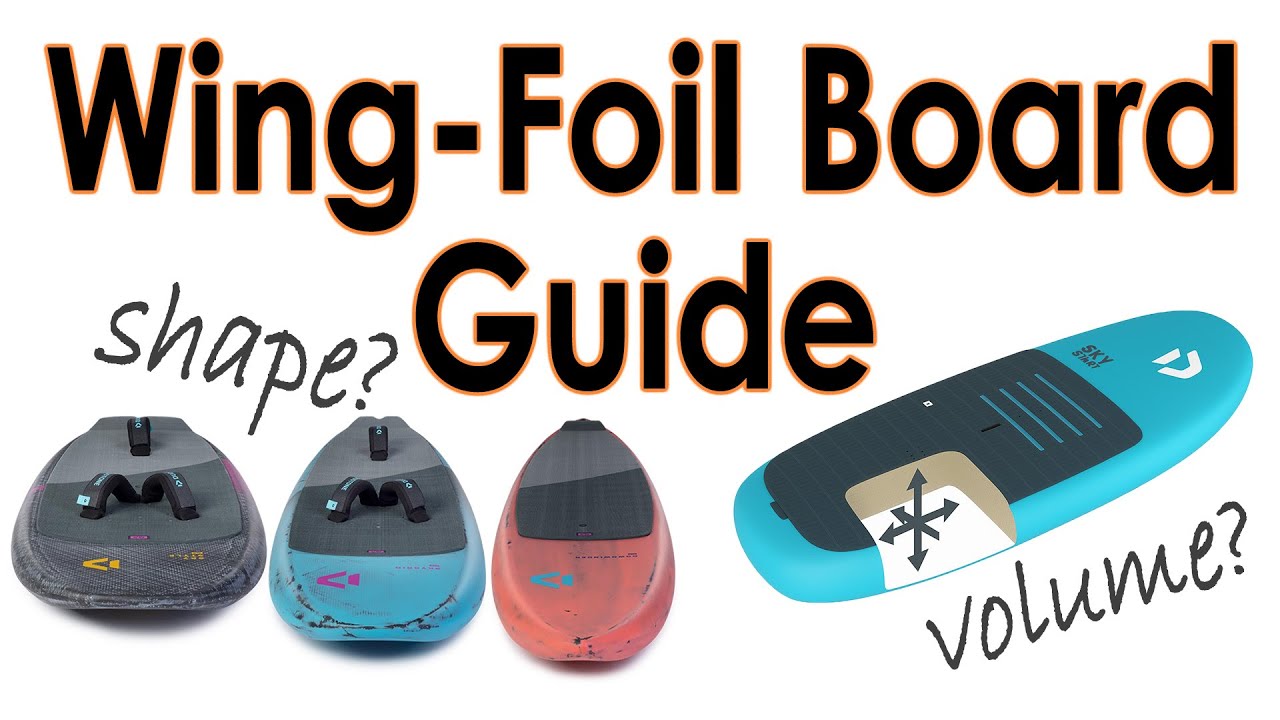
Volume decides whether you spend your first sessions learning or swimming. The SUP Company sizes the first board at body weight in kilograms plus 20 to 40 litres. Wingfoil.fit narrows that to plus 30 to 40 litres and argues the extra float buys attention rather than buoyancy, because a board that holds you up completely frees your head to work the wing.
Shape matters alongside the number. A 110 litre board built long and narrow behaves nothing like a 110 litre board built short and wide. For a first board, width through the middle and enough length to absorb small weight shifts is worth more than the glide a narrower shape offers later.
Hand wing size follows wind and body weight
A 5m wing is the most quoted first size for a 65 to 80 kg rider. Lighter riders drop to 3.5m or 4.5m, and riders above 95 kg move to 5.5m or 6.5m. Wind is the second variable: learning inland in light, gusty air pushes you a size up, while a steady coastal sea breeze lets you hold a smaller wing that is easier to keep out of the water during transitions.
Wingfoil.fit notes that most riders end up owning three or four wings covering 5m through 7m. Buying that quiver up front is the classic beginner overspend. One well chosen wing plus lessons progresses you faster than three sizes and no coaching.
Front foil area is the lift dial
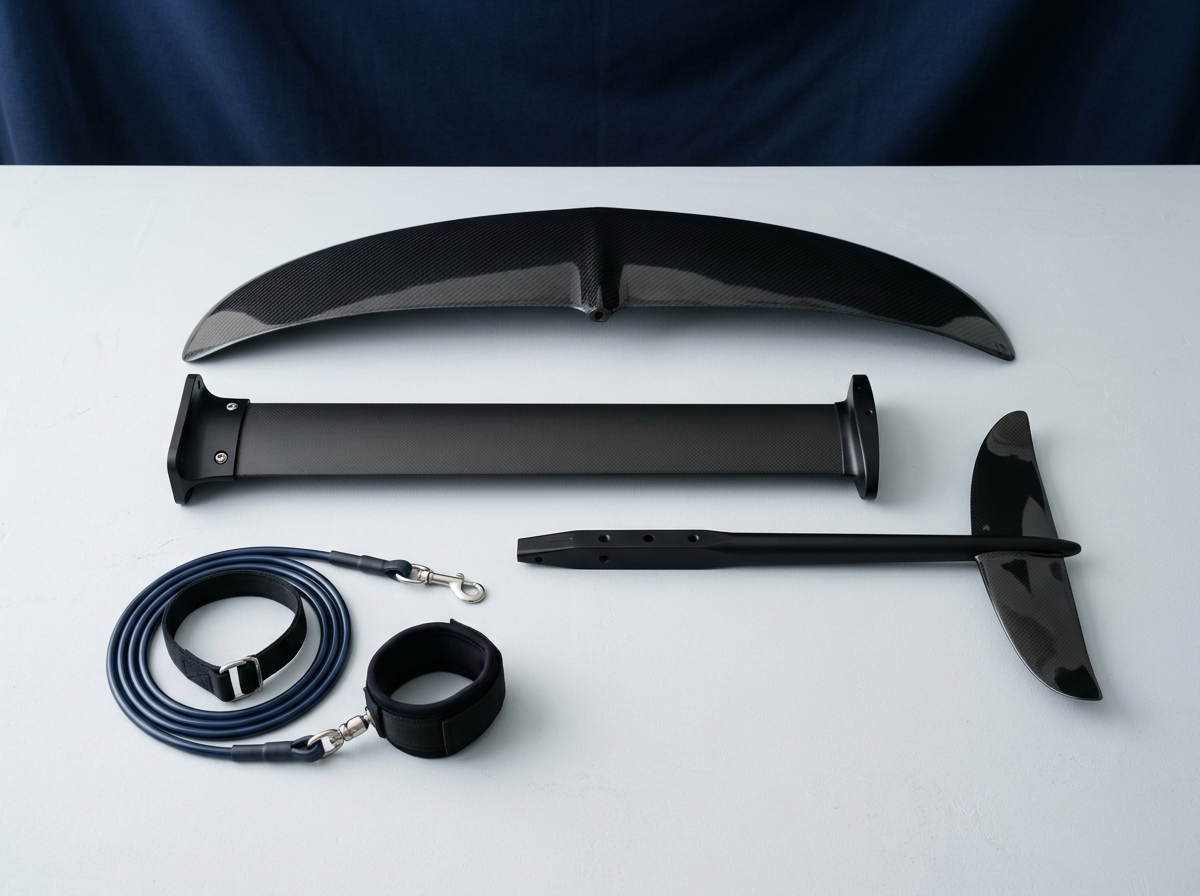
Windance charts front wing area straight off rider weight, running from 1300 to 1600cm² for riders under 60 kg up to 2100 to 2500cm² above 105 kg. Wingfoil.fit sets the modern beginner band at 1500 to 2000cm² and adds an important caveat: aspect ratio has shifted. The 2000 to 2500cm² low-aspect slabs that were standard when the sport started lift early but resist turning, which is why riders who learned on them hit a wall at their first jibes.
Mid-aspect shapes around AR 5 to 6.5 now cover the same learning job while still turning when you progress. Foils in that band include the AXIS BSC 890 and the larger Armstrong MA1000, both of which we cover in the foils section.
Mast, fuselage and stabiliser
Wingfoil.fit gives concrete numbers here: a 70 to 75cm mast, a fuselage around 70 to 74cm, and a stabiliser of 250 to 300cm² matched to the front wing. A short mast keeps the foil close to the surface and breaches more often once you start riding higher, so the 70cm and up range is worth buying into from the start.
- Buy mast, fuselage, front wing and stabiliser from one brand so mounting patterns and balance match.
- Check the brand publishes a range of front wings on the same fuselage, so you can size down later without replacing everything.
- Budget for a board leash, a wing wrist leash, an impact vest and a helmet before the first session.
Where the brand ecosystems sit
Four brands dominate the beginner and progression end of the foil market and all publish full component compatibility charts: Armstrong, AXIS, Naish, Unifoil. If you already ride a paddleboard from one of them, staying inside that ecosystem usually means your existing mast track and hardware carry over.
How long until you fly
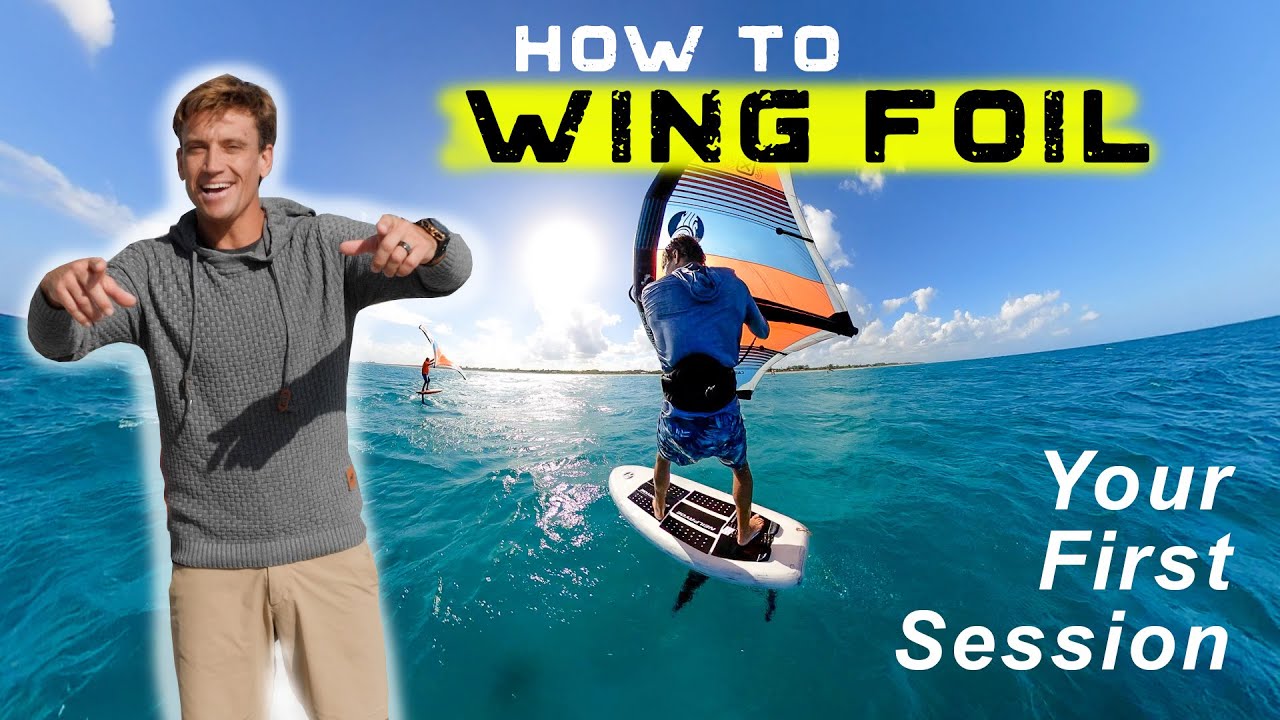
The SUP Company reports that many riders get short flights within five to ten good sessions. Good is the operative word. Side-shore wind between 15 and 20 knots over flat water beats a stronger, gustier day every time, and reading conditions before you drive is a skill in itself. Our guide to reading a surf report covers the wind and tide fields that matter most.
Take one or two lessons before buying if a school near you rents gear. An instructor will put you on the right board volume for a session, which tells you more about sizing than any chart.
Sources used
| Guide | Key figures taken |
|---|---|
| The SUP Company — Wing Foiling for Beginners: Size, Cost & Learning Guide | Most adult beginners start with a 4.5m to 6m hand wing, a front foil between roughly 1500cm² and 2000cm², and board volume of body weight in kg plus 20 to 40 litres. |
| Windance — Wing Foil Setup by Weight Chart | Front foil area should track body weight, from 1300 to 1600cm² under 60kg up to 2100 to 2500cm² above 105kg. |
| Wingfoil.fit — How to Choose Your First Wing Foil Setup | Board volume of body weight plus 30 to 40 litres, a mid-aspect front wing of 1500 to 2000cm², a 70 to 75cm mast, and every component from one brand's ecosystem. |
Video walkthroughs


Related reading
FAQ
What size wing foil board should a beginner buy?
Both The SUP Company and Wingfoil.fit size the first board off body weight. The SUP Company suggests body weight in kilograms plus 20 to 40 litres, and Wingfoil.fit pushes the buffer to 30 to 40 litres. For an 80 kg rider that lands between 100 and 120 litres.
What size hand wing do I need first?
The SUP Company puts most adult beginners between 4.5m and 6m, with 5m the common first size for a 65 to 80 kg rider in average coastal wind. Wingfoil.fit recommends a single 6m as the best first wing when local wind is variable.
How big should my front foil wing be?
Windance charts front foil area against rider weight: 1300 to 1600cm² under 60 kg, 1500 to 1800cm² at 60 to 75 kg, 1700 to 2000cm² at 75 to 90 kg, 1900 to 2200cm² at 90 to 105 kg, and 2100 to 2500cm² above that. Wingfoil.fit puts the modern beginner sweet spot at 1500 to 2000cm² in a mid-aspect shape.
What mast length works for learning?
Wingfoil.fit recommends 70 to 75cm for beginners, with a fuselage around 70 to 74cm and a stabiliser of 250 to 300cm² matched to the front wing. Shorter masts limit how deep the foil sits and make breaching more likely once you are riding higher.
How long does it take to get flying?
The SUP Company reports many riders get their first short flights within 5 to 10 good sessions, though building confidence takes longer. Wing handling on land first, then flat water on a stable board, is the sequence its guide recommends.
Should I mix foil brands to save money?
Wingfoil.fit advises against it, recommending mast, fuselage, front wing and stabiliser from one brand's ecosystem. Mounting patterns and fuselage tapers vary between brands, and a mismatch changes how the foil balances even when the parts physically bolt together.
Once you have your numbers, compare the foils that fall inside them in the Surfex foil reviews.