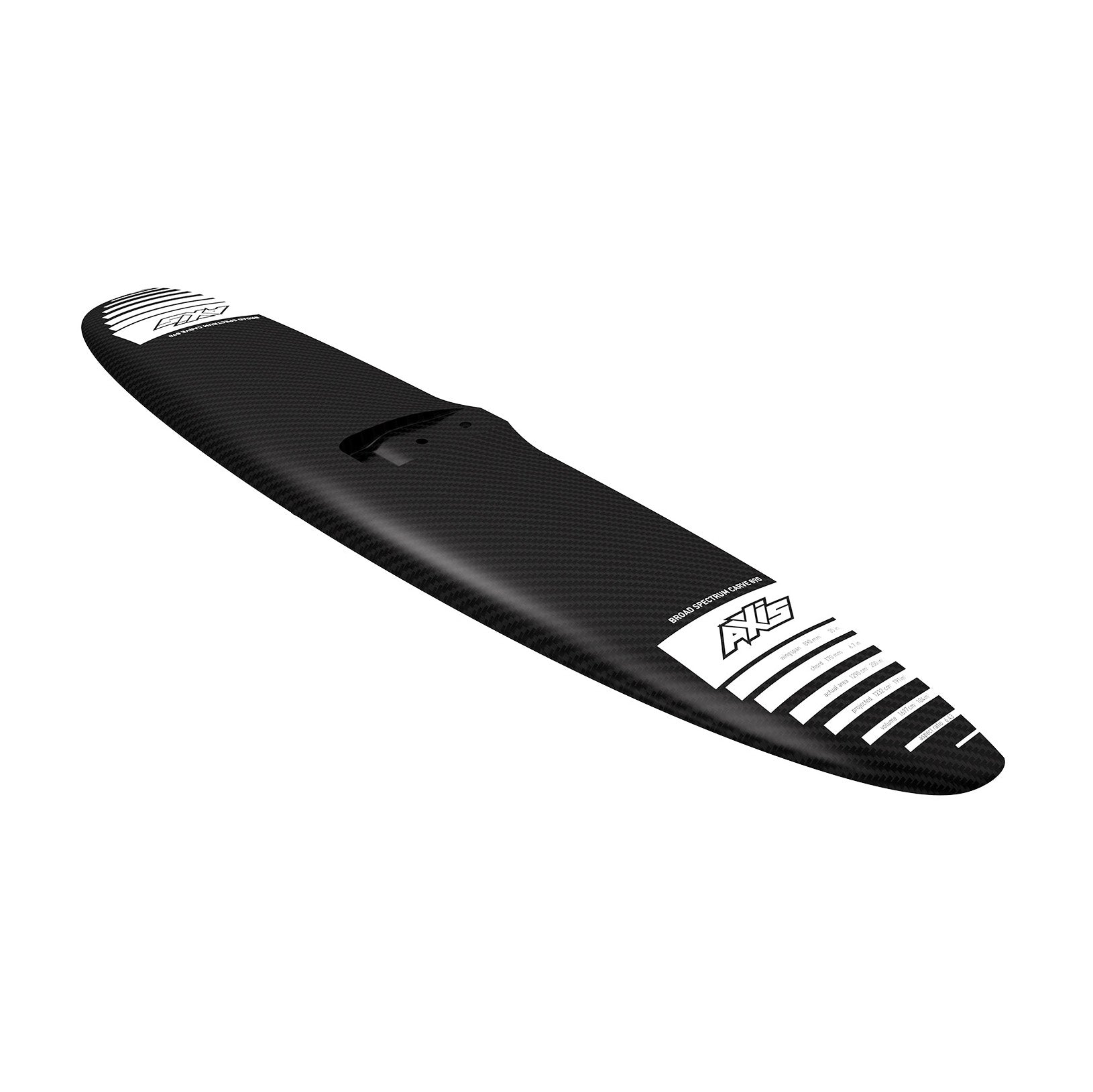
How it surfs
The choice inside the BSC range comes down to whether you want lift or speed. Moving up to the 970 or 1060 buys low-end lift for lighter riders and softer conditions; dropping to the 810 buys top-end speed at the cost of the easy takeoff the family is known for.
Because AXIS prints the measurements on each wing, mixing sizes within one setup is straightforward. Riders comparing across brands can look at the high-aspect Axis ART 999 for glide-focused riding or the mid-aspect Armstrong MA1000 for a carving alternative.
For surf-focused riders the waist to shoulder guidance is the most useful line on the official page. Above that size, published guidance points toward smaller, faster wings rather than the BSC 890.
Volume & sizing chart
Use the chart below as a starting point. Add half a litre if you are less experienced, subtract half a litre for a looser feel.
| Size | Volume | Rider weight | Best for |
|---|---|---|---|
| BSC 890 | 890 mm span | Suits big riders and beginners learning in small conditions per AXIS | Entry level to advanced |
| BSC 970 / 1060 | Larger spans | More low-end lift for lighter wind | All levels |
| BSC 810 / 740 | Smaller spans | Higher speed, more experienced riders | Advanced |
How it compares
| Board | Best at | Wave range | Aggregate score |
|---|---|---|---|
| Axis ART 999 | High-aspect glide | Prone / wing / SUP | 9.0 |
| Axis ART PRO 1201 | Pump and downwind efficiency | Downwind / wing | 9.3 |
| Armstrong MA1000 | Mid-aspect carving | Prone / wing | 9.0 |
Verdict
AXIS is unusually clear about where the BSC 890 works and where it does not. As a carving prone, wing and kite wing at USD 632.00 it fits a wide brief, but pump and flat-water riders should size up within the same family.