How to Duck Dive a Surfboard
Getting washed back to the beach twice in a row is rarely a fitness problem. It is almost always timing, and duck diving is where that timing lives. Sink the board a fraction too late and the lip takes it out of your hands. Sink the nose without weighting the tail and the wave grabs the back of the board like a handle. SurferToday describes the whole move as an arc that swings from air to water and back to air, which is a more useful mental picture than any list of positions. This guide sets out the six-step sequence in the order it happens, gives the trigger distance that published coaching sources agree on, and explains the board volume ceiling that decides whether the technique will work for you at all.
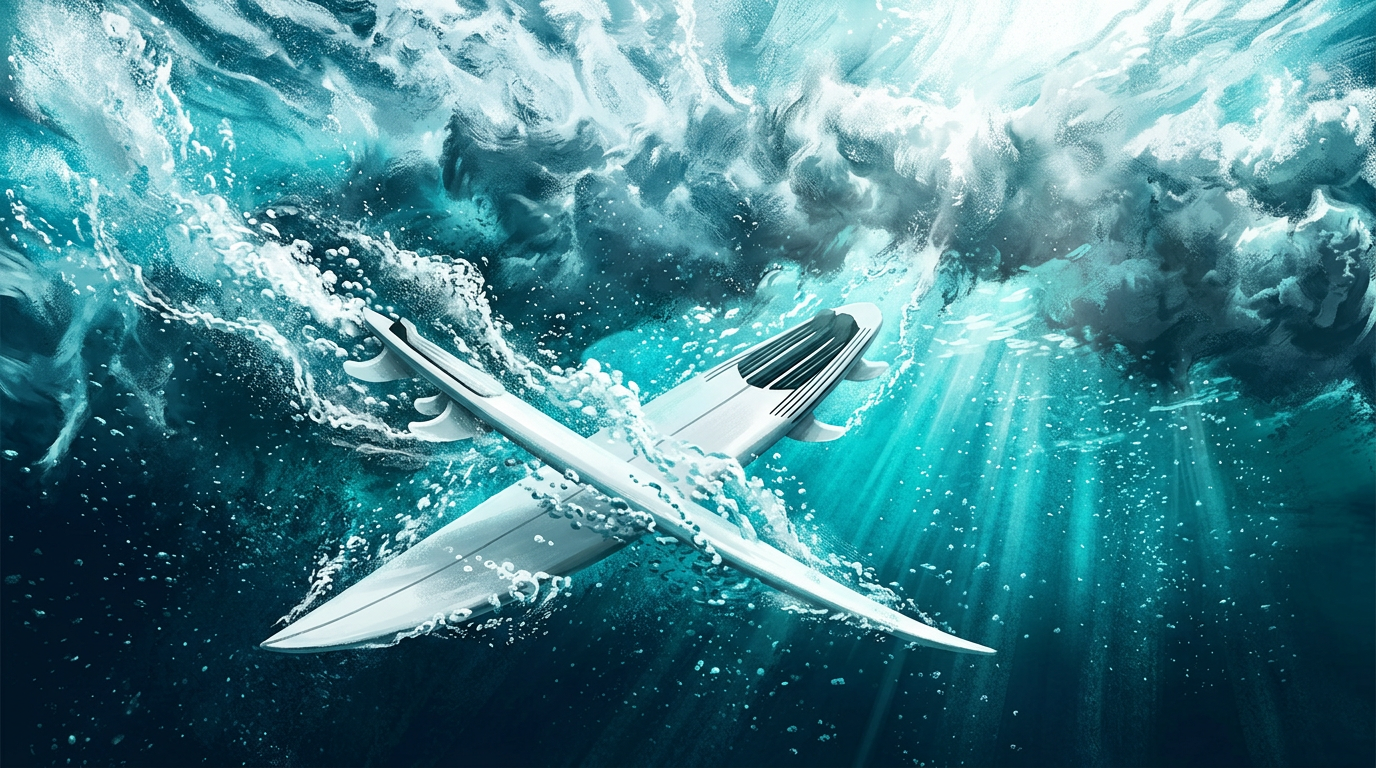
Original Surfex illustration.
Surfex aggregates published coaching guides and instructional sources, and normalises every score to a /10 scale. Every source links to its original page.
Five published coaching sources agree on the short version. Paddle fast at the wave, start the dive about one board length out, press the nose under with straight arms on the rails, then drive the tail down with a knee or foot until the board is level. Stay flat until the turbulence passes, then surface nose first and paddle straight away.
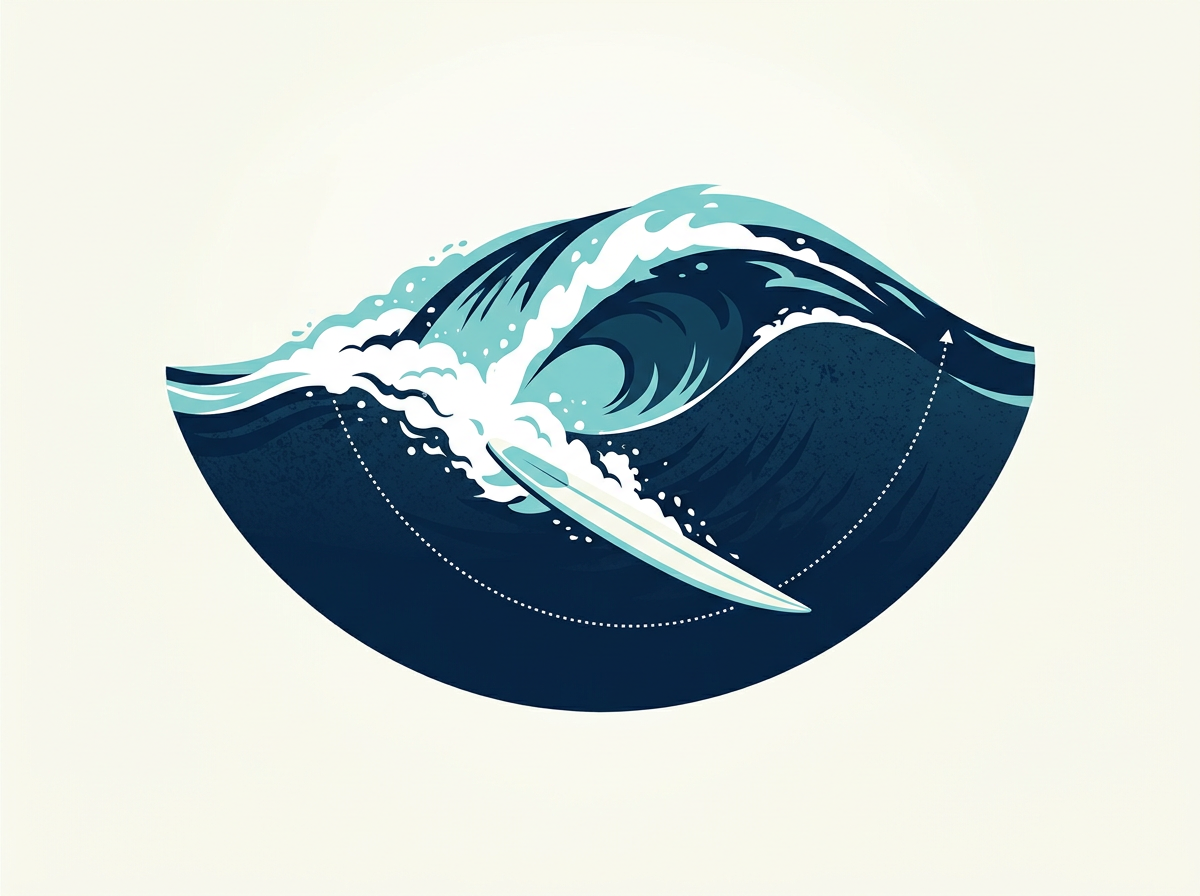
The dive is an arc, not a push
Picture the path your board takes rather than the positions your body passes through. It drops nose-first, flattens out beneath the turbulence, then climbs back to the surface on the far side. SurferToday calls it a pendulum, and the word earns its place because a pendulum never stops moving.
Most failed duck dives break that arc somewhere. The board goes down at an angle and stays there, or it levels out too shallow and the whitewater catches the tail. Fixing the shape of the path fixes more dives than adding effort does.
Speed first, everything else second
Surf Technique puts forward momentum at the top of its list, and the mechanics back it up. A moving board cuts down through the water. A stationary one has to be shoved against its own float, which is a much harder job for the same arms.
Keep paddling until your hands leave the water for the rails. The instinct to stop and brace a second early is the most common thing separating a clean dive from a rinse.
Timing: one board length out
Two independent sources land on the same number. Pacific Surf Co times the start at roughly one surfboard length from the lip, and American Surf Magazine gives the same distance as five or six feet. Steeper, hollower surf shifts that trigger slightly earlier.
Diving early leaves you drifting up into the wave before it has passed. Diving late means the lip lands on the board while your arms are still extending, which is how leashes snap and boards get ripped away.
Nose down, then tail down
Grip both rails around chest level, lock your arms and let your head and shoulders follow the nose under. Pacific Surf Co adds a detail worth stealing: keep one foot lightly on the tail during the approach so the board cannot pitch too far forward before you are ready.
The second half is where dives are won. Drive your knee or the ball of one foot into the tail until it sits at the same depth as the nose, and lift the free leg into the air so its weight pushes down too. A board that is level underwater slips through the turbulence. A board still angled tail-up gives the wave something to grab.
Board volume decides what is possible
Barefoot Surf is direct about the ceiling: high-volume boards are sometimes impossible to push under. This is a physics limit, not a skill one. Duck diving belongs to shortboards, hybrids and small twin fins, and gets marginal past about 40 litres.
If you are unsure where your board sits, work out its litres with our volume calculator before you spend another session blaming your arms. Riders on a longboard should learn the turtle roll instead: flip the board upside down, hold the rails near the nose, and let the wave pass over the hull.
Coming up without losing ground
Pull the nose back toward you, arch your back and let the board's float do the lifting. Surface nose first, straighten up and paddle immediately. Every second spent sorting yourself out is ground the next wave takes back.
Hold the rails firmly through the residual turbulence. Losing the board here is worse than a failed dive, because it sends a hard object back at anyone paddling behind you.
Practice that actually works
- Drill the movement in a pool or flat water where no wave punishes a slow rep, as both Barefoot Surf and SurferToday suggest.
- Film one paddle-out from the beach. Most surfers are diving later than they think.
- Count strokes into the wave so you stop bracing early out of habit.
- Alternate knee and foot on the tail for a session each and keep whichever sinks it deeper.
- Practise in waist-high whitewater first, where a mistimed dive costs nothing.
What to change on your next paddle-out
Pick the trigger distance and nothing else. Spend one session starting every dive a full board length out and accept a few that feel too early, because that error is far cheaper than the late one. Once the timing is automatic, move on to getting the tail as deep as the nose. If your gear is adding friction, a fresh grip from our waxing guide and a leash that is the right length in the leash guide both take one wave's worth of effort to fix.
What the sources say
| Source | Score | Key takeaway |
|---|---|---|
| Barefoot Surf — How to do a duck dive in surfing | 9.4 / 10 | "Surfboards with a lot of volume are very difficult to push underwater; sometimes, they are impossible to duck dive with because they float too much." |
| SurferToday — How to duck dive a surfboard | 9.1 / 10 | "The duck dive is teamwork between body and board. The goal is to form a kind of imaginary pendulum or arc that swings from air to water and air again." |
| Pacific Surf Co — The duck dive tutorial | 8.9 / 10 | "Time the start of your duckdive for when the lip or whitewash is approximately 1 surfboard length away from you. This may vary in steeper or hollower surf." |
| American Surf Magazine — Duck dive step by step | 8.6 / 10 | "You should make sure you are about your board's distance away from the wave, 5-6ft, and then you follow through with the duck dive." |
| Surf Technique — Duck dive technique, timing and board size | 8.4 / 10 | "Having some forward speed as you approach the wave is the number one key to a good duck dive, as it helps the board cut through the water and start the sinking process more easily." |
The full sequence
- 1Build paddle speed into the wave
Paddle straight at the wave and keep stroking until the last moment. Forward speed is what lets the board slice down instead of bouncing off the surface, and it is the single factor most published coaching sources put first.
- 2Start about one board length out
Pacific Surf Co and American Surf Magazine both put the trigger point at roughly one board length, around five or six feet, from the lip or whitewater. Start earlier and you surface into the wave. Start later and it lands on you.
- 3Grip the rails and press the nose under
Slide your hands toward the nose, grab both rails around chest level, lock your arms straight and drive the nose down. Your head and shoulders follow it under the surface rather than staying up.
- 4Sink the tail with a knee or foot
Once the nose is down, put your dominant knee or the ball of one foot on the tail and push it to the same depth as the nose. The other leg lifts into the air so its weight helps drive the board down.
- 5Level out and let the wave pass
Hold the board flat and hug it close while the turbulence goes over. Broken whitewater pushes energy toward you, so stay under longer than feels necessary. An unbroken wave will pull you in and then push you out the back.
- 6Angle up and surface nose first
Pull the nose toward you, arch your back and let the board's own float carry you up. Break the surface nose first, straighten the board and start paddling immediately so the next wave does not catch you stationary.
Video guides


Related reading
FAQ
How do you duck dive a surfboard step by step?
Paddle hard straight at the wave, start about one board length out, grip both rails near chest level and press the nose under with locked arms, then push the tail down with a knee or foot so the board is level underwater. Hug the board while the turbulence passes, then angle the nose up, surface nose first and resume paddling.
When should you start the duck dive?
Around one surfboard length from the lip or whitewater, which most sources put at five to six feet. Steeper, hollower waves need a slightly earlier start because the lip lands with more force and further out.
What size surfboard can you duck dive?
Duck diving is a low-volume technique. Performance shortboards, hybrids and small fish sink readily, midlengths are marginal, and longboards or soft-tops float too much to submerge. Barefoot Surf is explicit that high-volume boards are sometimes impossible to push under, and the turtle roll is the alternative.
Why can't I get my board deep enough?
Usually one of three things. Not enough paddle speed, so the board never slices. Starting too late, which means diving into the impact rather than under it. Or sinking the nose without ever weighting the tail, which leaves the board angled and the wave grabs it. Board volume is the fourth cause and no technique fixes it.
Should you use your knee or your foot on the tail?
Both work and coaching sources disagree on which is better. The knee gives more leverage on a thicker board, the foot keeps you flatter and is quicker to recover from. Try both, keep the one that gets the tail as deep as the nose.
Is duck diving or bailing the board safer?
Duck diving, in almost every case. Letting go sends the board back toward whoever is paddling behind you and risks a snapped leash and a swim. Bailing is a last resort when the wave is beyond what you can duck dive.
Aggregated from 5 independent published sources and 4 video guides.