How to Wash a Wetsuit
A good 4/3 costs more than most sets of fins, and the fastest way to lose one is a hot rinse and a sunny fence. Salt left to dry inside neoprene crystallises and works like sandpaper on the fibres and stitching, which is why every wetsuit brand publishes the same short list of rules and why almost nobody follows all of them. This guide pulls those published instructions together from Rip Curl, Xcel, Gear Aid and Wetsuit Centre, then sets out what to do after every surf, what to do weekly, and what to do when the suit goes away for the season. Southern hemisphere surfers are deep in winter suits right now and northern surfers are about to pack theirs away, so both ends of the calendar need this today.
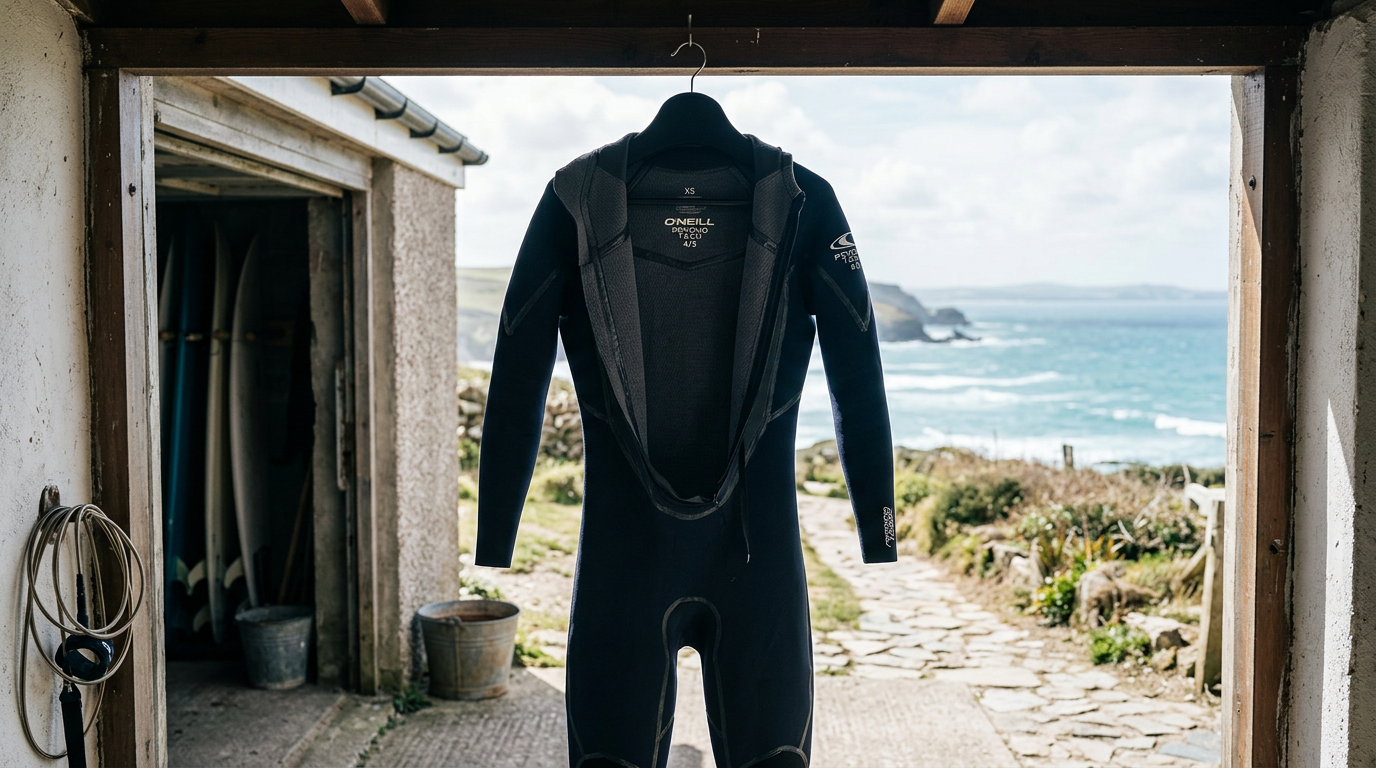
Original Surfex illustration.
Surfex aggregates published manufacturer care instructions and retailer guides, and normalises every score to a /10 scale. Every source links to its original page.
Four published sources agree on the same short version. Rinse in cold fresh water after every surf, use a neoprene-safe shampoo about once a week, keep the suit away from machines, heat and household detergent, and dry it inside out on a wide hanger in the shade.
Salt is what actually kills a suit
Rip Curl describes the mechanism plainly. Seawater dries, the salt crystallises, and those crystals have a corrosive effect on neoprene and hardware, destroying fibres and eating away at stitching until water courses through the holes and your body temperature drops. That is the failure most surfers blame on the brand.
The fix is a rinse in cold fresh water after every surf, and the sooner the better. Xcel goes as far as calling that single habit ninety percent of the battle against rashes, smells and neoprene degradation. Nothing else on this page matters as much, and it applies equally to a summer 3/2 and a hooded winter suit.
Cold water only, and nothing from the laundry cupboard
Rip Curl's instruction is unambiguous: no washing machine, no hot water, no laundry detergent, no fabric softener, no bleach. Household detergents are formulated for cotton and synthetics, not for a glued and taped neoprene sandwich, and they strip the flexibility out of the panels while attacking the seam adhesive.
Wetsuit Centre makes the same point from the retail side, recommending a wetsuit-specific shampoo because those formulations lift salt, chlorine, mould, skin oils and organic residue without the harshness. If you have nothing to hand, cool fresh water on its own is always safer than reaching for washing powder.
When to bring out the shampoo
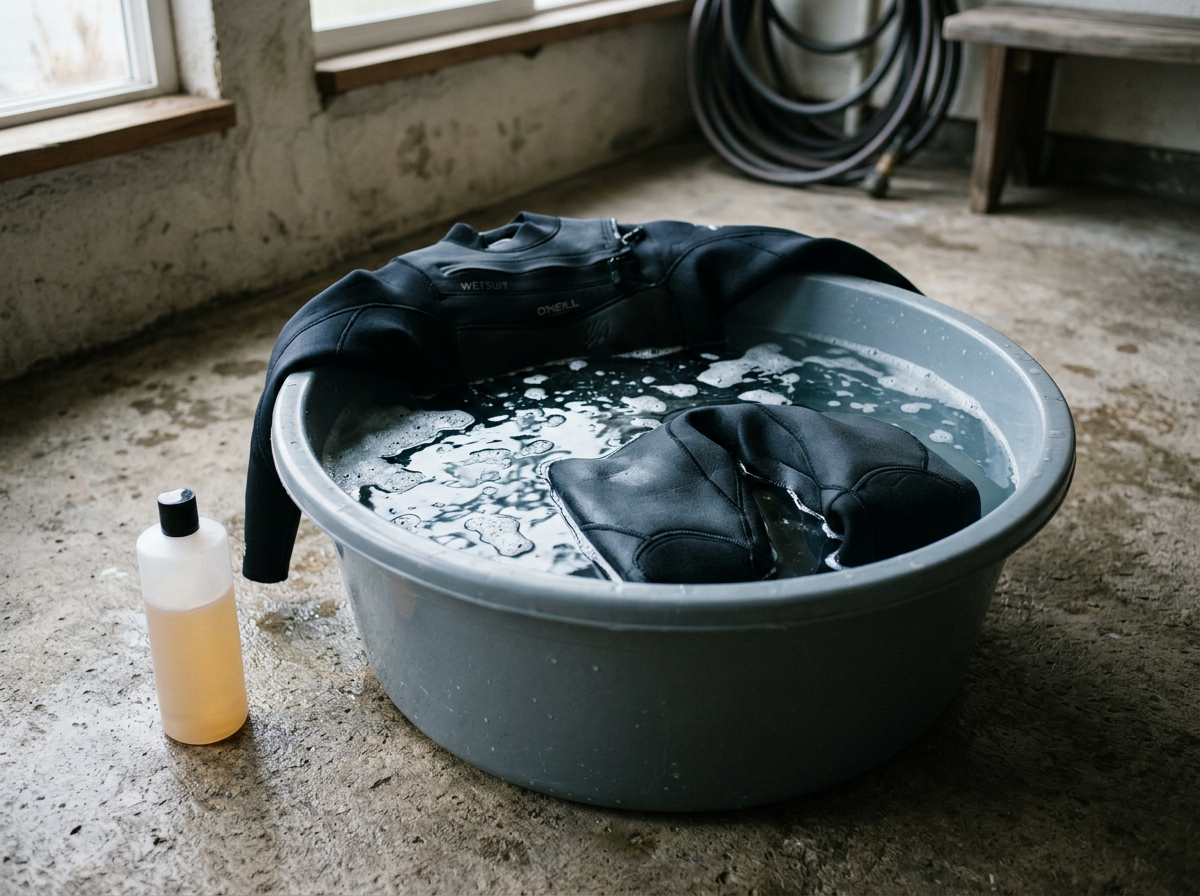
A rinse handles salt. It does not handle the bacteria that cause the smell, which come mostly from urine and skin oils trapped in the lining. Gear Aid's method is a clean bucket of cold water with wetsuit shampoo mixed through, kneading the suit rather than scrubbing it, then emptying the bucket and rinsing every last sud out.
Frequency is where sources differ slightly. Wetsuit Centre suggests once a week or after heavy use; Xcel frames soap as an occasional deep clean on top of daily rinsing. Either way the rinse-out afterwards is not optional, because leftover detergent residue is itself a cause of mildew.
Drying is where most suits get ruined
Two things destroy neoprene faster than surfing does: a tumble dryer and direct sun. Gear Aid points out that UV stretches the material, fades it and breaks down the neoprene, while Xcel is blunter about the dryer, noting that heat and tumbling damage seams, weaken glue and can void the warranty.
Hang the suit inside out first so the lining dries before the outer face, in a cool ventilated spot out of the sun, then turn it right side out after 24 to 48 hours. Rip Curl recommends hanging it folded at the waist over a smooth round surface such as a shower rail or the bar of a wide hanger, balanced evenly, which spreads the weight instead of loading the shoulders.
Storage between seasons
Once the suit is completely dry, store it flat or folded over a thick hanger bar in a cool dark space. Gear Aid warns that crumpling, folding badly or using a plain plastic hanger leaves creases and rolls that stop the suit conforming to your body, and those dents do not fully recover.
The car boot is the worst place in the world for neoprene, since it combines heat, damp and compression. If you are heading somewhere warm and swapping to a spring suit, check the water temperature bands in our wetsuit thickness guide before you pack the winter suit away.
Common mistakes
- Rinsing in hot water because the suit is cold, which softens the seam glue.
- Using laundry detergent or fabric softener instead of a neoprene-safe shampoo.
- Drying the suit on a sunny fence, which fades and stretches the panels.
- Hanging a heavy wet suit by the shoulders on a thin wire hanger.
- Leaving it balled up in the boot, then blaming the smell on the suit rather than the storage. If it is genuinely past saving, start with our wetsuit reviews.
What to do this week
Put a bucket by the door and rinse every suit that comes home in it. Buy one bottle of wetsuit shampoo and one wide-shouldered hanger, which together cost less than a single fin, and give the suit a soak this weekend. If the seams are already lifting or the panels feel stiff no matter what you do, that is a replacement decision rather than a cleaning one, and the O'Neill and Rip Curl ranges in our wetsuit index are the place to start.
What the sources say
| Source | Score | Key takeaway |
|---|---|---|
| Rip Curl — Wetsuit care: how to clean, when to replace | 9.4 / 10 | "When it comes to cleaning your wetsuit, you want to rinse with simple, cold fresh water. No washing machine, no hot water, no laundry detergent, no fabric softener, and no bleach." |
| Xcel Wetsuits — Six simple steps to extend the life of your suit | 9.2 / 10 | "Hang it on a wide-shouldered wetsuit hanger, inside out in a cool, ventilated space. Above all, avoid drying your suit in sunlight." |
| Gear Aid — Wetsuit wash and care how-to | 9.0 / 10 | "The sun's UV rays and the dryer can cause serious damage to the material, stretching it out, causing it to fade, and damaging that neoprene." |
| Wetsuit Centre — Essential wetsuit cleaner advice | 8.8 / 10 | "Use wetsuit shampoo once a week or after heavy use with clean water and let it soak for a while. Avoid household detergents or harmful chemicals when washing." |
The full sequence
- 1Peel the suit off carefully
Roll the neoprene down rather than dragging it, and stand on a towel or changing mat so the legs never grind against gravel or oily asphalt. Watch fingernails around smooth-skin panels, which slice easily.
- 2Rinse in cold fresh water straight away
Hose the suit down or dunk it in a tub of cold fresh water, inside and out, before the salt dries. Never hot water, never a washing machine, never laundry detergent, fabric softener or bleach.
- 3Soak with wetsuit shampoo when it needs it
Fill a bucket with cool water, add a small dose of a neoprene-safe wetsuit shampoo, knead the suit through it and let it soak for several minutes. Once a week or after heavy use is enough for most surfers.
- 4Rinse the cleaner out completely
Empty the bucket, refill with clean cool water and rinse until no suds remain. Detergent or shampoo residue left in the lining is itself a cause of mildew and skin irritation.
- 5Hang inside out in the shade
Use a wide-shouldered wetsuit hanger, or fold the suit at the waist over a smooth round bar. Dry it in a cool ventilated spot out of direct sun, then turn it right side out after a day so both faces dry.
- 6Store it flat or on a thick hanger
Once fully dry, lay the suit flat or hang it folded at the waist on a wide bar in a cool dark space. Never leave it crumpled in a car boot, and never put it near a radiator or in a tumble dryer.
Video guides



Related reading
FAQ
How do you wash a wetsuit properly?
Rinse it in cold fresh water inside and out straight after every session, then once a week soak it in a bucket of cool water with a small dose of wetsuit shampoo, knead it through and rinse until no suds remain. Hang it inside out on a wide-shouldered hanger in the shade to dry.
Can you put a wetsuit in the washing machine?
No. Rip Curl, Xcel and Gear Aid all rule out machines, hot water, laundry detergent, fabric softener and bleach. Agitation and household chemicals break down the glue lines and the neoprene itself, and machine washing usually voids the warranty.
How often should you use wetsuit shampoo?
Wetsuit Centre suggests once a week, or after heavy use. Xcel puts the same idea differently, calling the cold water rinse after every surf ninety percent of the battle and reserving soap for occasional deeper cleans. Daily shampooing is unnecessary.
Why does my wetsuit still smell after rinsing?
The smell is bacteria living in the lining, mostly from urine and skin oils, and plain water does not remove it. A shampoo soak followed by a complete rinse deals with it, and drying the suit inside out first stops it coming straight back.
Should you dry a wetsuit in the sun?
No. UV fades the material, stretches it and degrades neoprene, and heat weakens the seam glue in the same way a tumble dryer does. Dry it in a cool ventilated spot in the shade instead.
What is the right way to hang a wetsuit?
Fold the suit at the waist over a smooth round bar or a wide-shouldered wetsuit hanger, balanced evenly on both sides. Hanging a wet suit by the shoulders on a thin hanger stretches the panels and leaves permanent dents.
Aggregated from 4 independent published sources and 4 video guides.