How to Pop Up on a Surfboard
Two seconds decide whether you ride the wave or wear it. The pop up is the shortest movement in surfing and the one that keeps people stuck at the same level for years, usually because it gets treated as a strength problem when it is really a timing and sequence problem. Coaches teaching the same drill at Barefoot Surf and across published surf instruction agree on a short list: hands at the rails, one explosive push, hips clear of the deck, both feet through the gap onto the stringer. This guide sets that sequence out in the order it happens, covers the four common variations and when each one is the right call, and gives you the dry-land drill that actually transfers to the water.
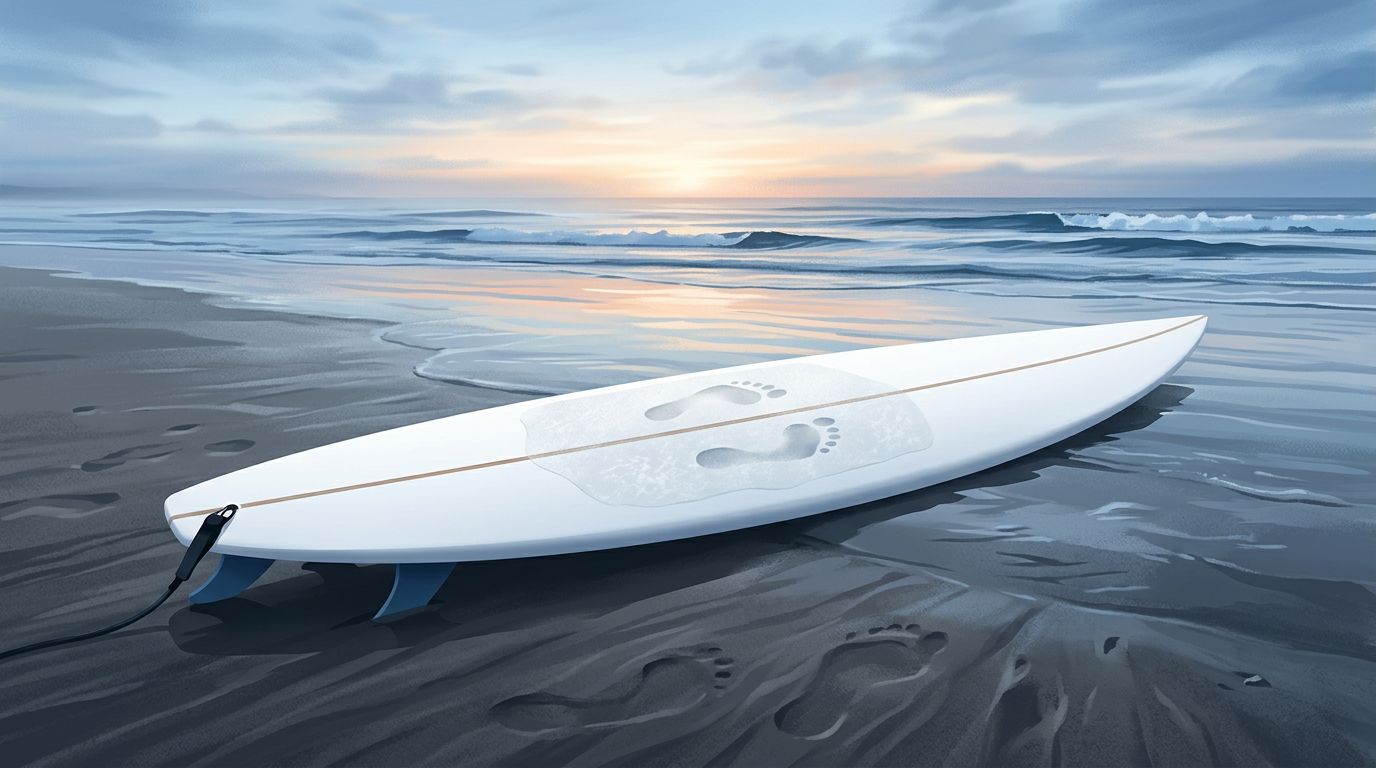
Original Surfex illustration.
Surfex aggregates published coaching guides and instructional sources, and normalises every score to a /10 scale. Every source links to its original page.
Five published coaching sources agree on the same short version. Paddle past the point where it feels like enough, put both hands flat beside your ribs, push hard enough that your hips leave the deck, and swing both feet through onto the centre line in one motion. Everything else is a variation on how you handle the gap between the push and the landing.
The pop up is a sequence, not a lift
Watch a surfer who cannot stand up and you will usually see them trying to haul their body weight vertically. Watch someone who can, and the body barely rises at all. The chest goes up, the hips come off the deck, and the feet travel horizontally through the space that push created.
Barefoot Surf frames it as a single explosive movement rather than a set of positions. That distinction matters, because thinking in positions makes people pause between them, and a pause is exactly what a breaking wave punishes.
Paddle position sets everything up
Before the hands or the feet matter, the board has to be trimmed. Lie centred on the stringer with the nose a couple of centimetres clear of the water. Slide too far back and the tail sinks so the wave passes underneath. Slide too far forward and you pearl the moment the wave lifts the tail.
Board choice makes this dramatically easier or harder. A board with enough float lets you find the spot by feel, which is why almost every coaching source starts beginners on volume. If you are not sure yours is right, run the numbers through our volume calculator before blaming your technique.
Hands at the rails, not out front
SurferToday and Barefoot Surf converge on the same detail here. Palms go flat on the deck beside your ribs, close to the rail line, roughly under the shoulders. From there your push travels straight down through the board.
Reaching forward feels natural because that is how you get up off the floor, but on a moving board it drives the nose down at the exact moment the wave is trying to lift the tail. A surprising number of pearled takeoffs are hand placement, not paddle position. Grip helps too, which is why a bare rail line costs takeoffs and a fresh coat from our waxing guide is worth thirty seconds.
Create space before you move your feet
The push is the whole trick. Barefoot Surf describes the mid-point as a one-legged push-up position, chest high and hips clear, and that image is worth borrowing even though the real movement never stops there. Your feet cannot swing through a gap that does not exist yet.
Once the hips are off the deck, twist. The rotation at the hips is what carries the back foot over the tail while the front foot slides forward. Surfers who skip the twist end up dragging a knee or crawling, both of which stall the board.
Land on the stringer, land low
Back foot over or just ahead of the fins, front foot near the middle, both straddling the centre line. Feet that land on the rails tip the board before you have any speed to work with, and no amount of ankle correction saves it.
Land in a crouch with your knees bent and your weight slightly forward, shoulders already turned down the line. Standing tall on the landing raises your centre of gravity at the least stable moment of the wave.
Choosing between the variations
There is no single correct takeoff, and Barefoot Surf says so directly. The chicken wing, where the back foot lands first, is a genuine longboard technique rather than a beginner's mistake, because a nine-foot board gives you the time. Try it on a steep shortboard drop and the wave is gone before your front foot arrives.
Back-foot-first has its own place on late, critical drops where setting the rail early is worth a fraction of a second. The knee-assisted rise is the only one worth actively unlearning, since it works on a soft-top and nowhere else. Which board you are on shapes the answer, so it is worth reading the takeoff difference between a longboard and a shortboard as a technique difference too.
The dry-land drill that transfers
The Inertia's point about speed over strength is the useful one for practice design. Repetition at full speed beats slow, careful reps, because the water never gives you a slow rep.
- Tape a stringer line on the floor and run ten full-speed reps, checking both feet land on the line.
- Film from the side. If your hips never leave the ground, you are crawling rather than pushing.
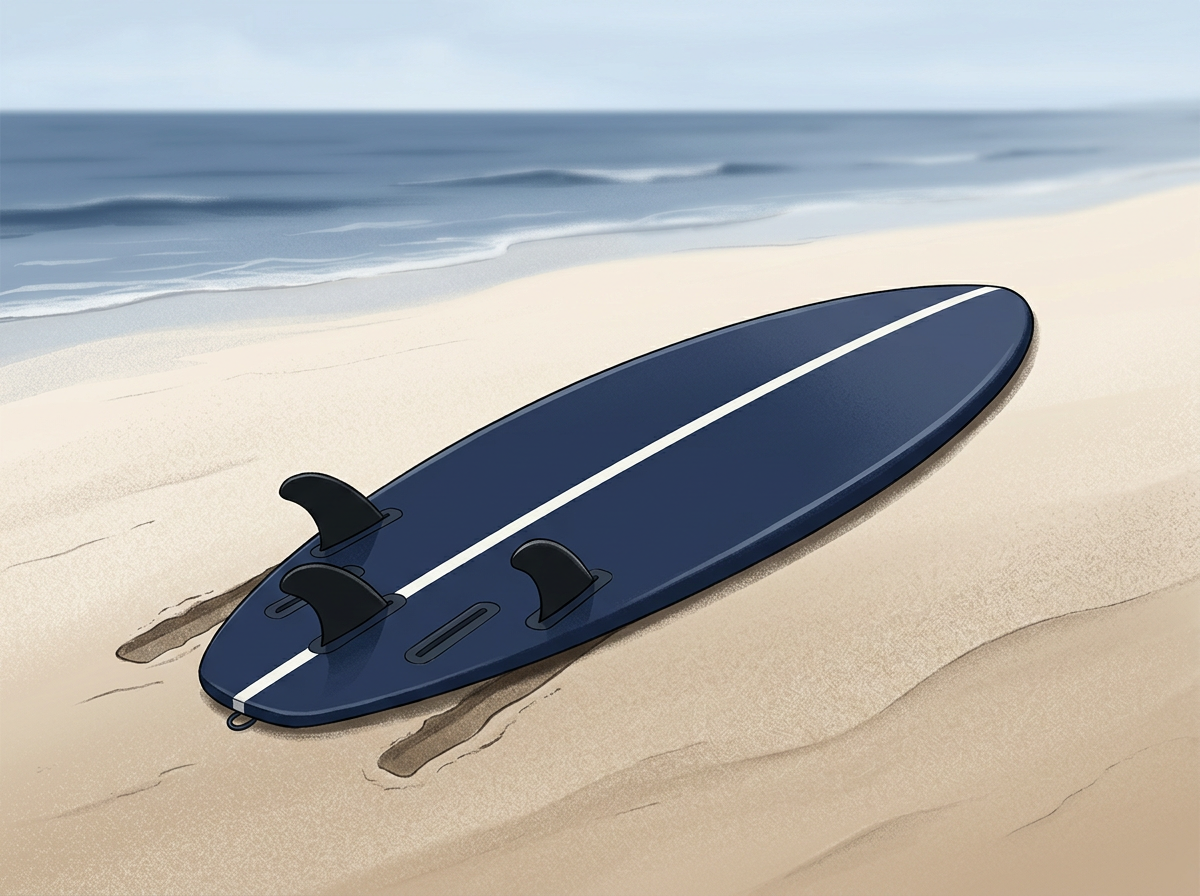
- Practise on the actual board on sand, with a shallow trench dug for the fins.
- Alternate stances occasionally so the movement is a skill rather than a reflex on one side.
- Three sets of ten, three times a week, beats an hour once a fortnight.
What to work on this week
Pick one fault and fix only that. For most surfers it is hand placement, so spend a session consciously putting both palms beside your ribs before every wave and accept a few slow standups while it beds in. Check your board is not making it harder than it needs to be with our beginner board guide, and make sure your leash and traction are not stealing attention mid-takeoff by reading the leash guide and the traction pad guide.
What the sources say
| Source | Score | Key takeaway |
|---|---|---|
| Barefoot Surf — How to do a take off | 9.4 / 10 | "The take off is one single explosive movement. Push your body up into a one-legged push up position, then slide the front foot underneath you and land both feet on the centre line of the board." |
| Barefoot Surf — What take off technique is right for you | 9.1 / 10 | "There is no single correct take off. The technique that works depends on your mobility, the board you ride and how steep the wave is when you commit." |
| Barefoot Surf — How to pop up on a shortboard | 9.0 / 10 | "On a shortboard the window is smaller. The pop up has to happen in one motion, with hands under the chest at the rails and no knee touching the deck." |
| SurferToday — How to pop up on a surfboard | 8.7 / 10 | "Place your hands flat on the deck beside your chest, near the rails, and push your chest up while your feet come through in a single sweep rather than a crawl." |
| The Inertia — Pop up technique fundamentals | 8.5 / 10 | "Most struggling surfers are not weak, they are slow. Speed through the transition matters more than strength, and the drill for it happens on dry land." |
The full sequence
- 1Set your paddling position first
Lie centred on the stringer with your chest just far enough forward that the nose sits a couple of centimetres clear of the water. Too far back and the board will not catch the wave. Too far forward and the nose buries before you stand.
- 2Paddle until the wave carries you
Take two or three more strokes than feels necessary. The pop up only works once the board is already moving at wave speed, because the board must be planing before your weight leaves the horizontal.
- 3Plant your hands at the rails
Bring both palms flat onto the deck beside your ribs, roughly level with the bottom of your chest and close to the rail line. Hands under the shoulders push you upward. Hands too far forward push the nose down.
- 4Push explosively and create space
Straighten your arms in one burst, lifting your chest and hips clear of the deck. This is the moment that decides everything. You are making a gap between your body and the board that your feet swing through.
- 5Swing both feet through in one motion
Twist at the hips and bring the back foot over the tail area while the front foot slides forward underneath your chest. Aim for both feet landing near-simultaneously on the centre line, not one then the other on the rails.
- 6Land low with your eyes down the line
Absorb the landing with bent knees, weight over the front foot, shoulders open toward the direction you are riding. Standing up straight on landing is the fastest way to lose the wave you just caught.
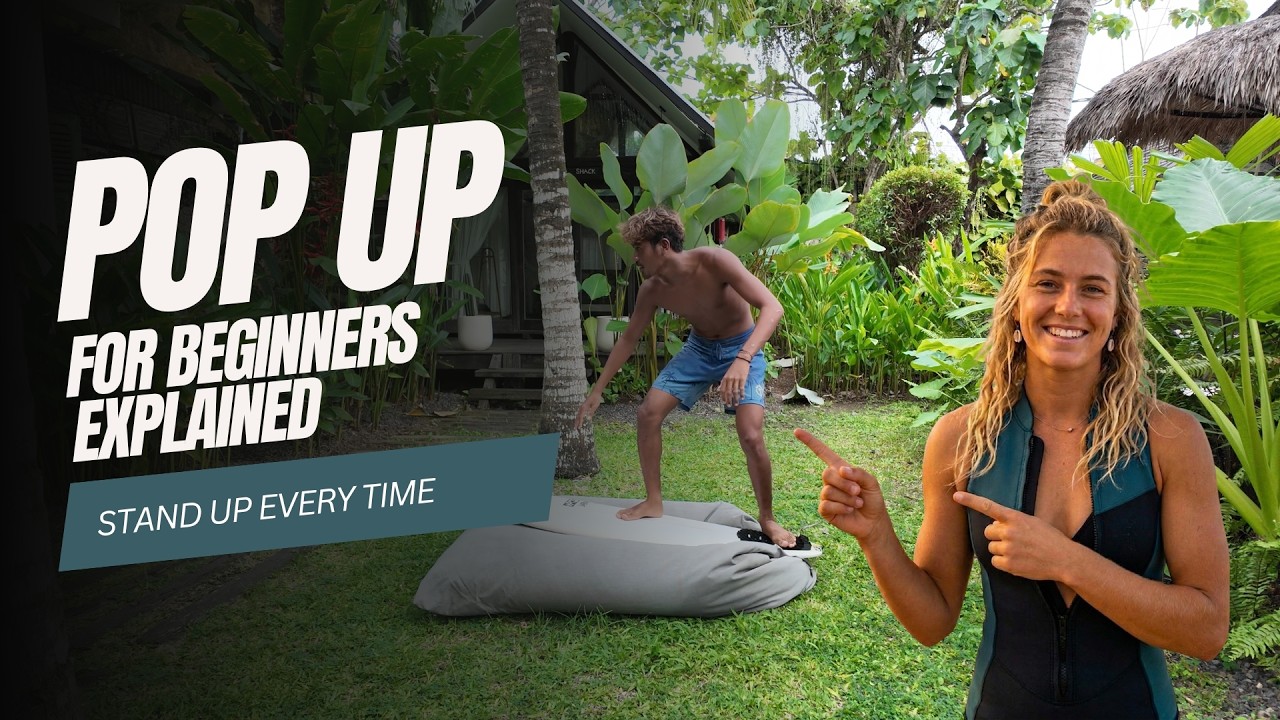
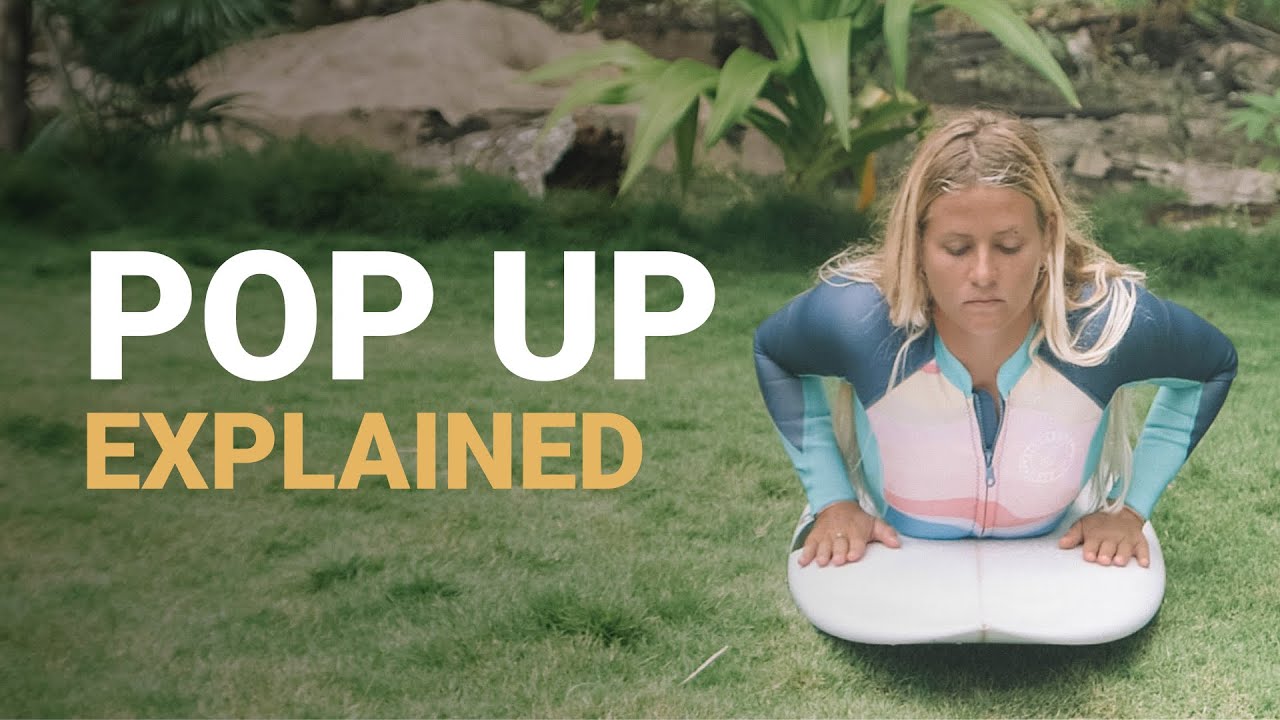
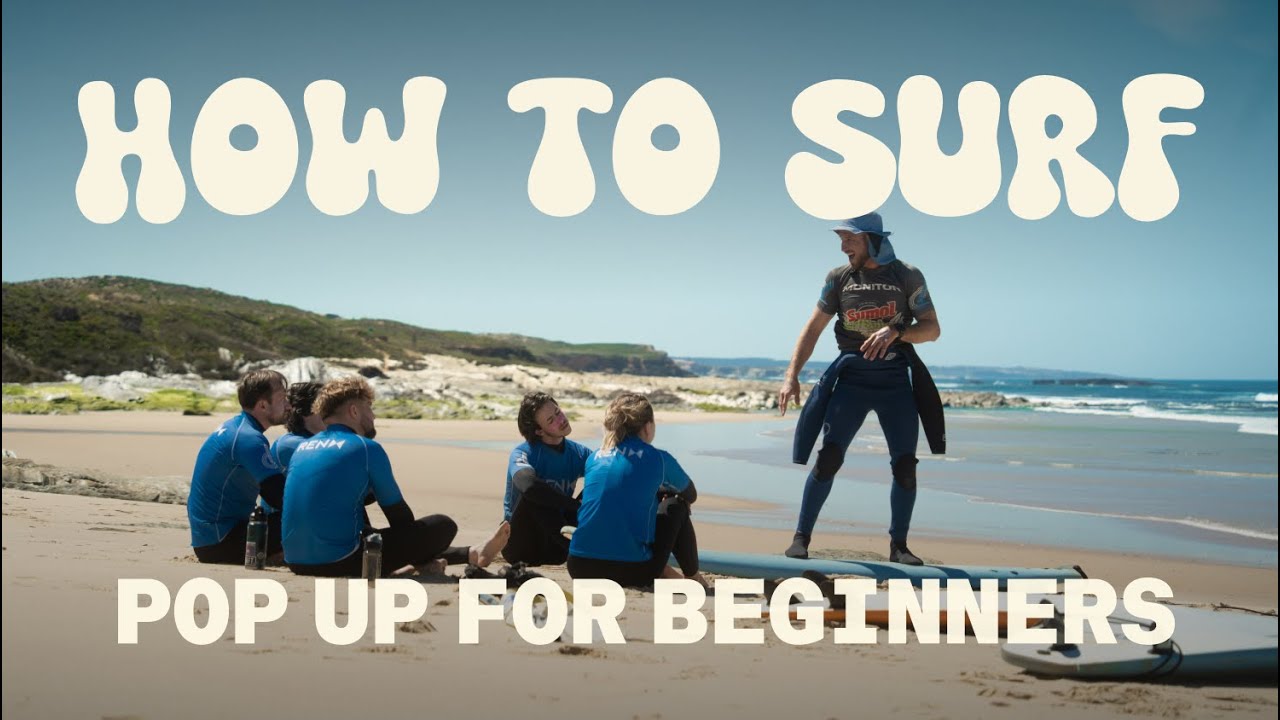
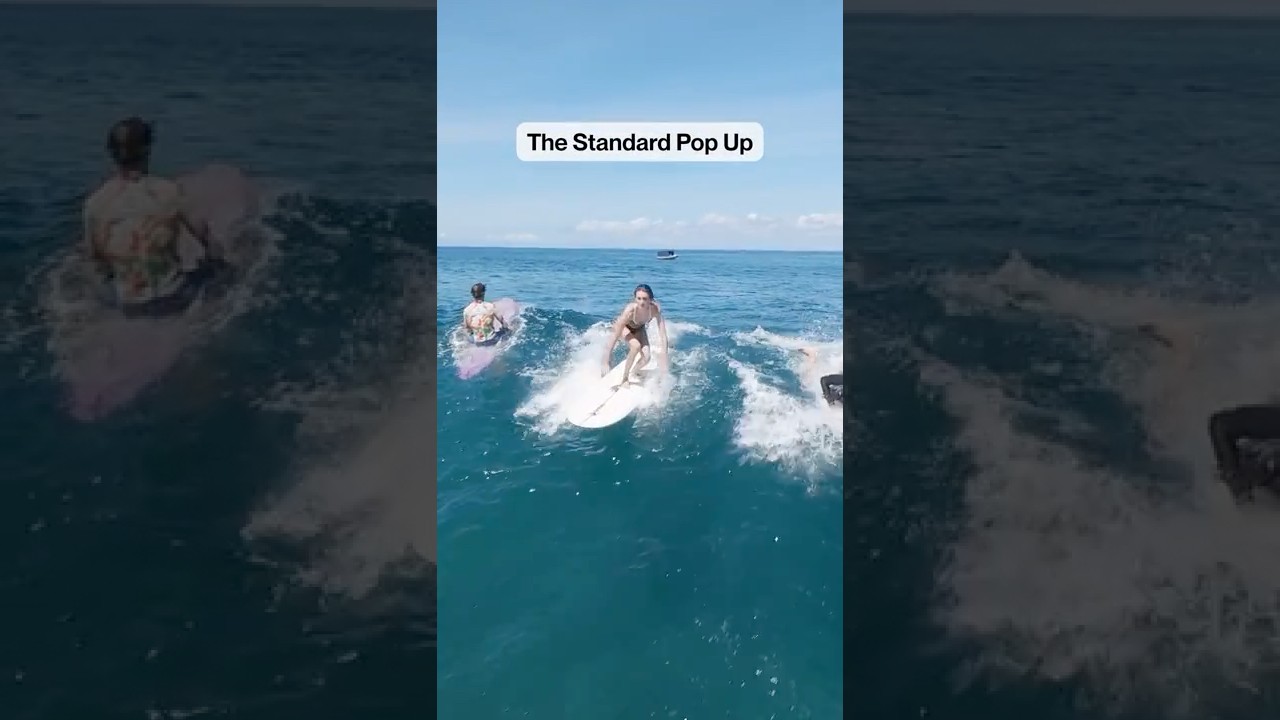
Video guides


Related reading
FAQ
How do you pop up on a surfboard step by step?
Paddle until the wave is carrying the board, plant both hands flat beside your ribs near the rails, push your chest and hips up explosively, twist at the hips and swing both feet through the gap onto the centre line of the board, then land in a low crouch with knees bent and eyes looking down the line.
Why can't I pop up on my surfboard?
The three usual causes are paddling too slowly so the board never planes, placing the hands too far forward which drives the nose under, and pulling the knees up before the arms have created space. Speed through the transition matters more than arm strength, which is why dry-land repetition fixes it faster than gym work.
Is the chicken wing pop up bad technique?
It is a legitimate takeoff on a longboard or midlength, where the extra length gives you time to bring the back foot down first. On a shortboard the wave will not wait, so a chicken wing usually means missing the drop. Learn both and pick by board and wave steepness.
Should my knee touch the board when I stand up?
No, beyond the first couple of sessions on a soft-top. A knee on the deck kills board speed and adds a step you then have to unlearn. Aim to go from prone to feet in one motion, even if it means a slower, more deliberate rise at first.
Where should my feet land on the board?
Back foot over or just ahead of the fins, front foot around the middle of the board, both roughly shoulder-width apart and straddling the stringer. Feet landing on the rails is the most common reason a good takeoff still ends in a fall.
How can I practise the pop up at home?
Mark a stringer line on the floor with tape, lie prone, and run the full sequence in sets of ten with a focus on landing both feet on the line. Filming yourself from the side shows whether your hips actually clear the ground or whether you are crawling forward instead of pushing.
Aggregated from 5 independent published sources and 6 video guides.