Soft Top Surfboard Guide
Two foam boards can sit side by side on the same rack at the same length and surf nothing alike. Stringer count, rail stiffness, deck material and fin boxes decide whether a soft top washes sideways in the whitewater or holds a line on an open face. Published reviews put the current crop between 7.6 and 8.6 out of 10 at prices from about $320 to $500, and the gaps between them are easy to read once you know which specs matter. This guide sets out sizing by rider weight, the four build types on the market, what each reviewed board is actually good at, and the care routine that decides whether a foamie lasts one summer or five. Late northern summer and the run into southern spring are both peak soft top buying windows, so pricing is worth checking now.
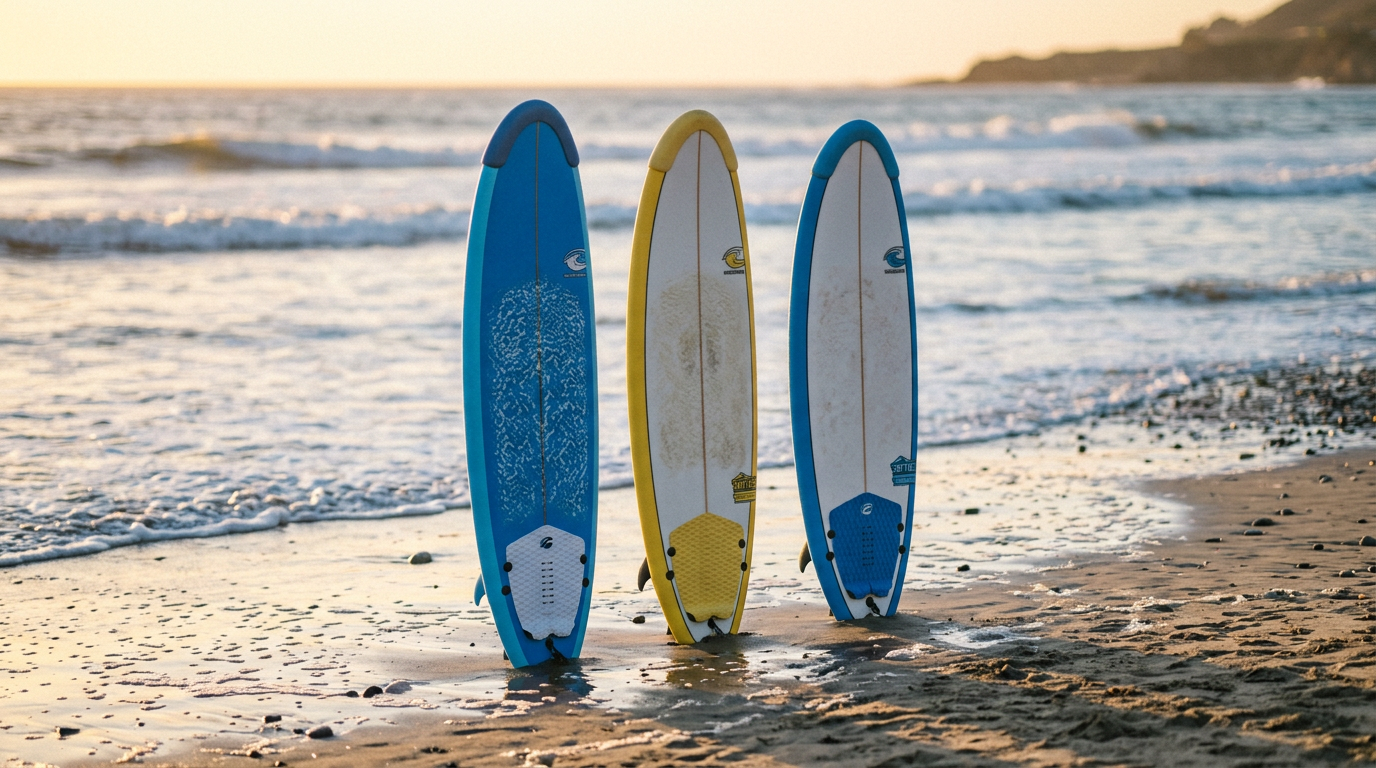
Surfex is an aggregator. Every price and score on this page comes from a published review that is linked in the sources section.
| Rider weight | Board length | Why |
|---|---|---|
| Under 60 kg / 130 lb | 7'0" – 8'0" | Enough float without a board you cannot carry |
| 60 – 80 kg / 130 – 175 lb | 8'0" – 8'6" | The 8' Wavestorm and Odysea Log band |
| 80 – 95 kg / 175 – 210 lb | 8'6" – 9'0" | Extra length beats extra thickness for paddling |
| Over 95 kg / 210 lb | 9'0" and up | Heritage 9' class, since most foamies stop near 80 L |
What a soft top actually buys you
A foam deck and soft rails cut the cost of a mistake. You fall on the board instead of into it, the nose does not split a lip, and a shallow sandbar does not end the session. That safety margin is why surf schools run nothing else, and it is also why the boards hold their value at the bottom of the market.
The second thing you buy is wave count. Length and volume put you into waves earlier, and early entry is what turns a two-wave session into a twenty-wave one. If you are still working on timing, our pop-up guide pairs well with a foamie, because the extra stability gives you time to get your feet right.
Sizing by rider weight
The 8' band covers most adult beginners, which is why the two best selling foam boards in the world are both built at that length. Under 60 kg, a 7' to 8' board floats you fine and is far easier to carry down a beach. Over 95 kg the maths changes: published reviews point out that most foam boards stop near 80 litres, so a heavier rider needs 9' of length rather than a thicker 8'.
Length is the lever, not thickness. A thicker foam board sits high and feels tippy, while extra length spreads the same volume into a longer paddling platform. Run your numbers through the surfboard volume calculator before you buy, then compare against the beginner surfboard guide if you are weighing a foamie against a soft-railed hard board.
The four builds on the market
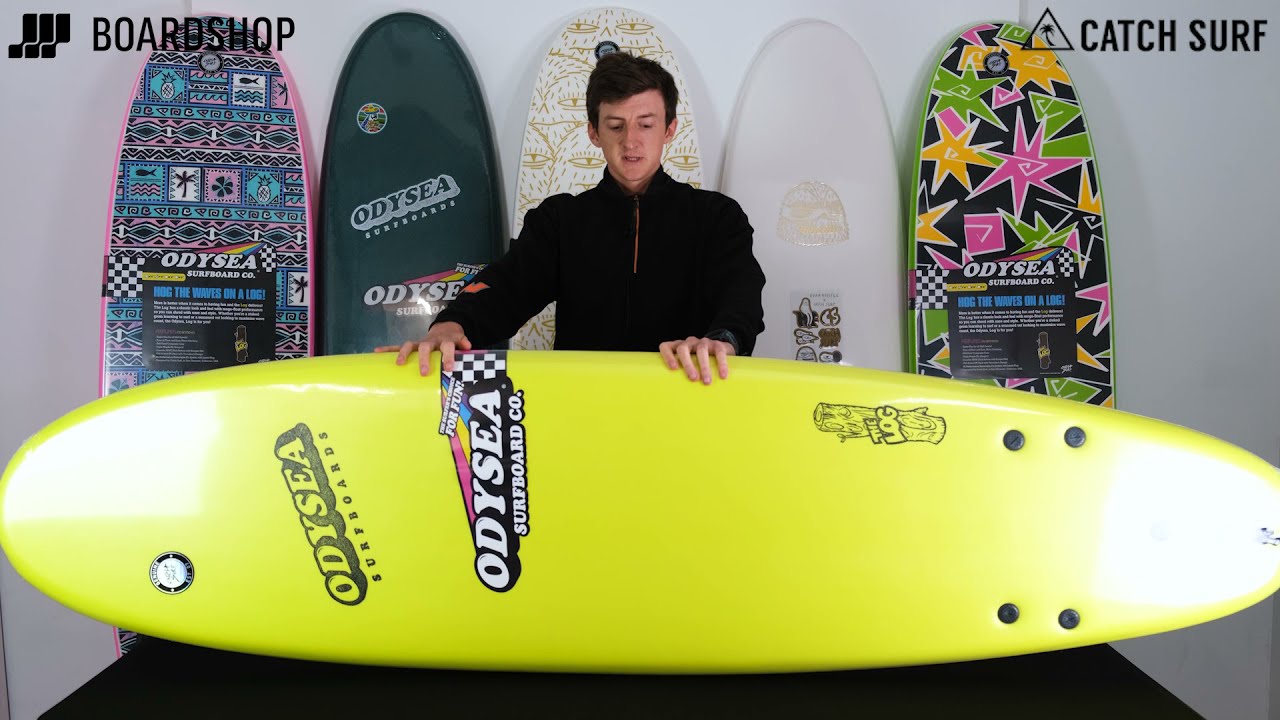
Budget EPS foamies keep the price near $320 by using minimal stringers and a glued deck. They are forgiving and flexy, which is fine in waist-high whitewater and noticeable once the wave stands up. Stiffened foamies add stringers, a slick HDPE bottom and harder rails, and FoamieCrew reports the Catch Surf Odysea Log 8'0 is far stiffer than its length suggests.
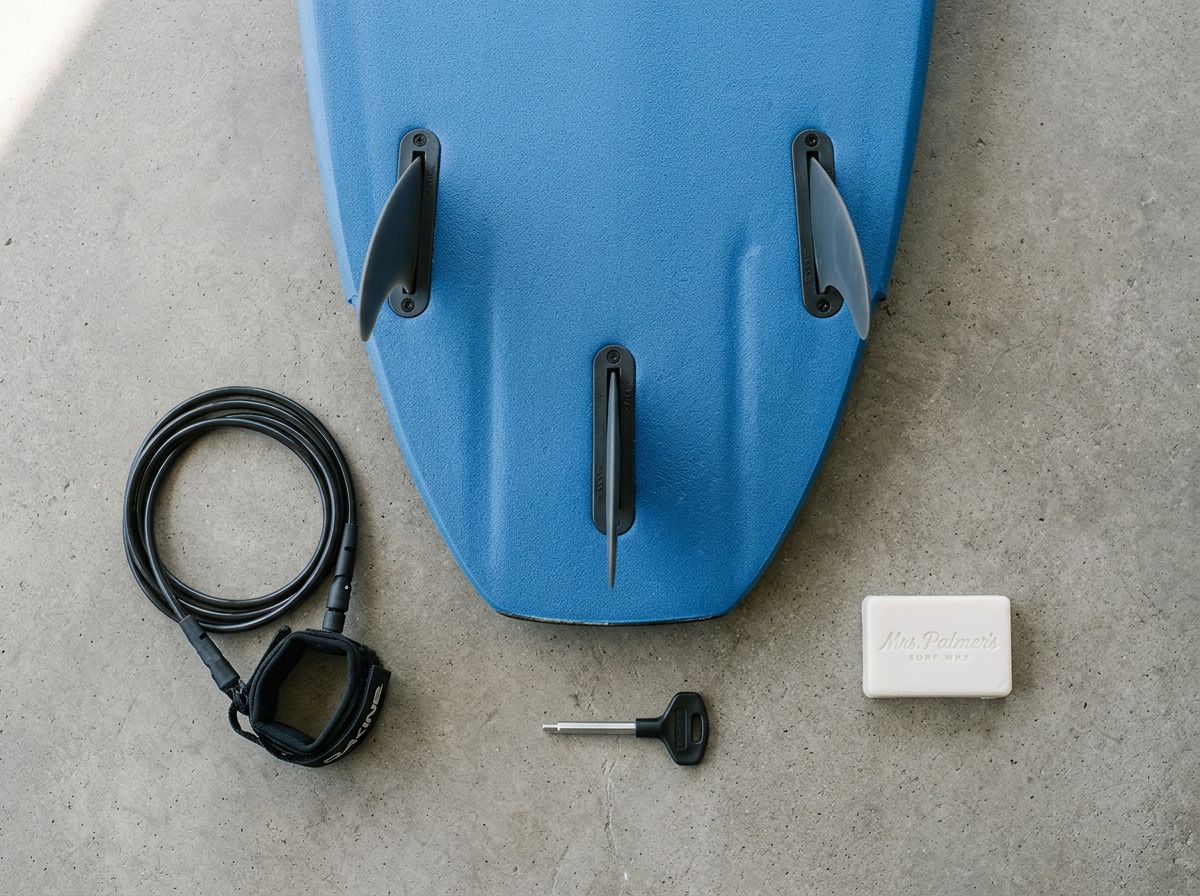
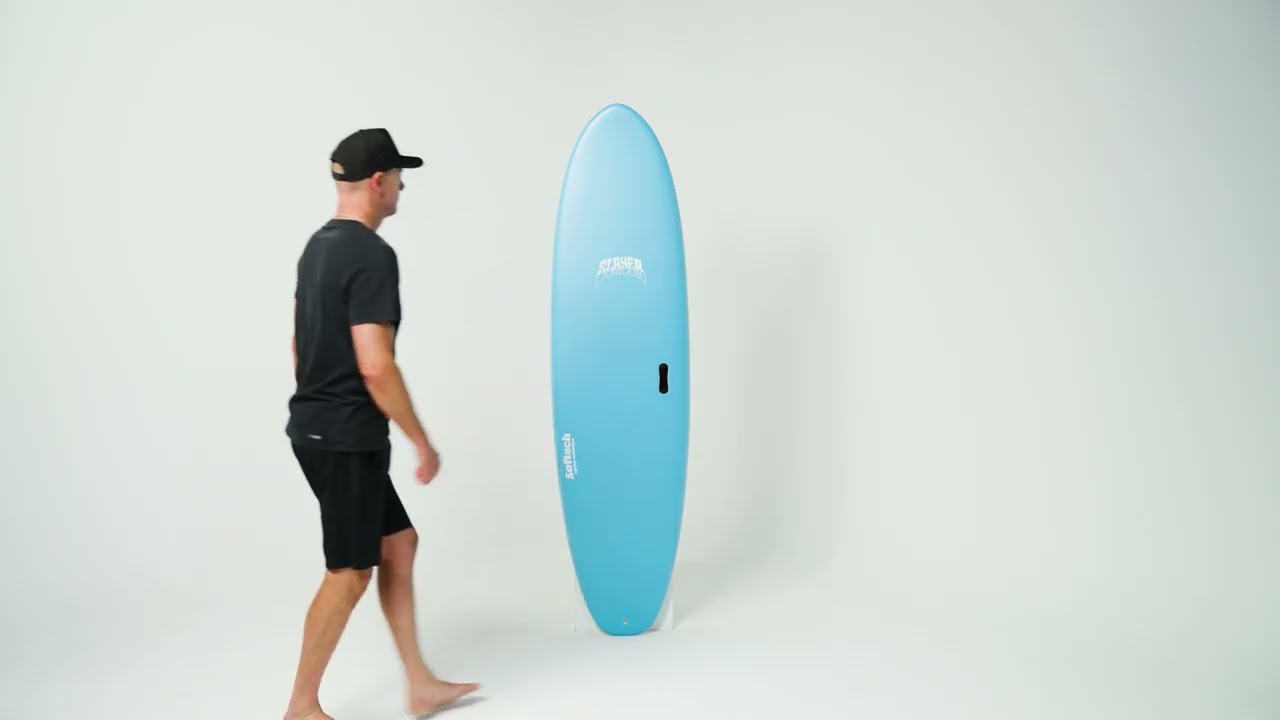
Epoxy-core soft tops such as the Softech Roller run performance outlines and real FCS II boxes, so you can swap fins the same way you would on a glassed board. Browse the fins category if your soft top takes removable fins, since the stock plastic set is usually the weakest part of the package. Big-volume mini mals round out the group for taller and heavier riders.
What the published scores say
Paddle Sesh rates the Wavestorm 8' and the Softech Roller level at 8.6 out of 10, with the Catch Surf Odysea Log 8' and South Bay Heritage 9' a tenth behind at 8.5. The Top Zone scores the shorter 6'6" Roller at 7.6, with construction its strongest sub-score at 8.3 and performance its weakest at 7.3. That spread is the whole story: foam boards score well on forgiveness and construction, and give ground on outright performance.
Price tracks the same order. Around $320 gets a Wavestorm, $330 to $340 buys a stiffer Odysea Log or a Roller, and $500 puts a 9' Heritage under a heavier rider. Nothing in that range is a bad board, so pick on rider weight and wave type rather than on the score alone.
Fins, leashes and wax
Most foam boards ship with soft plastic fins that are safe and slow. If the board has real boxes, a stiffer set adds drive as soon as you start trimming across a face. Leash choice matters more than people expect on a big foamie, because a 9' board loose in a crowd is dangerous. Our leash guide sets length against board size.
Textured EVA decks and full traction pads need no wax. Plain foam decks grip better with a thin coat of tropical wax where your chest and back foot sit, and the waxing guide covers temperature bands.
Making a foamie last
- Keep it out of a hot car. Heat delaminates foam decks faster than surf does.
- Rinse with fresh water and dry in shade, deck down, before storing.
- Check fin screws monthly for pull-through, which is the usual first failure.
- Seal any split in the slick bottom quickly, because a waterlogged core never comes back.
- Do not stack heavy boards on the deck in storage; foam takes a set.
When to move on
The signal is not time in the water, it is which waves you are catching. Once you are taking off on unbroken faces, turning off the bottom and running out of speed on the foamie, a stiffer soft top or a small-wave hard board is the next step. The small-wave board roundup and the surfboard reviews index cover what scores well at that stage. Plenty of surfers keep the foamie anyway for onshore days.
Sources
| Source | What it contributes |
|---|---|
| Paddle Sesh — Wavestorm 8' Classic Soft-Top Review | Rates the Wavestorm 8' at 8.6 out of 10 at around $320, calling it the best first surfboard on price and forgiveness while noting it will not grow with a rider forever. |
| Paddle Sesh — Catch Surf Odysea Log 8' Review | Rates the Odysea Log 8' at 8.5 out of 10 at around $330, describing it as stiffer and more responsive than budget foamies and a step up for beginners who are progressing. |
| Paddle Sesh — Softech Roller Soft-Top Review | Rates the Softech Roller at 8.6 out of 10 at around $340, positioning it for surfers who have outgrown a Wavestorm but do not want a glassed board. |
| Paddle Sesh — South Bay Heritage 9' Review | Rates the Heritage 9' at 8.5 out of 10 at around $500 and flags that most foam boards top out near 80 litres, which leaves riders over 200 pounds short on float. |
| The Top Zone — Softech Roller 6'6" Review | Scores the 6'6" Roller 7.6 out of 10 overall, with construction at 8.3 and performance at 7.3, showing where a shorter foamie gives ground. |
| FoamieCrew — Catch Surf Odysea Log 8'0 Review | Reports the 8'0 Log is far stiffer than expected for a foam board of that length, which is the trait that separates it from cheap soft tops. |
| FoamieCrew — Softech Handshaped 8'0 Review | Notes the mini-mal foam outline is decently stiff and allows late takeoffs, which is why advanced surfers still ride foamies on small days. |
| Catch Surf — Odysea collection | Official brand listing for current Odysea shapes, lengths and fin setups. |
Video guides
Related reading
FAQ
What size soft top surfboard should I get?
Most adult beginners between 60 and 80 kg land on an 8' board, which is why the Wavestorm 8' and Catch Surf Odysea Log 8' are the two most common first boards. Riders over 95 kg usually need 9' of length, because published reviews note that most foam boards top out around 80 litres and start to feel sluggish under a heavier rider.
How much does a good soft top surfboard cost?
The reviewed range runs from about $320 for a Wavestorm 8' Classic to roughly $500 for a South Bay Heritage 9'. A Catch Surf Odysea Log sits near $330 and a Softech Roller near $340. Anything far below that band usually cuts stringers or rail stiffness, which shows up as flex in surf over waist high.
Are soft top surfboards only for beginners?
No. FoamieCrew notes that a stiff foam mini mal allows late takeoffs, and experienced surfers keep foamies for small, crowded, shallow or closeout days when a glassed board is not worth the risk. The difference is construction: stiffened and epoxy-core soft tops surf far closer to a hard board than a bare budget foamie does.
Do you need to wax a soft top surfboard?
It depends on the deck. Boards with a full traction pad or a textured EVA deck usually need nothing. Boards with a plain foam deck grip better with a light coat of tropical wax on the chest and back foot area, applied thinly so the foam texture still shows through.
What is the difference between a Wavestorm and a Catch Surf Odysea Log?
Published reviews score them within a tenth of each other, 8.6 against 8.5, but they aim at different riders. The Wavestorm is the cheapest reliable way to stand up. The Odysea Log is stiffer and more responsive, so it holds a line and trims instead of washing sideways, which suits a beginner who is already catching unbroken waves.
How long does a soft top surfboard last?
Foam decks compress and delaminate faster than glass, and heat is the main killer. Rinse the board in fresh water, keep it out of a hot car and out of direct sun when it is not in use, and check the fin screws for pull-through each month. Treated that way, a mid-priced foamie holds up across several seasons of regular surfing.
When the foamie stops keeping up, the surfboard reviews index ranks current models by scores collected across retailers and editorial sources.