Wetsuit Size Chart
Three brands, three sets of numbers, one body. This page puts the official Xcel, Rip Curl and O'Neill wetsuit charts side by side so you can size a suit from your own height, weight and chest before you buy anything from our wetsuit review index.
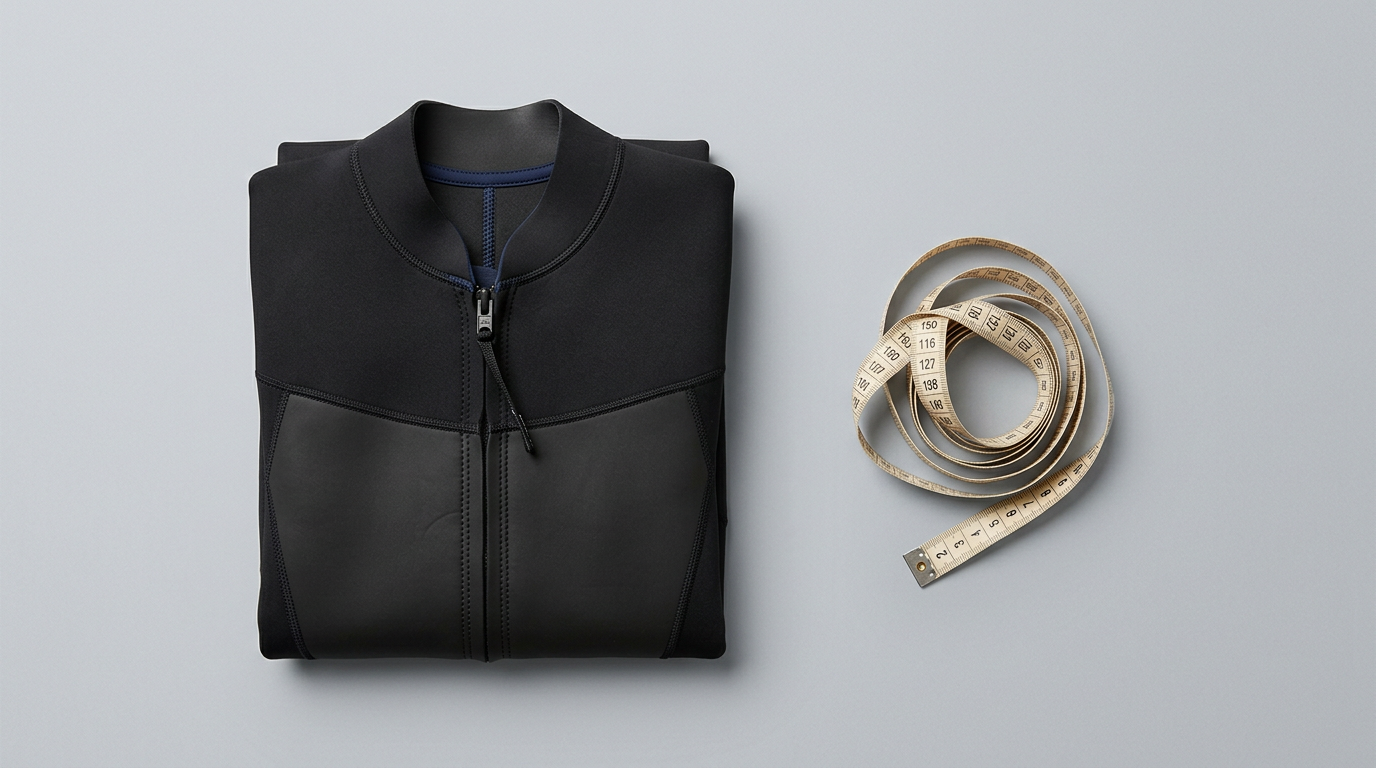
Original Surfex illustration.
Every number on this page is copied from the brand's own published size guide, linked in the sources table. Surfex does not sell wetsuits and takes no payment for placement.
- Measure height, weight, chest and waist first, then open the chart for the brand you are buying.
- Match chest and height before weight. Weight only breaks a tie.
- Long in the leg or torso at a normal chest girth? Take the tall (T) cut rather than the next letter up.
- Not every model runs every size, so check the size list on the individual suit before you commit.
Why wetsuit sizes ignore your clothing size
A wetsuit is sized to your body, not to a garment fit. Rip Curl puts it plainly in its own fit guide: a medium in boardshorts tells you nothing about a medium in neoprene. Brands build each size around a chest girth and a height window, then split that window into short, regular and tall so the arms and legs finish in the right place.
That is why the letter on the label matters less than the four numbers behind it. An Xcel M is built for a 39 in chest between 5'8" and 5'10". An MT keeps the same 39 in chest but shifts the height window up to 5'11" to 6'1". Same girth, more length, no baggy panels.
Take four measurements before you open a chart
Height and chest carry the most weight. Rip Curl's guide says to prioritise those two when your numbers straddle a boundary, because the neck and arm seals are where flushing costs you the most warmth. Waist decides how the suit sits through the middle, and weight is the tie-breaker when chest and height point at different sizes.
Use a soft tape, measure in your underwear, and keep your arms relaxed at your sides when you take the chest. Write the four numbers down once and reuse them for every brand, because you will be converting between inches and centimetres as you move from chart to chart.
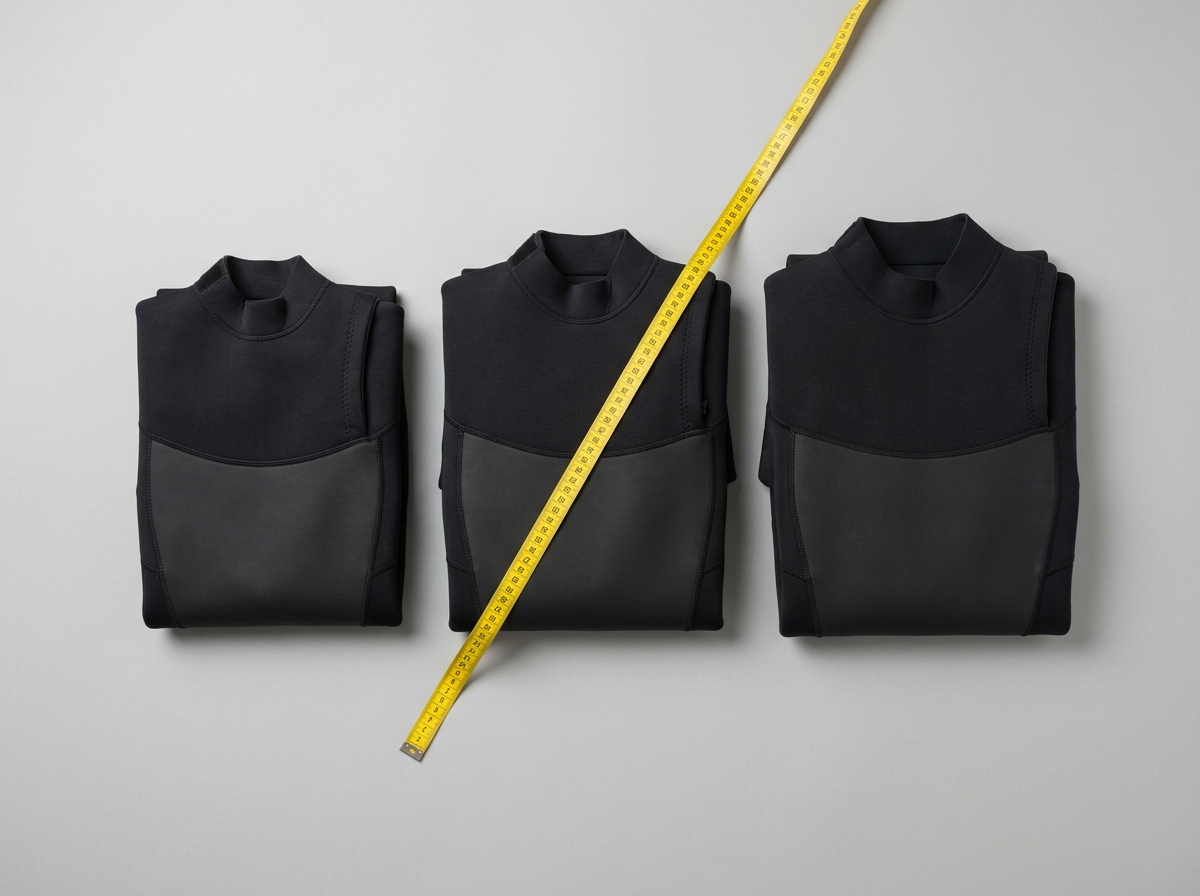
Between two sizes? The brands disagree
Xcel's chart carries a single instruction for borderline bodies: choose the next largest size. Rip Curl points the other way and tells you to fit the chest and height first, even if that leaves you in the smaller letter. Both work, and the tie-breaker is thickness. Buying a 4/3 or 5/4 for cold water argues for the smaller size, since thicker panels take up more room and a loose cold-water suit flushes on every duck dive.
The letters do not travel between brands
Compare the three charts and the large sizes drift. Xcel's L is a 41 in chest at 5'10" to 6'0" and 175 to 190 lb. Rip Curl's L is also a 41 in chest but is pegged to a 70 to 72 in height range. O'Neill's L runs 104 to 110 cm chest at 178 to 183 cm and 77 to 86 kg, which is a wider chest band than either American chart. Sizing by memory across brands is how people end up with a suit that seals at the neck and gaps at the lower back.
The practical fix: re-check the chart for each brand you shop, then read the size list on the individual model. Xcel states outright that not all sizes are available in every style, so a suit that runs MS and MT in one model may only offer M in another.
What a correct fit feels like on land
Dry, the suit should be a fight to zip and feel close everywhere. Look for three things once it is on: no loose pocket in the small of the back, no folds behind the knees, and a neck seal you can breathe against without straining. Squat down and reach both arms overhead. If the suit pulls your shoulders down or rides up the calves, the length is wrong and a tall or short cut usually fixes it faster than changing the letter.
Sizing checked, now pick the suit
With your numbers written down, the choice moves to warmth and budget. Temperate-water surfers usually land on a 3/2 such as the Rip Curl Dawn Patrol 3/2 or the O'Neill Hyperfreak 3/2, while colder coastlines push toward a 4/3 like the Xcel Comp X 4/3 or a hooded 5/4. Aggregate scores for every suit sit on our wetsuit reviews index, and looking after the one you buy starts with the wetsuit washing routine.
Sources
| Source | Key takeaway |
|---|---|
| Xcel Wetsuits — Official Size Chart | If you are in between sizes, we suggest choosing the next largest size. Not all sizes are available per style. |
| Rip Curl — Wetsuit Size Chart & Fit Guide | If your measurements fall between two sizes, always prioritize the best fit for chest and height. |
| Rip Curl — Official Size Guides | Rip Curl publishes men's, women's and kids' wetsuit measurements in inches, including neck, leg length and body length. |
| O'Neill — How do I find the right size wetsuit? | O'Neill lists height, weight, chest and waist in centimetres, with short (S), regular and tall (T) cuts inside each letter size. |
| Xcel — Water Temperature Guide | Thickness pairs with fit: the same size in a 5/4 hooded suit feels tighter than in a 3/2 because of the extra neoprene. |
Related reading
FAQ
How do I measure myself for a wetsuit?
Use a soft tailor's tape in your underwear. Take height against a wall with heels together, chest around the widest point with arms relaxed, and waist at your natural waistline. Women also measure hips at the widest point. Rip Curl's fit guide notes that height and chest are the two measurements that decide the size.
What size wetsuit should I buy if I am between two sizes?
Xcel's official chart says to take the next largest size when you fall between two. Rip Curl takes a slightly different line and says to prioritise the best fit for chest and height, because those two points control how the suit seals at the neck and arms.
What do the S and T letters after a wetsuit size mean?
S means short and T means tall within the same chest measurement. An Xcel MT covers 5'11" to 6'1" with the same 39 in chest as a regular M, while an MS suits a shorter torso at the same girth. Same trick at O'Neill and Rip Curl, so a tall surfer with a normal chest does not have to size up to get length.
Are wetsuit sizes the same across brands?
No. An Xcel large lists a 41 in chest across 5'10" to 6'0", a Rip Curl large lists 41 in chest across 70 to 72 in height, and an O'Neill large lists 104 to 110 cm chest at 178 to 183 cm. The letters line up loosely, but the height and weight bands do not, so check the specific brand's chart every time.
Should a wetsuit feel tight when it is dry?
Yes. A dry suit should feel snug enough that you work to get the zip closed and there are no loose pockets at the lower back, behind the knees or under the arms. Neoprene relaxes once wet, so a suit that feels comfortable dry will usually flush cold water.
Does wetsuit thickness change the size I need?
The size stays the same but the feel does not. A 5/4 hooded suit in your size will feel tighter than a 3/2 in the same size because there is more neoprene in the panels. Keep the size and expect a stiffer first few sessions rather than sizing up.
Charts reproduced from 5 official brand sources covering men's, women's and kids' wetsuit sizing at Xcel, Rip Curl and O'Neill.