How to Choose a Mid Length Surfboard
Two boards can both read 7'0" on the stringer and surf nothing alike. One is a flat-rockered glider built to catch everything, the other has a pulled tail and enough rocker to hold a steep face. Shops now split the category into four distinct styles, and picking the wrong one is the reason so many mid lengths end up unsold in the garage. This guide pulls the published length bands, volume ranges and fin specs from surf shop and shaper sources into one place, then shows which numbers change how the board feels. Late winter swells in the southern hemisphere and the flat weeks of a northern summer both push riders the same direction, so it is a fair time of year to add glide.
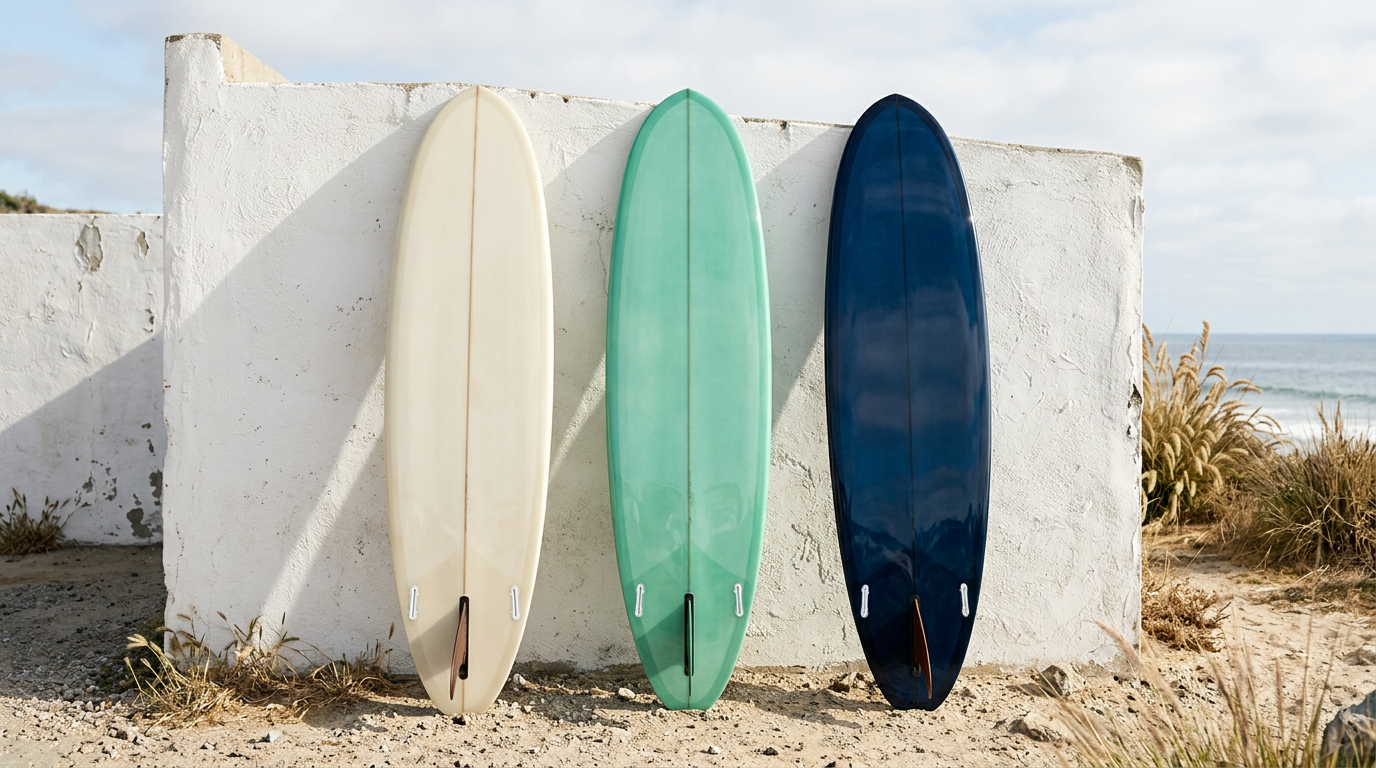
Surfex is an aggregator. Every number here comes from a published guide linked in the sources section, and every board score comes from ratings collected across retailers and editorial outlets.
| Rider level | Length | What changes |
|---|---|---|
| Beginner to intermediate | 7'0" – 7'4" | More volume, wider outline |
| Intermediate | 6'8" – 7'0" | Balanced volume, versatile design |
| Advanced | 6'4" – 6'8" | Lower volume, performance focused |
Length band and 35 to 50 litre volume range published by nanazero. Natural Necessity stretches the category out to 8'0" at the long end.
Who actually buys a mid length
Boardshop.co.uk describes two buyers, and the split is accurate. The first is a shortboarder whose paddle power is fading and whose wave count in a crowd has gone with it. The second is stepping down from a foam board or a mal and wants something that still catches waves while turning off the tail.
Those two riders want different boards. The first is better served by a shorter, livelier outline. The second wants length, foam and a flat rocker line. Deciding which one you are takes thirty seconds and saves a wasted purchase.
Length, volume and the number that matters
nanazero puts the category at 6'4" to 7'4" and 35 to 50 litres, and maps length to ability: 7'0" to 7'4" for beginner to intermediate, 6'8" to 7'0" for intermediate, 6'4" to 6'8" for advanced riders on a performance shape. Natural Necessity runs the top of the range out to 8'0".
Volume is the number to fix first. Length is a consequence of it. A 90 kg surfer on a 6'10" at 42 litres gets a different board to a 65 kg surfer on the same length at 42 litres, and only one of them is riding it as designed. Run your weight through the surfboard volume calculator before you shortlist anything.
The four mid length styles
Mini mids sit at 6'4" to 6'8" and exist to give a shortboarder paddle help without a full personality change. Everyday mids carry flatter rocker and more glide, which is the version most people picture. The Channel Islands CI Mid is the reference point here: low entry rocker, foam pushed forward, double-barrel concave and a 2+1 fin set built with True Ames.
Performance mids add rocker, pull the nose and tail in, and change the bottom contours so the board holds on a steeper face. The Harley Ingleby Mid 6 and the Channel Islands M23 both live there, and plenty of riders use them as step-ups. Mid twins are the fourth branch, and a board like the Pukas Magnetic is shaped around two fins rather than converted to them. Compare the whole twin fin category if that direction appeals.
Fin setups and the sizes brands publish
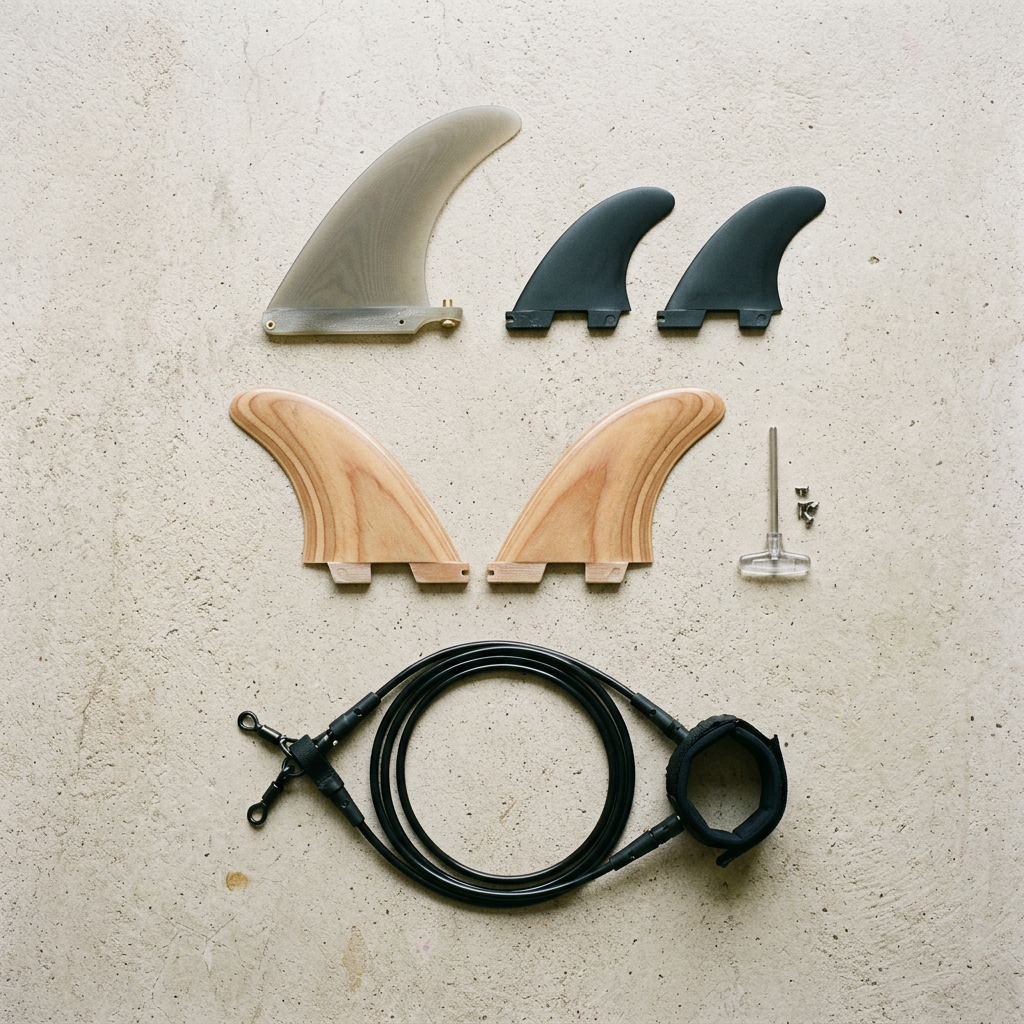
2+1 is the standard because it gives you two boards. Leave the side bites in and the tail holds through a turn; pull them out and the board pivots and trims like a single fin. Channel Islands publishes exact side bite sizes for the CI Mid: 3.6 inch for surfers 160 lb and under, 4.0 inch above that.
Centre fin depth and box position are the cheap adjustments. Back in the box for hold, forward to loosen the tail. Our surfboard fin guide covers templates and materials, and the fins category lists what current models score.
Where a mid length shines
Natural Necessity names point breaks, cruisy beach breaks and soft reefs, waist to head-high. That matches how these boards work: they need a face to run along rather than a wedge to launch off. In genuinely weak surf a wider tail and flatter rocker carry you further, which is why an everyday mid outperforms a performance one on an average day.
If your home break is closing out at head-high, the mid is not the answer. Read the forecast properly with our surf report guide and check whether the swell period actually supports the board you are buying.
Mid length or longboard
A log rewards trim and cross-stepping in slow waves. A mid holds a rail, turns from the middle of the board and duck dives with practice. Riders who want both usually own a mid and rent the log. If you are leaning the other way, the longboard buying guide covers sizing and fins for that side of the fence, and the Channel Islands and Harley Ingleby brand pages show how each shaper handles the crossover.
Mistakes worth avoiding
- Buying a performance mid for waves that never get steep enough to use the rocker.
- Choosing length off a chart and ignoring litres, then floating too high or sinking at rest.
- Dropping a twin set into a 2+1 board and blaming the board for the feel.
- Sizing a mini mid like an everyday mid, which gives up the paddle advantage you bought it for.
- Taking a 7'2" into a packed beach break before you can duck dive it.
Mid lengths reviewed on Surfex
Aggregate scores collected from retailer and editorial ratings, shown on a 10 point scale.
| Board | Style | Aggregate score |
|---|---|---|
| Channel Islands CI Mid | Everyday mid, 2+1 | 9.2 |
| Harley Ingleby Mid 6 | Performance mid | 9.2 |
| Lost Crowd Killer | Wave-count machine | 9.0 |
| Channel Islands M23 | Performance mid outline | 8.8 |
| Pukas Magnetic | Mid twin | 8.8 |
| Firewire Greedy Beaver | Everyday mid | 8.0 |
Sources
| Source | What it contributes |
|---|---|
| Boardshop.co.uk — The Mid Length Surfboard User Guide | Splits mid lengths into four shop categories: mini mids at 6'4" to 6'8", everyday mids, performance mids and mid twins, with model examples in each. |
| Natural Necessity Surf Shop — Best Mid-Length Surfboards | Puts the category between 6'6" and 8'0" and names waist to head-high point breaks, cruisy beach breaks and soft reefs as the conditions they suit best. |
| nanazero — Mid-length Surfboards: Complete Guide | Publishes a 6'4" to 7'4" length band at 35 to 50 litres, and a skill table: 7'0"–7'4" for beginner to intermediate, 6'8"–7'0" intermediate, 6'4"–6'8" advanced. |
| Channel Islands Surfboards — CI Mid | Documents the Devon Howard collaboration: low entry rocker, foam forward, double-barrel concave, and a True Ames 2+1 set with 3.6" side bites under 160 lb and 4.0" over. |
| Lost Surfboards — Crowd Killer | Shows how a longer performance outline is built around paddle speed and wave count rather than pure length. |
Video guides
Related reading
FAQ
What size mid length surfboard should I get?
nanazero publishes a skill-based table: 7'0" to 7'4" for beginner to intermediate surfers, 6'8" to 7'0" for intermediate, and 6'4" to 6'8" for advanced riders wanting a performance outline. Volume sits between 35 and 50 litres across that band, so match the litres to your weight first and let the length follow.
What is considered a mid length surfboard?
Boards longer than a shortboard and shorter than a mal. Natural Necessity puts the category between 6'6" and 8'0", while nanazero uses a tighter 6'4" to 7'4" band. The outline matters more than the tape measure: medium to wide nose, full rails and enough foam forward to paddle in early.
Is a mid length good for a beginner?
Yes, once you are past a foam board. The extra length and volume raise wave count, and the wider outline is stable enough to stand up on. The trade is handling in the impact zone, so pick a smaller peak with room rather than a crowded shifty beach break while you learn to duck dive a bigger board.
What fin setup works best on a mid length?
2+1 is the default because the centre fin gives drive and the side bites add hold. Channel Islands specs 3.6 inch side bites for surfers under 160 lb and 4.0 inch for surfers over that on the CI Mid. Twin and quad options exist, but the outline has to be designed around them rather than the fins simply swapped.
Mid length or longboard?
A longboard trims and noserides in soft, slow waves and needs room to turn. A mid length holds a rail through steeper sections and duck dives with practice. If you already ride a shortboard and want wave count on average days, a mid is the smaller step. If the goal is cross-stepping, buy the longboard.
What waves suit a mid length?
Natural Necessity names point breaks, cruisy beach breaks and soft reefs, with waist to head-high the sweet spot. Performance mids with more rocker and a pulled tail extend that into steeper, faster surf, which is where models like the Harley Ingleby Mid 6 are aimed.
Once you know the style and fin setup you want, the surfboard reviews section ranks current models by scores collected across retailers and editorial sources.