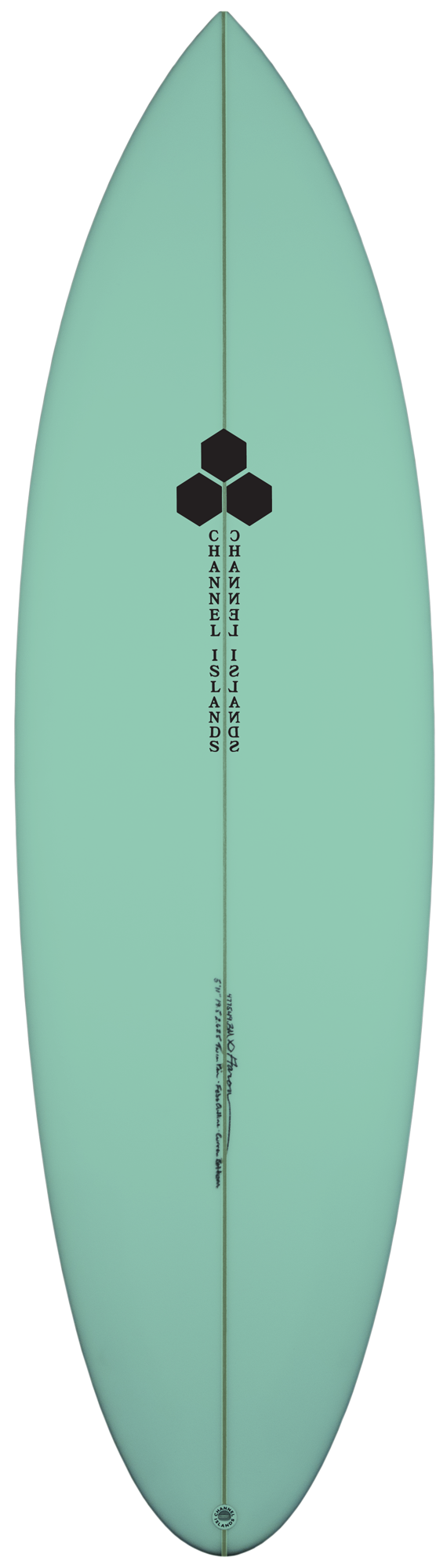
Channel Islands Twin Pin Twin Fin — full deck view

Photo: Channel Islands Surfboards

Channel Islands
Channel Islands · Twin Fin

Channel Islands Twin Pin Review

A Britt Merrick and Mikey February collaboration: a twin-finned pintail built to keep the loose, drifty twin feel while adding enough hold and projection that you never wish for a third fin. Channel Islands lists a 25.8–47.8 L volume range across the size run.

Quick specs
Type
Twin-fin pintail / all-rounder
Skill level
Improver → Advanced
Wave range
Waist-high to well overhead
Bottom contour
Flat through the nose → slight roll → vee in the back half
Rails
Low — CI recommends riding 1/8" thicker than your shortboard
Fin setup
Twin (CI Twin Pin template, between keel and upright)

Channel Islands describes the Twin Pin as a collaboration between Britt Merrick and Mikey February, designed so that a twin fin never leaves you wishing for a third fin or a trailer. The pintail is doing the work a stabiliser normally would.

The bottom runs flat from the nose, into a slight roll, then vee in the back half. Reviewers consistently describe the result as buttery — responsive without ever feeling loose or skatey.

CI's own sizing guidance is deliberately wide: Mikey February rides a 6'0" shortboard and picks Twin Pins at 5'9" and 5'11", while Britt rides his a couple of inches longer than his regular boards at Rincon.

Pros & cons
  • Holds a rail far better than a keel twin — usable well overhead
  • Buttery, stylish trim without feeling stiff
  • Genuinely wide wave range for a twin fin
  • The dedicated CI twin template balances drive, hold and release
  • Low rails mean you need to size up in thickness to keep the paddle power
  • No third-fin option — the pin does the holding, not a trailer
  • Less skatey in ankle-high surf than a keel fish like the Seaside

How it surfs

The Twin Pin's point of difference among modern twins is hold. Where a keel fish washes out once the wave stands up, the pulled pintail and the purpose-built fin template let this one keep a rail through overhead faces. Reviewers repeatedly place its ceiling far higher than a typical twin.

Boardshop UK's review — quoted on Blink Surf — describes it as usable by "pretty much anyone from higher level beginner right through to a pro", with the caveat that the low rails mean you should add a couple of litres and a couple of inches over your normal shortboard.

If your local waves get real more than half the time and you still want the twin-fin feel, this is the twin to buy. If they rarely break above shoulder-high, a keel twin like the Seaside is the better value.

Volume & sizing chart

Use the chart below as a starting point. Add half a litre if you are less experienced, subtract half a litre for a looser feel.

SizeVolumeRider weightBest for
5'5"25.8 L55–62 kgAdvanced
5'8"29.5 L62–72 kgIntermediate+
5'10"32.5 L70–80 kgIntermediate
6'0"35.5 L78–88 kgIntermediate
6'3"40.0 L88–98 kgImprover
6'9"47.8 L98+ kgImprover

How it compares

BoardBest atWave rangeAggregate score
Channel Islands Twin PinHigh-hold twin pintailWaist to well overhead9.0
Firewire SeasideSmall-wave keel twinAnkle to shoulder9.0
Lost RNF '96Performance retro fishKnee to head-high9.2
Haydenshapes Hypto KryptoHybrid all-rounderWaist to overhead9.3

Recommended fin setups

  • CI Twin Pin template (Futures)Designed for this board — between a keel and an upright.
  • Futures Machado KeelMore classic drive and glide, less vertical bite.
  • FCS II Modern KeelA workable FCS alternative if your board is FCS-plugged.

Verdict

Verified Channel Islands, Blink Surf and Boardshop UK sources agree on the same picture: the Twin Pin is the twin fin with the widest wave range, trading a little small-wave skate for genuine overhead hold. No verified source publishes a retail price we can quote, so no price is listed here.

Estimated score: 9.0 / 10
Estimated from 3 independent sources — none publish numeric scores. See sources below.

What reviewers around the web are saying

Surfex does not test gear directly. Below are independent retailer and editorial sources. When a source publishes a numeric score, it is normalized to a five-point scale; otherwise the source is listed without a score.

Estimated score
9.0/ 10
9.0
3 sources, none scored
SourceScoreSummary
Blink Surf — Channel Islands Twin Pin ReviewNo numeric score"Rated across moveability, power, skill and speed, with a listed 25.8–47.8 L volume range and a waist-to-well-overhead ideal wave height."
Boardshop UK (via Blink Surf)No numeric score"This is such a fun board to surf. A lot of people will find this board perfect as their daily driver — its wave range and ability to still fly in varied conditions make it a perfect option for at home and travelling."
Channel Islands SurfboardsNo numeric score"Designed as an all-rounder, it helps you rip in anything from lame little waves to double overhead rifling walls."

Frequently asked questions

What size Twin Pin should I ride?+

Channel Islands recommends riding it at least 1/8" thicker than your shortboard because the rails are low. Most riders go the same length to two inches longer than their everyday board, depending on wave size.

Can the Twin Pin handle overhead waves?+

Yes — that is its point of difference. Channel Islands rates it from small waves through to double-overhead walls, and the pintail plus the dedicated fin template supply the hold a keel twin lacks.

What fins work best in the Twin Pin?+

The purpose-built CI Twin Pin template, which sits between a keel and an upright fin. A Machado-style keel works but trades vertical bite for glide.

Twin Pin vs Firewire Seaside — which one?+

The Seaside is the small-wave specialist; the Twin Pin is the one with a high ceiling. Pick by how often your local breaks above shoulder-high.

Is the Twin Pin a beginner board?+

No. Improvers and up. Beginners should start on a soft-top — see our beginner surfboard guide.