Fish Surfboard Guide
A fish is the board that keeps working on the days everything else feels dead. Width, flat rocker and a wide swallow tail let it carry speed across a soft wall, which is why a design drawn by Steve Lis in the early 1970s still sells in 2026. The problem is that "fish" now covers two different boards. A retro keel fish and a modern winged quad share a nose outline and almost nothing else in how they ride, and ordering the wrong one at the wrong size is the most common way surfers waste a board purchase. This guide pulls published sizing bands, dimension ranges and wave brackets from shaper and retailer sources into one place, then lists the fish outlines Surfex tracks with their aggregate scores. Southern hemisphere spring and the small weeks either side of a northern summer are exactly when these boards earn their rack space.

Surfex is an aggregator. Every figure here comes from a published guide linked in the sources section, and every board score comes from ratings collected across retailers and editorial outlets.
| Rider | Length | Volume | Why |
|---|---|---|---|
| Beginner | Up to 6" to 12" over your height | Plenty of float, err high | Width and thickness do the wave catching |
| Intermediate and advanced | 3" to 5" under your height | +2 L to +5 L over your shortboard | Foam replaces the length you dropped |
Length and volume bands published by 1974 Surfboards.
What actually makes a board a fish
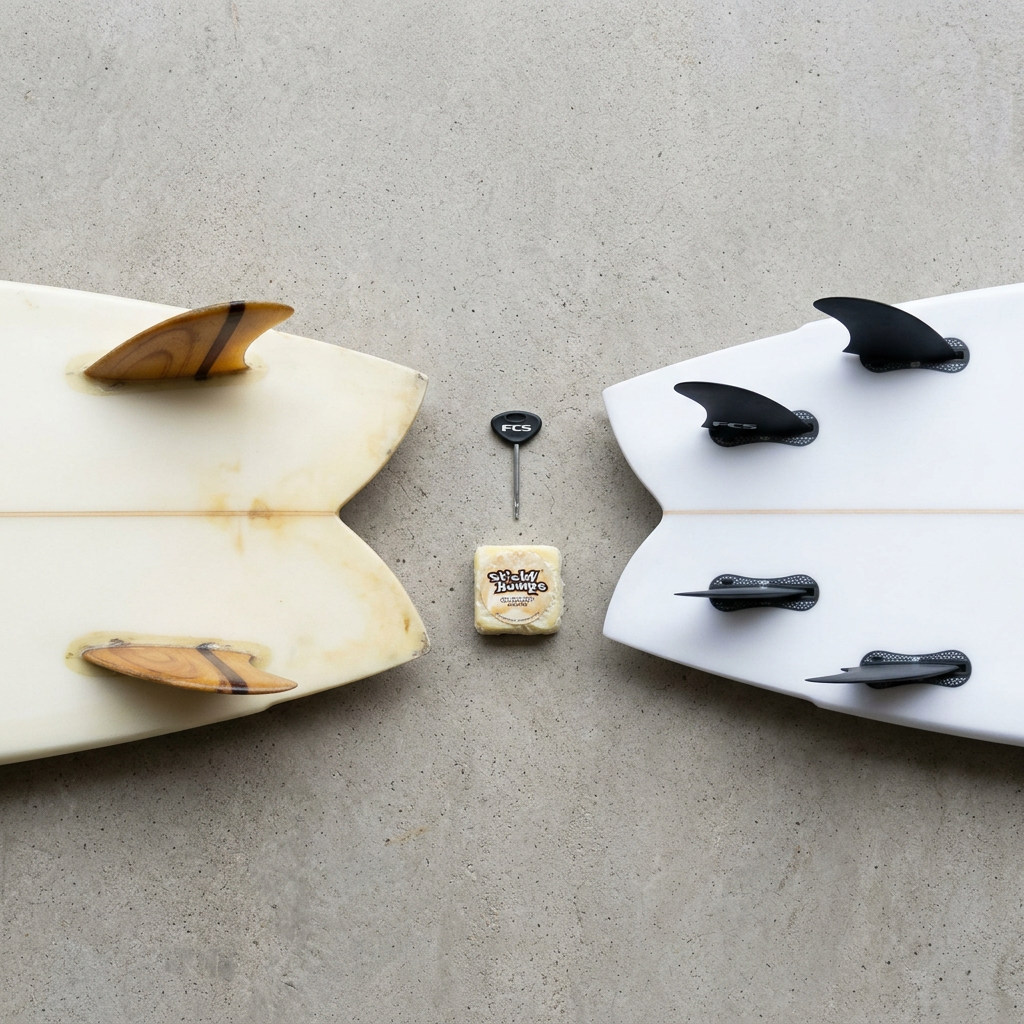
Three features do the work: width through the middle, a low rocker line, and a deep swallow tail split into two points. Steve Lis drew the first ones in the early 1970s as kneeboards, and 1974 Surfboards notes the outline survived almost unchanged while shapers rebuilt the rocker, rails, bottom contours and fin placement underneath it.
The result is a board that planes early and holds speed through the dead sections of a small wave. If you want the same effect from a different direction, a wide mid length trades the tail area for length instead.
Retro fish or modern fish
This is the decision that matters most, and both boards sit in the same rack labelled fish. 1974 Surfboards puts a retro fish at wider with a straighter rocker, easy to catch waves on and built for relaxed lines in weak to medium surf with full walls. A modern fish is narrower with more rocker, so it surfs much closer to a current shortboard.
The modern branch has a clear origin. Lost Surfboards documents the Round Nose Fish built for Chris Ward and Cory Lopez in the mid 1990s, the boards behind the 1997 film 5'5" x 19 1/4" that took small wave shapes into serious waves. The Lost RNF 96 is a direct descendant, and Lost still lists it beside a full run of modern variations.
Sizing: shorter than you think, fatter than you think
1974 Surfboards publishes two clean bands. Beginners ride a fish up to 6 to 12 inches taller than their own height. Intermediate and advanced surfers go 3 to 5 inches shorter than their height, then add 2 to 5 litres over their normal shortboard volume. Skipping that second half is the classic mistake, and it turns a wave magnet into a board that will not paddle.
Work out your baseline litres first with the surfboard volume calculator, then apply the fish adjustment on top. Width matters as much as the number. Degree 33 points out that a wider fish floats better and paddles easier regardless of what the volume figure says.
Keels, quads and what each one gives up
1974 Surfboards describes the keel twin as the more locked in setup: the larger fin surface accumulates pressure, so the board drives harder and holds a longer line. A quad lets water flow between the fins more freely, which reads as looser and more performance oriented underfoot.
In practice that means keels like the FCS II Modern Keel or the Futures Rasta Keel for soft full walls, and a quad set such as the FCS II Split Keel once the wave stands up. The wider fins category covers templates outside the keel family.
Matching the fish to the forecast
Degree 33 draws the line simply. Retro fish for 2 to 6 ft, quad or hybrid fish once the surf runs 3 ft to overhead. Beyond that the shape stops helping, and 1974 Surfboards is direct about it: low rocker wide tail boards are not ideal for tubular or powerful waves.
Two boards cover most of that spread. A keel fish such as the Firewire Seaside for the gutless days, and something with a pulled tail for the rest. If the forecast never gets past waist high, the small wave surfboard guide compares fish against grovelers directly.
PU or epoxy in a fish
1974 Surfboards recommends a PU blank for an authentic retro fish, because the extra weight gives a more predictable feel underfoot and suits smooth relaxed lines. EPS and XPS blanks are lighter and more responsive, which the same source pairs with modern fish shapes and smaller, weaker waves.
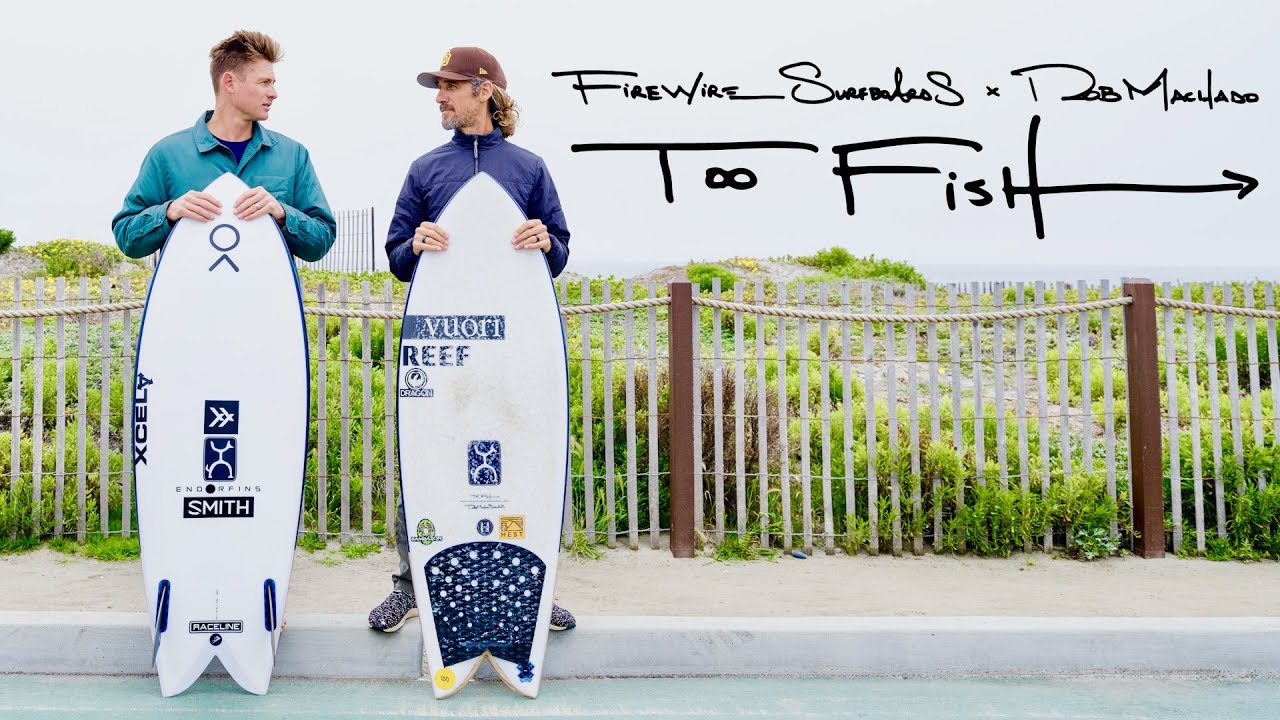
Brands sit on both sides. Firewire builds its Machado keel fish in light composite constructions, while plenty of hand shapers stay with polyurethane. The epoxy versus PU comparison covers the durability and flex trade in full.
Mistakes that waste the purchase
- Cutting 5 inches off your shortboard length without adding the litres back.
- Buying a retro fish as a first board at performance dimensions.
- Running keels in a narrow modern tail and wondering why it will not turn tight.
- Taking a flat rocker fish into hollow overhead surf and blaming the shape.
- Reading only the volume number and ignoring width, which drives paddle speed.
Fish outlines reviewed on Surfex
Aggregate scores collected from retailer and editorial ratings, shown on a 10 point scale.
| Board | Style | Aggregate score |
|---|---|---|
| Lost RNF 96 | Modern fish, 90s outline | 9.2 |
| Lost Pisces | Mason Ho twin fish | 9.1 |
| Firewire Seaside | Keel fish | 9.0 |
| Firewire Seaside and Beyond | Longer keel fish | 9.0 |
| Firewire Sweet Potato | Ultra wide small wave fish | 9.0 |
| Channel Islands Fishbeard | Fish and groveler hybrid | 8.9 |
| Slater Designs Great White Twin | Performance leaning twin | 8.9 |
| Pukas Flying Diamond | Diamond tail twin | 8.7 |
Fish fin sets reviewed on Surfex
| Fin set | Type | Aggregate score |
|---|---|---|
| FCS II Split Keel Quad | Keel split into a quad | 10.0 |
| FCS II Modern Keel | Keel twin | 8.9 |
| Futures Rasta Keel | Wood keel twin | 8.9 |
| FCS MR Twin | Upright twin template | 8.9 |
Sources
| Source | What it contributes |
|---|---|
| 1974 Surfboards — How to Choose a Fish Surfboard | Publishes the sizing bands used here: beginners up to 6 to 12 inches over their height, intermediate and advanced riders 3 to 5 inches under their height with 2 to 5 litres added over their normal shortboard. Also separates retro fish from modern fish by rocker and width, and explains why keels drive harder than quads. |
| Degree 33 — Fish Surfboards, What Size Should I Buy? | Sets the wave brackets this guide uses: a retro fish for 2 to 6 ft, a quad or hybrid fish once the surf runs 3 ft to overhead. Notes fish sizes now stretch to 8 ft and that width drives paddle speed as much as length. |
| Surf Holidays — Surfboard Guides: The Retro Board | Gives the classic fish dimension range of 5'5" to 7'0" long, 18.5" to 21" wide and 2.25" to 3" thick, and points out that the shorter and wider the board, the more genuinely retro the shape. |
| Lost Surfboards — RNF '96 design notes | Matt Biolos documents the mid 90s Round Nose Fish built for Chris Ward and Cory Lopez, the boards behind the 1997 film 5'5" x 19 1/4" that pushed the fish outline into performance surfing. |
| Firewire Surfboards — Seaside | Official product page for the Rob Machado keel fish, including the Machado Twin Keel and Seaside Quad fin templates that ship alongside it. |
Video guides
Related reading
FAQ
What size fish surfboard should I get?
1974 Surfboards splits it by ability. A beginner should be on a fish up to 6 to 12 inches taller than they are, because the extra length plus the width makes wave catching easy. Intermediate and advanced surfers go the other way, 3 to 5 inches under their height, and add 2 to 5 litres over the volume of their normal shortboard so the shorter board still paddles.
Are fish surfboards good for beginners?
They can be, in the right size. Degree 33 notes the thicker rails and extra width give a fish strong flotation, and Surf Holidays describes the shape as buoyant and stable enough for beginners moving toward intermediate waves. The catch is length. A fish cut down to a short, high performance size is a poor first board, so a beginner should stay well above their height.
What is the difference between a retro fish and a modern fish?
1974 Surfboards puts the difference in the rocker and the width rather than the outline. A retro fish is wider with a straighter rocker, which makes it easy to get into waves and suited to relaxed lines. A modern fish is narrower with more rocker, often with a wing to pull the tail in, and surfs much closer to a current performance board.
Should I run keel twins or a quad in a fish?
1974 Surfboards describes the keel twin as more locked in with extra drive, because the larger fin area builds pressure through a turn. A quad lets water pass between the fins more easily, so it feels looser and more high performance. Keels for soft full walls, quads once the wave has some steepness.
What size waves are fish surfboards good in?
Degree 33 puts a retro fish in 2 to 6 ft and moves you to a quad or hybrid fish once the surf runs 3 ft to overhead. Above that the design runs out of road. 1974 Surfboards states plainly that low rocker wide tail boards are not ideal for tubular or powerful waves.
What are the standard fish surfboard dimensions?
Surf Holidays gives the classic range as 5'5" to 7'0" long, 18.5" to 21" wide and 2.25" to 3" thick, and adds that the shorter and fatter the board, the more genuinely retro the shape. Modern fish outlines now stretch well past that, with Degree 33 noting fish built up to 8 ft.
Once you know whether you want a keel fish or a modern quad, the twin fin and fish reviews section ranks current models by scores collected across retailers and editorial sources.