How to Choose a Wetsuit
Cold water pulls heat out of you roughly 25 times faster than air at the same temperature, which is why a session that felt fine on the beach turns into shivering fifteen minutes after the first duck dive. A wetsuit fixes that by holding a thin layer of water against your skin long enough for your body to warm it. Every decision you make when buying one, from millimetres to seams to how you get in, is really a decision about how much of that warm layer stays put. Four numbers matter: water temperature, thickness, seam type and fit. Get those right and the price tier barely changes the outcome. This guide pulls the published temperature bands, seam ratings and zip comparisons from brand and retailer guides into one place, then lists the suits Surfex tracks with their aggregate scores. Late August is the useful moment to sort it out, with northern autumn swell arriving and southern water still at its coldest.
Surfex is an aggregator. Every number here comes from a published guide linked in the sources section, and every suit score comes from ratings collected across retailers and editorial outlets.
| Water temperature | Thickness | Suit type | Accessories |
|---|---|---|---|
| Above 20 °C / 68 °F | 2/2 mm or lycra | Shorty or neoprene top | Nothing extra |
| 17 – 20 °C / 63 – 68 °F | 3/2 mm | Full suit | Nothing extra |
| 14 – 17 °C / 57 – 63 °F | 3/2 or 4/3 mm | Full suit | Optional 2 mm boots |
| 11 – 14 °C / 52 – 57 °F | 4/3 mm | Full suit | Boots |
| 8 – 11 °C / 46 – 52 °F | 5/4 mm | Full suit with hood | Hood, boots, gloves |
| Below 8 °C / 46 °F | 5/4 or 6/5 mm | Hooded full suit | 3 mm hood, 5 mm boots, 3 mm gloves |
Temperature bands published by Picture Organic Clothing.
Start with water temperature, not air
The number on a suit label describes millimetres of neoprene, and the only thing that should set it is the water you surf in during the coldest months you actually paddle out. A 4/3 reads as 4 mm across the torso and 3 mm on the arms and legs, thinner where you need to move. A three digit label like 5/4/3 adds a third figure for the arms.
Picture publishes the band table most brands work from, and it lines up with what surfers buy: a 3/2 for 17 to 20 °C, a 4/3 once the water sits between 11 and 14 °C, and a hooded 5/4 below that. If you want the longer version of that ladder including boots and glove thicknesses, the wetsuit thickness guide covers each band on its own.
One practical rule saves money. Buy for the coldest water you surf regularly rather than the average. A 4/3 in 18 °C water for a short session is survivable. A 3/2 in 12 °C water is not, and no amount of accessories fixes it.
Seams leak before neoprene does
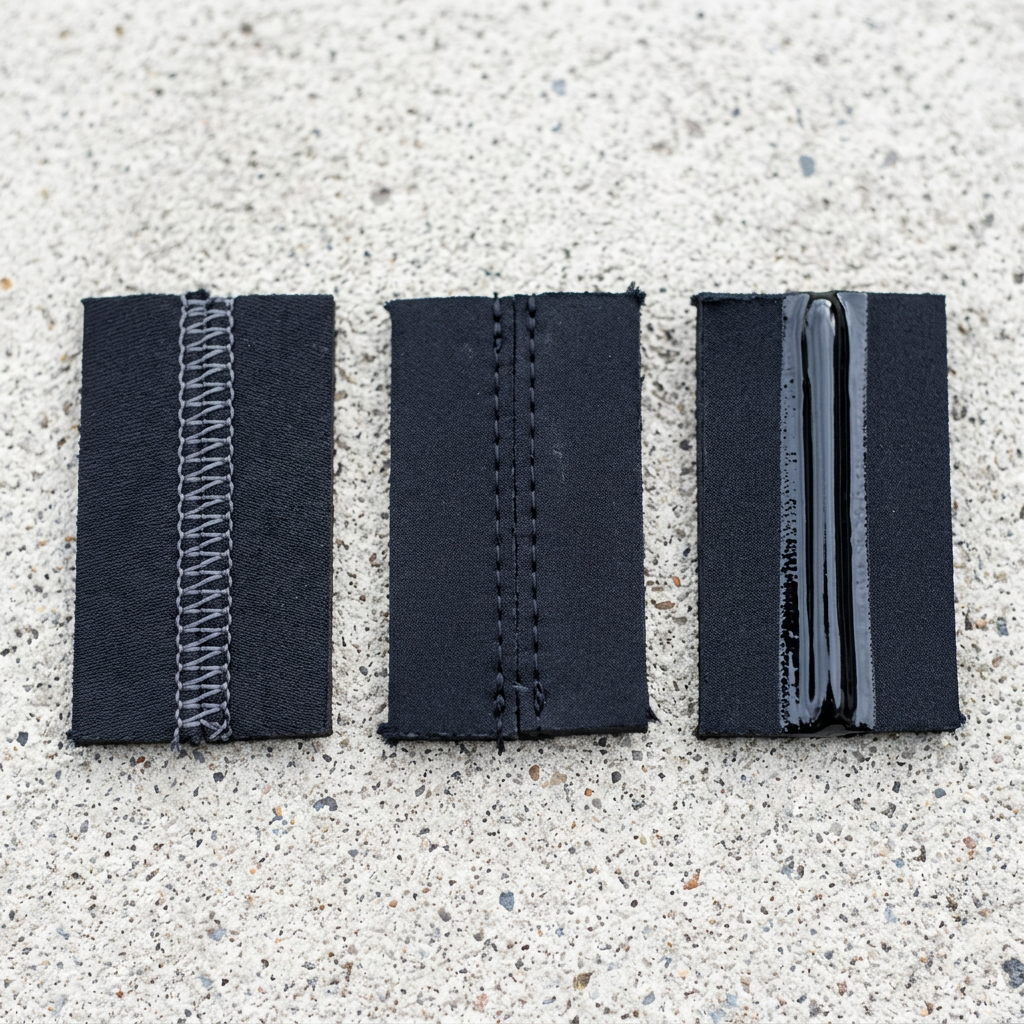
Two suits at the same thickness can feel a season apart, and the difference is usually stitching. A flatlock seam runs the needle straight through both panels, so every stitch is a hole. Wetsuit Center places that construction above 68 °F water, where a slow trickle does not matter, and rules it out below that.
Glued and blind stitched, written GBS on most spec sheets, glues the panels first then stitches only part way into the neoprene so the needle never reaches the far side. That is the default for 3/2 and 4/3 suits. Once the water drops under about 13 °C, the seams get taped internally or coated with a liquid rubber bead on the outside, which is most of what you pay extra for in a winter suit.
Back zip, chest zip or zipless
A back zip opens the whole spine, so you step in and pull. Picture rates entry very easy and watertightness only decent, because the lower back is the flush point even with an internal baffle. For a first suit in temperate water that trade is fine, and it is why the Rip Curl Dawn Patrol 3/2 stays a common starting point.
A chest zip keeps the back as one continuous panel, which seals better and frees the shoulders. Most premium suits use it, including the O'Neill Psycho Tech 4/3. Zipless suits drop the zip entirely and rely on a stretch collar, which Picture rates best in class for both seal and stretch at the cost of a genuine wrestle getting in. The Rip Curl Flashbomb 3/2 is the example most surfers meet first.
Fit decides whether any of it works
Quiksilver frames the failure modes clearly. Too big and the suit chafes and fills with water, leaving you cold and heavy. Too tight and you lose mobility, which drains you before the good sets arrive. Start from height and weight, confirm with a chest measurement at the widest point, then check neck, waist, hips and inseam against the specific brand chart, since an M in one label is not an M in another.
Two adjustments matter. If your arms and legs are long for your torso, size up or look for a tall cut. And since a new suit relaxes a little after a few sessions, take the tighter option when you sit between sizes. Brand by brand measurements are collected in the wetsuit size chart.
Neoprene, limestone and natural rubber
Traditional neoprene is petroleum based. Limestone neoprene is the lighter, stretchier version most performance suits moved to. The newer option is natural rubber tapped from the Hevea tree, sold as Yulex and similar names, which Picture describes as roughly 85 percent natural rubber with 15 percent synthetic polymer for UV resistance, matching conventional neoprene on warmth and water resistance with about a 70 percent smaller carbon footprint.
That claim holds up against aggregate ratings rather than marketing. The Patagonia R3 Yulex scores in the same band as the top conventional suits on Surfex, and Rip Curl, O'Neill and other major labels now run natural rubber lines of their own.
Cold water accessories are not optional
Below about 11 °C the suit stops being the whole answer. Picture puts heat loss at roughly 40 percent through the head, 15 percent through the feet and 10 percent through the hands, which is why a hooded suit plus boots and gloves changes a winter session more than another millimetre of torso neoprene would. Under 10 °C the working set is a 2 mm hood, 5 mm boots and 3 mm gloves, stepping the hood to 3 mm below 8 °C.
Mistakes that shorten a suit's life
- Buying to the summer water temperature, then giving up surfing in April.
- Paying for a flatlock suit for cold water because the thickness number looked right.
- Sizing up for comfort, then flushing cold water through the gap all winter.
- Drying the suit in direct sun on a thin hanger, which stretches the shoulders and cooks the rubber.
The last one is the cheapest to fix. Rinse in fresh water straight after the session, dry inside out first, and keep it out of the sun. The full routine is in how to wash a wetsuit.
Wetsuits reviewed on Surfex
Aggregate scores collected from retailer and editorial ratings, shown on a 10 point scale.
| Suit | Water band | Entry | Aggregate score |
|---|---|---|---|
| Rip Curl Flashbomb 3/2 | 17 – 20 °C | Zipless | 9.5 |
| O'Neill Psycho Tech 4/3 | 11 – 14 °C | Chest zip | 9.5 |
| Rip Curl Flashbomb Fusion 4/3 | 11 – 14 °C | Zipless | 9.5 |
| Rip Curl Flashbomb Heatseeker 5/4 Hooded | Below 8 °C | Zipless | 9.5 |
| Xcel Infiniti 4/3 | 11 – 14 °C | Chest zip | 9.4 |
| O'Neill Psycho Tech 5.5/4 Hooded | Below 8 °C | Chest zip | 9.4 |
| O'Neill Hyperfreak 3/2 | 17 – 20 °C | Chest zip | 9.2 |
| Patagonia R3 Yulex | 8 – 11 °C | Front zip | 9.0 |
| Billabong Absolute Natural 3/2 | 17 – 20 °C | Chest zip | 8.8 |
| Rip Curl Dawn Patrol 3/2 | 17 – 20 °C | Back zip | 8.5 |
Sources
| Source | What it contributes |
|---|---|
| Picture Organic Clothing — How to Choose a Surf Wetsuit | Publishes the water temperature to thickness table used here, the zip comparison table, heat loss figures for head, hands and feet, and the 85 percent natural rubber composition behind Yulex style suits. |
| Quiksilver — How To Choose the Perfect Wetsuit | Sets out the suit formats (full suit, spring suit, long john, top) and the sizing method: height and weight first, then chest, then neck, waist, hips and inseam, with size up advice for long limbs. |
| Wetsuit Center — Blind Stitch vs Flatlock vs GBS | Gives the seam to water temperature match used in the seams table: flatlock above 68F, GBS from 55F to 68F, sealed or taped construction below 55F. |
| C-Skins — Seam Construction Guide | Manufacturer breakdown of how each seam is assembled, from flatlock through glued and blind stitched to liquid taped. |
| Surfing Waves — Wetsuit Stitching and Seams Explained | Independent explainer on why stitch penetration is the main leak path in a suit. |
Video guides
Related reading
FAQ
What thickness wetsuit do I need?
Match the first number on the label to the water, not the air. Picture publishes the bands most brands follow: 2/2 mm or lycra above 20 °C, 3/2 mm from 17 to 20 °C, 3/2 or 4/3 mm from 14 to 17 °C, 4/3 mm from 11 to 14 °C, and 5/4 mm with a hood once it drops below 11 °C. The first digit is torso thickness, the second is legs, and a third digit means the arms are thinner again for paddling.
Chest zip or back zip?
A back zip opens wide and is the fastest suit to climb into, at the cost of some flush through the lower back. A chest zip seals better because the back stays one continuous panel of neoprene, and it frees up the shoulders. Picture rates back zip entry very easy with decent watertightness, chest zip moderate entry with excellent watertightness, and zipless the tightest seal of all with the hardest entry.
How tight should a wetsuit be?
Snug everywhere with no loose pockets at the lower back, behind the knees or under the arms, but not so tight that you cannot lift your arms above your head or take a full breath. Quiksilver notes that a suit that is too big chafes and fills with water, while one that is too tight burns energy on every paddle. Picture adds that a new suit relaxes slightly after a few sessions, so between two sizes take the tighter one.
What do GBS seams mean on a wetsuit?
GBS stands for glued and blind stitched. The panels are glued first, then stitched only part way through the neoprene so the needle never pierces the far side. Wetsuit Center puts GBS as the right construction for roughly 13 to 20 °C water. Flatlock seams stitch all the way through and leak, which is fine above 20 °C, and below 13 °C you want taped or liquid sealed seams on top of GBS.
Is Yulex as warm as neoprene?
Picture reports that natural rubber suits, built from about 85 percent Hevea rubber with 15 percent synthetic polymer for UV resistance, deliver the same thermal and waterproofing performance as petrochemical neoprene with roughly a 70 percent lower carbon footprint. On Surfex the Patagonia Yulex suits sit alongside the best scoring conventional suits rather than below them.
How many wetsuits do I actually need?
One well chosen full suit covers most surfers. Pick the thickness for the coldest water you surf regularly, because you can wear a 4/3 in warmer water for a short session but you cannot make a 3/2 warmer. Riders who surf year round in a temperate climate usually end up with a 3/2 for the warm half of the year and a 4/3 or hooded 5/4 for the cold half.
Once you know the thickness, seam and entry system you need, the wetsuit reviews section ranks current suits by scores collected across retailers and editorial sources.