Epoxy vs PU Surfboards
Two boards can share an outline, a fin setup and a volume figure, then feel like different craft in the water because of what is under the glass. One is a polyurethane blank with a timber stringer wrapped in polyester resin. The other is expanded polystyrene foam wrapped in epoxy. The first is heavier with a softer flex, the second is lighter and springier and stays white for years. Most shops shorten all of that to the word epoxy, which is only the resin half of the story. This guide separates the core from the resin, sets out what each build does to weight, flex, durability, repair and price, and shows which of the boards Surfex tracks are built which way.
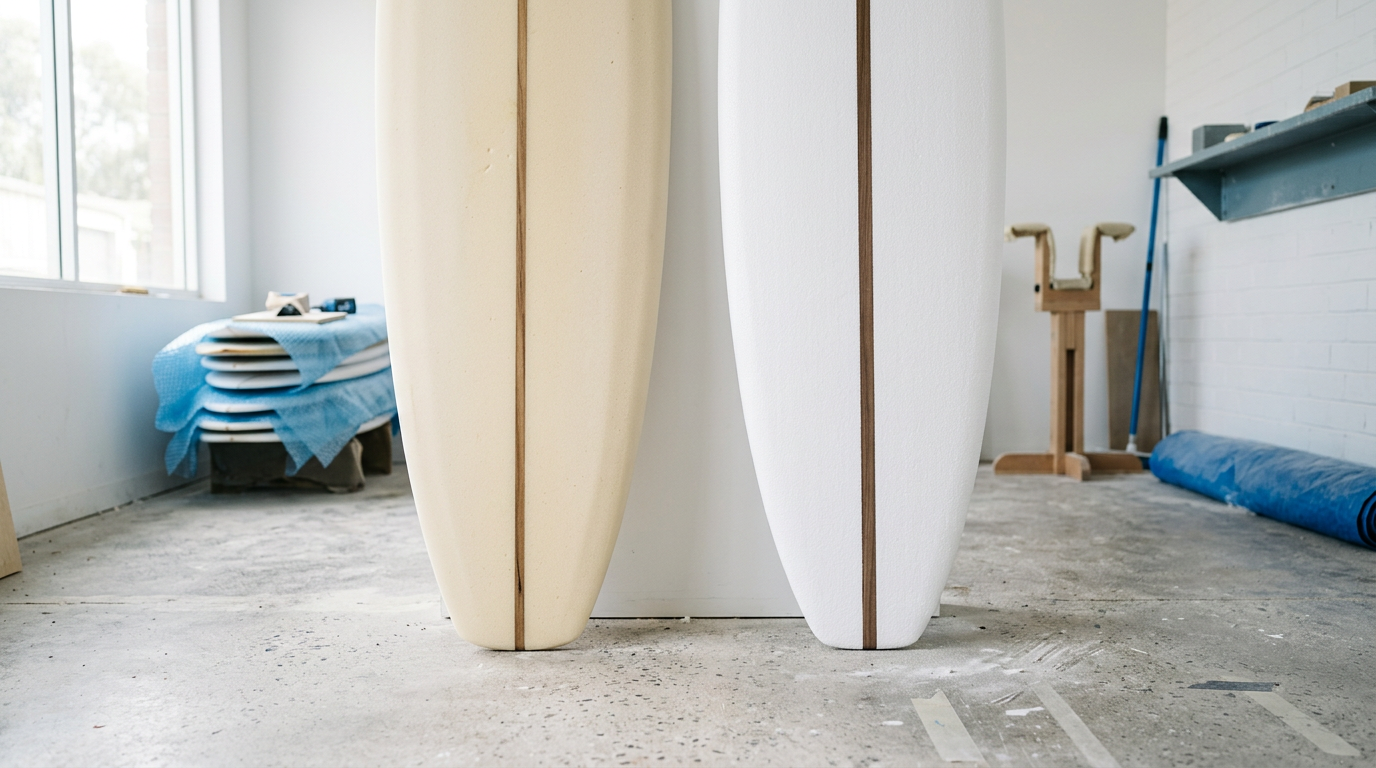
Surfex is an aggregator. Every construction claim here comes from a published shaper or retailer guide linked in the sources section, and every board score comes from ratings collected across retailers and editorial outlets.
| Build | Core | Resin | What you notice |
|---|---|---|---|
| PU / PE | Polyurethane blank with a timber stringer | Polyester | Traditional weight and flex, yellows with age, cheapest to buy and to fix |
| EPS / epoxy | Expanded polystyrene beads, often stringerless | Epoxy | Lighter and more buoyant, stiffer, stays white, dearer |
| Epoly | Polyurethane blank | Epoxy | PU feel with a tougher shell, heavier than EPS epoxy |
Build definitions follow the Rusty Surfboards and 1974 Surfboards guides.
The core and the resin are two decisions
Hawaiian South Shore answers the shop question the same way every day: every surfboard has fibreglass, and epoxy is simply a different resin. The part that actually changes how a board rides is the foam under it. Lundquist Surfboards frames core and resin as a paired choice, because the two cannot be mixed freely.
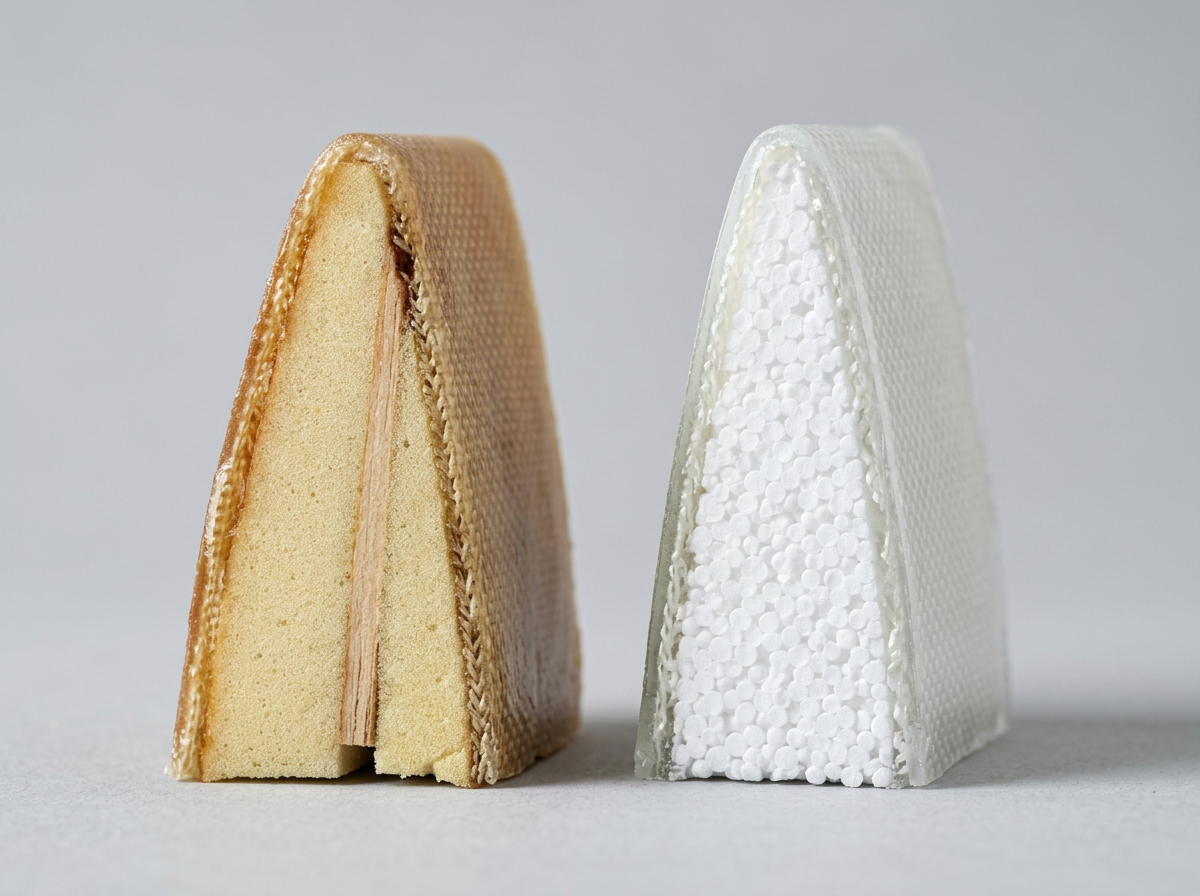
That pairing has one hard rule. Polyester resin dissolves expanded polystyrene, so an EPS core must be glassed in epoxy. Rusty Surfboards spells this out in its construction breakdown. A polyurethane blank can go either way, and when it is glassed in epoxy the industry calls it Epoly.
What the weight difference actually does
EPS foam is less dense than polyurethane, so the same shape comes out lighter and floats higher for the same litres. Surf Bunker ties that buoyancy straight to paddling and wave catching, which is why the build turns up so often in groveler and beginner shapes.
The flip side shows up on a windy afternoon. A light board skips over chop where a heavier PU blank stays planted. That is the single most common reason surfers with two boards keep a PU shortboard for the days with real push and reach for the epoxy when the swell drops away. The small wave surfboard guide covers those shapes in more detail.
Flex is the feel most people are describing
When someone says an epoxy board feels corky, they usually mean stiff rather than buoyant. Epoxy resin is harder than polyester and EPS cores are often stringerless, so the board loads and releases differently through a turn. Some surfers read that as spring and drive. Others miss the damped, forgiving flex of a stringered PU blank.
Brands have spent two decades engineering around it. Firewire builds parabolic rails into its EPS boards and Haydenshapes uses a carbon frame in FutureFlex, both aimed at putting controlled flex back into a light core. Full model histories sit on the Firewire and Haydenshapes brand pages.
Durability cuts both ways
An epoxy shell resists heel dents and small impacts better than polyester, which is why it holds resale value and why it travels well. The risk does not vanish though, it moves. Open up an EPS board and the foam beads take on water quickly, while a closed cell PU blank gives you more time before real damage sets in.
Practically that means two things. Tape a ding on an EPS board before your next paddle out, and keep an epoxy repair kit rather than a polyester one, since polyester will attack the core. The ding repair guide walks through both resin types.
Sizing when you switch
Because EPS floats higher per litre, plenty of surfers order a slightly smaller epoxy board than their PU equivalent. Do not guess at that on the first order. Match your usual volume, ride it for a few sessions, then trim one or two litres on the next board if it feels like it is riding on top of the water rather than in it.
If you have never worked out your number, run it through the surfboard volume calculator first, then read the construction section of the how to choose a surfboard guide alongside it.
Choosing without overthinking it
- Learning to surf, or riding mostly small waves: EPS epoxy, for the float and the tougher shell.
- Chasing high performance in punchy surf: PU polyester, for weight and flex you can push against.
- Flying with the board often: EPS epoxy, and still use a padded bag.
- Wanting the PU feel with a harder shell: Epoly, the middle option most shapers will quote.
- On a tight budget: PU polyester, cheaper to buy and cheaper when it breaks.
EPS epoxy boards tracked on Surfex
Aggregate scores collected from retailer and editorial ratings, shown on a 10 point scale.
| Board | Construction | Aggregate score |
|---|---|---|
| Haydenshapes Hypto Krypto | FutureFlex EPS epoxy | 9.3 |
| Firewire Dominator II | Firewire Helium EPS epoxy | 9.1 |
| Firewire Seaside | EPS epoxy keel fish | 9.0 |
| Firewire Sweet Potato | EPS epoxy groveler | 9.0 |
PU boards tracked on Surfex
| Board | Construction | Aggregate score |
|---|---|---|
| Channel Islands CI Pro | PU performance shortboard | 9.4 |
| Pyzel Ghost | PU step up leaning shortboard | 9.2 |
| JS Monsta 10 | PU high performance | 9.1 |
| Lost Sabotaj | PU everyday shortboard | 8.7 |
More models sit in the shortboard reviews and twin fin reviews sections.
Sources
| Source | What it contributes |
|---|---|
| Rusty Surfboards — PU vs Epoly vs Epoxy | Shaper-side breakdown of the three builds, including why polyester resin cannot be used over an EPS core and where the Epoly hybrid sits. |
| Lundquist Surfboards — Foam and Resin Types | Explains that core and resin are a paired decision rather than two separate options on an order form. |
| 1974 Surfboards — PU vs EPS Epoxy vs Carbon Fiber | Sorts the common blank and resin combinations used in modern production boards. |
| Flux Surf — Surfboard Construction Guide | Buyer-side view of construction and glassing choices written from a custom order perspective. |
| Hawaiian South Shore — Surfboard Construction Guide | Retail counter answer to the most common shop question, that every board has fibreglass and epoxy is only a resin type. |
| Surf Bunker — Epoxy vs PU | Compares the two builds on buoyancy, durability and how each handles wind and chop. |
Video explainers

Related reading
FAQ
Is an epoxy surfboard better than a PU surfboard?
Neither build wins outright. EPS epoxy is lighter, floats higher and takes a knock better, which suits weak surf and travel. PU with polyester resin has a softer flex and more weight, which most surfers prefer in powerful or windy waves. The right answer depends on the waves you ride most and the feel you like underfoot.
Why can't you use polyester resin on an EPS blank?
Polyester resin attacks expanded polystyrene and eats into the foam, so an EPS core has to be glassed with epoxy. Rusty Surfboards makes this point directly in its construction breakdown. It also explains why an epoxy ding repair kit is the only safe option once you own an EPS board.
What is an Epoly surfboard?
Epoly is a polyurethane blank glassed with epoxy resin rather than polyester. You keep the familiar PU flex and weight while gaining a harder, more impact resistant shell that stays whiter for longer. It sits between the two mainstream builds on both feel and price.
Do epoxy boards ding less than PU boards?
They resist pressure dents and small impacts better because the epoxy shell is harder. The risk shifts rather than disappearing. When an EPS board does get an open ding it soaks water through the foam beads faster than a closed cell PU blank, so a quick tape fix and a proper repair matter more.
Should I change volume when switching from PU to epoxy?
Many surfers ride a slightly smaller EPS epoxy board because the lighter core floats higher for the same litres. Start by matching your usual volume, ride it a few sessions, then drop one or two litres if the board feels corky. Run your numbers through the volume calculator before ordering.
Are epoxy surfboards good for beginners?
Yes, for most beginners. The extra float makes paddling and wave catching easier, and the tougher shell survives the knocks that come with learning. The stiffer feel matters far less at that stage than getting to your feet on more waves.
Once you know which construction suits your waves, the surfboard reviews section ranks current models by scores collected across retailers and editorial sources.