Surfboard Tail Shapes Explained
The tail is the part of the board your back foot stands on and the last part to touch the wave, so it decides whether a turn snaps or draws out. Two boards with identical length, width and volume will surf nothing alike if one ends in a squash and the other in a pin. Shapers keep the rule simple: more tail area buys speed and lift, less tail area buys hold. This guide sets out what each shape does, pulls the descriptions from shaper and shop guides that are linked at the bottom, and matches tails to the waves you actually surf. It is worth settling before you order a board for the coming swell season, because a tail cannot be changed later.
Surfex is an aggregator. Every description on this page comes from a published shaper or shop guide linked in the sources section, and every board score comes from ratings collected across retailers and editorial outlets.
| Tail | Outline | How it feels | Waves it suits |
|---|---|---|---|
| Squash | Wide, squared with soft corners | Lift and quick release off the corners | Everyday beach and reef, knee-high to overhead |
| Round | Curved, no corners | Smooth, drawn-out arcs with steady hold | Clean points and hollow pockets |
| Rounded pin | Tapered but softened | Pin hold with more turn than a true pin | Step-up conditions and solid reef |
| Pin | Minimal, tapered to a point | Digs in and tracks at speed | Big, fast, steep waves and guns |
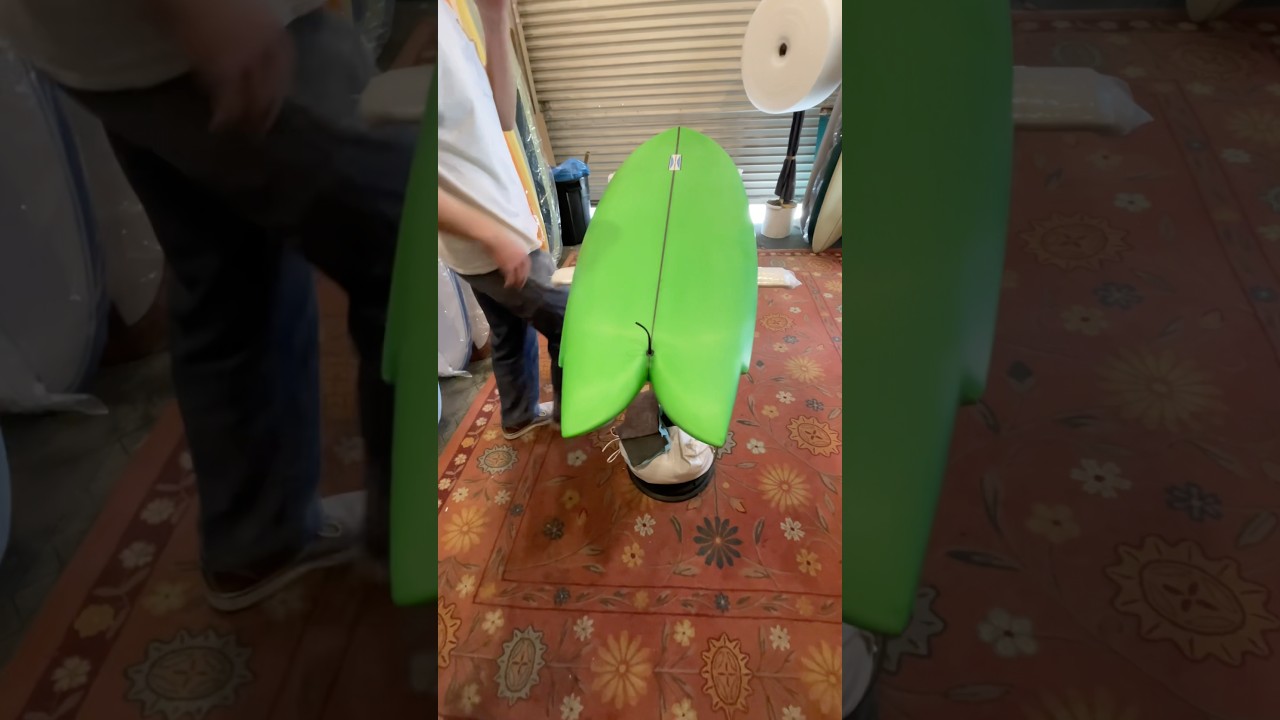
| Swallow | Wide base split by a V | Planing area for speed, two points for bite | Small to medium, weaker beach breaks |
| Diamond | Squash corners cut on an angle | Shortens the rail line for tighter pivots | Small to average waves on fuller outlines |
Two parent shapes, everything else is a variation
The Surfing Handbook strips the subject back to two designs: the round tail and the square tail. Every other outline sits somewhere between them. A round outline lets water wrap and release late, which draws turns out and holds the board on the face. A square outline puts area and corners at the very back, so water breaks away sharply and the board pivots.
Shaper Rusty Preisendorfer put it plainly in that same guide: an angular tail creates a more angular turn. Hold that sentence in your head while you look at boards and most of the marketing language stops mattering.
Tail area is the real variable
More volume and width in the tail means more speed and more lift, and less control once the wave stands up. Narrower tails flip that: control at speed, at the cost of drive in soft surf. This is why the same surfer can want a wide swallow in February and a pulled round pin in July.
Tail area also interacts with rocker and volume. A wide tail on a board with lots of tail rocker will not feel as fast as the outline suggests, and a narrow tail on a thick board can still feel corky. Run your numbers through our surfboard volume calculator before you fixate on the tail block alone.
Squash tail: the default for a reason
OMBE calls the squash the most common modern tail, and Sanded lists it on performance shortboards, hybrids, mid-lengths and small-wave boards alike. The flat back edge with softened corners gives you lift through fat sections and a corner to bury when you want the tail to release. If you own one shortboard, this is the safe pick. Boards such as the Channel Islands CI Pro and the Haydenshapes Hypto Krypto build their range on it.
Swallow tail: area without losing bite
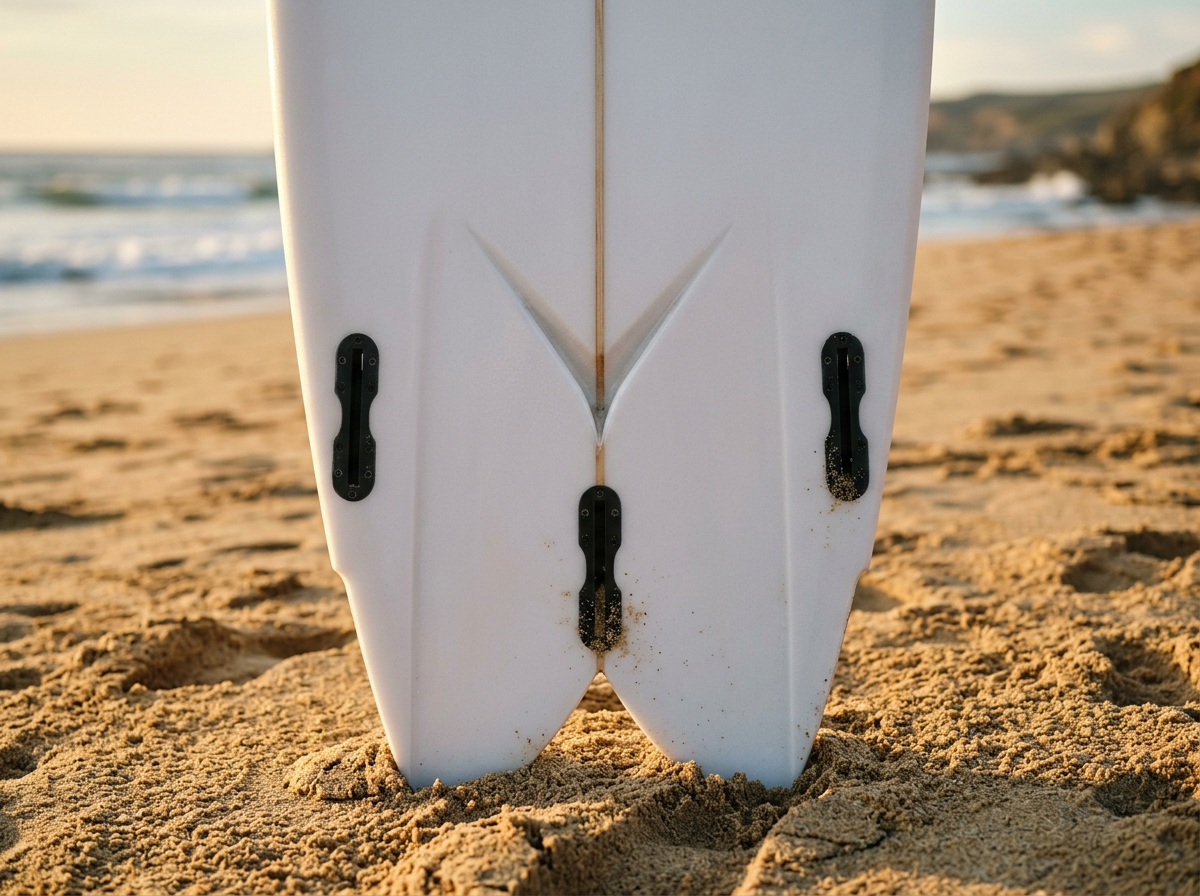
Bell Surf describes a swallow as two small pin tails sharing a wide base, which is the clearest way to picture it. The wide block keeps the board planing when the wave has no push, and the two points give the inside rail something to hold with once you lean on it. Surfolio flags the limit as well: in big, powerful surf a swallow can feel loose.
This is the tail that defines most fish and retro shapes, including the Lost Sweet Potato. If you are considering one, the twin fin guide covers the fin setups that usually come with it.
Round and rounded pin: hold without tracking
A round tail has no corners, so water leaves the board gradually and turns become continuous rather than snapped. Sanded lists it as an all-round performance shape with tighter arcs, while OMBE frames the rounded pin as the halfway house: pin-tail hold with enough looseness to keep surfing it in average waves.
These are the tails to look at for clean points, reef and anything hollow. A step-up such as the Pyzel Ghost pulls the tail in for exactly that reason, and our step-up surfboard guide covers how much to pull it as the swell grows.
Pin tail: control first
A pin has the least area of any tail. It sinks, it digs into the face and it tracks in a straight line at speed, which is what you want when the wave is moving faster than you can turn. Sanded puts pin tails almost exclusively on guns, and OMBE notes the same sinking behaviour is why some surfers like a pulled tail for airs. In waist-high beach break it will feel like hard work. Boards like the Pyzel Padillac exist for the other end of the range, and the surfboard category shows how far the outline gets pulled across shapes.
How tails and fins work together
Tail shape sets the water release; fins set the drive and the pivot point. A loose squash with a stiff thruster set will feel very different from the same board with softer, raked fins. Fins are the cheap experiment, so change those first if a board is close but not right. The surfboard fin guide covers templates and materials, and the fins category lists what current models score.
Mistakes worth avoiding
- Buying a pin tail for waves that never break over head high.
- Judging a tail from a photo of the deck instead of the tail block width.
- Copying a pro's tail without matching their wave, weight or fin setup.
- Adding tail area to fix a paddling problem that volume and outline would solve better.
- Assuming a swallow and a fish tail behave the same; the fish keeps more area right out to the tips.
Boards to compare by tail
Aggregate scores collected from retailer and editorial ratings, shown on a 10 point scale.
| Board | Tail | Aggregate score |
|---|---|---|
| Channel Islands CI Pro | Squash tail performance shortboard | 9.4 |
| Haydenshapes Hypto Krypto | Squash tail all-rounder | 9.3 |
| Pyzel Ghost | Pulled squash step-up | 9.2 |
| Lost Sweet Potato | Swallow tail small-wave shape | 9.0 |
| Pyzel Padillac | Round pin for size | 9.0 |
Sources
| Source | What it contributes |
|---|---|
| The Surfing Handbook — Surfboard Tail Shapes | Reduces every tail to two parents, round and square, and quotes shaper Rusty Preisendorfer on angular tails producing angular turns. |
| OMBE — Guide to Surfboard Tail Shapes | Shaper Clayton Nienaber's breakdown of pin, round, rounded pin, squash and swallow, including why a pin tail sinks for airs. |
| Sanded Australia — Tails & Fin Design | Maps each tail to the board types that carry it, from guns with pin tails to fish and retro shapes with fish and swallow tails. |
| Surfolio — Swallow, Pin and Squash Compared | Side-by-side pros and cons for the three most common tails, including where a swallow starts to feel unstable. |
| Bell Surf — Tail Shapes Explained | Short shop-side summary describing a swallow tail as two mini pin tails sharing a wide base. |
| Jamie O'Brien — A Quick Guide to Surfboard Tail Shapes | Rider-side view of how the tail connects a surfer's weight to the wave face and shapes manoeuvrability. |
Video explainers

Related reading
FAQ
What is the best surfboard tail shape for beginners?
A squash tail. The Surfing Handbook points beginners and lighter surfers away from pin tails and toward a squash, because the extra area at the corners adds lift and stability while still turning easily.
What is the difference between a squash tail and a round tail?
A squash tail ends in a straight edge with soft corners, so water releases quickly and turns feel sharp. A round tail has no corners, so water wraps around it and turns become smoother and more drawn out with more hold.
Why do fish surfboards have swallow tails?
A swallow tail keeps a wide base for planing speed in weak surf, then splits that base into two points so the board still bites when you put it on rail. Bell Surf describes the shape as two mini pin tails sharing one wide tail block.
When should you ride a pin tail?
In big, fast waves. A pin has the least surface area, so it sinks and tracks instead of sliding. Sanded Australia lists pin tails as the standard on guns built for down the line speed, and they feel sluggish in small surf.
Does tail shape matter more than fins?
They work together. Tail shape sets how much area sits under your back foot and where water leaves the board, while fins set drive and pivot. Changing fins is the cheaper experiment, but a tail that fights your waves cannot be fixed with a fin swap.
What is a diamond tail good for?
Shortening the rail line. A diamond tail cuts the squash corners on an angle, which keeps some area for lift while letting the board turn tighter than its length suggests. It suits fuller small-wave outlines.
Once you know which tail suits your waves, the shortboard reviews page ranks current models by scores collected across retailers and editorial sources.