Surfboard Rocker Guide
Two boards can share a length, a width and a volume figure and still feel nothing alike, and rocker is usually the reason. It is the curve you see side on, running nose to tail, and it decides whether a board paddles into a soft wave or bogs, whether it holds a long arc or snaps tight, and whether the nose clears a late drop. Shapers set it first and build everything else around it. Almost nobody publishes the numbers, so most surfers buy curve by feel and hope. This guide pulls together what shapers and surf publications actually state about rocker, including the rare published measurements, and turns it into a way to compare two boards before autumn swells make the choice for you.

Surfex is an aggregator. Every definition and figure on this page comes from a published shaper, brand or editorial page linked in the sources section.
| Part of the curve | Where it sits | More of it | Less of it |
|---|---|---|---|
| Entry / nose rocker | The curve through the front third | Fits steep faces, resists pearling, redirects easily | Paddles faster, catches weak waves earlier |
| Exit / tail rocker | The curve behind your back foot | Lifts the nose, releases the rail, pivots tighter | Holds speed and draws longer arcs |
| Body / mid rocker | The curve under your chest and front foot | More drag while paddling | More planing surface and glide |
| Deck and rail rocker | Curves along the deck line and the rail line | Shapes volume distribution and bottom contours | Read alongside bottom rocker, never alone |
Definitions published by TRAX, Degree 33, Foam Magazine and Natural Curves Surfboards.
What rocker actually is
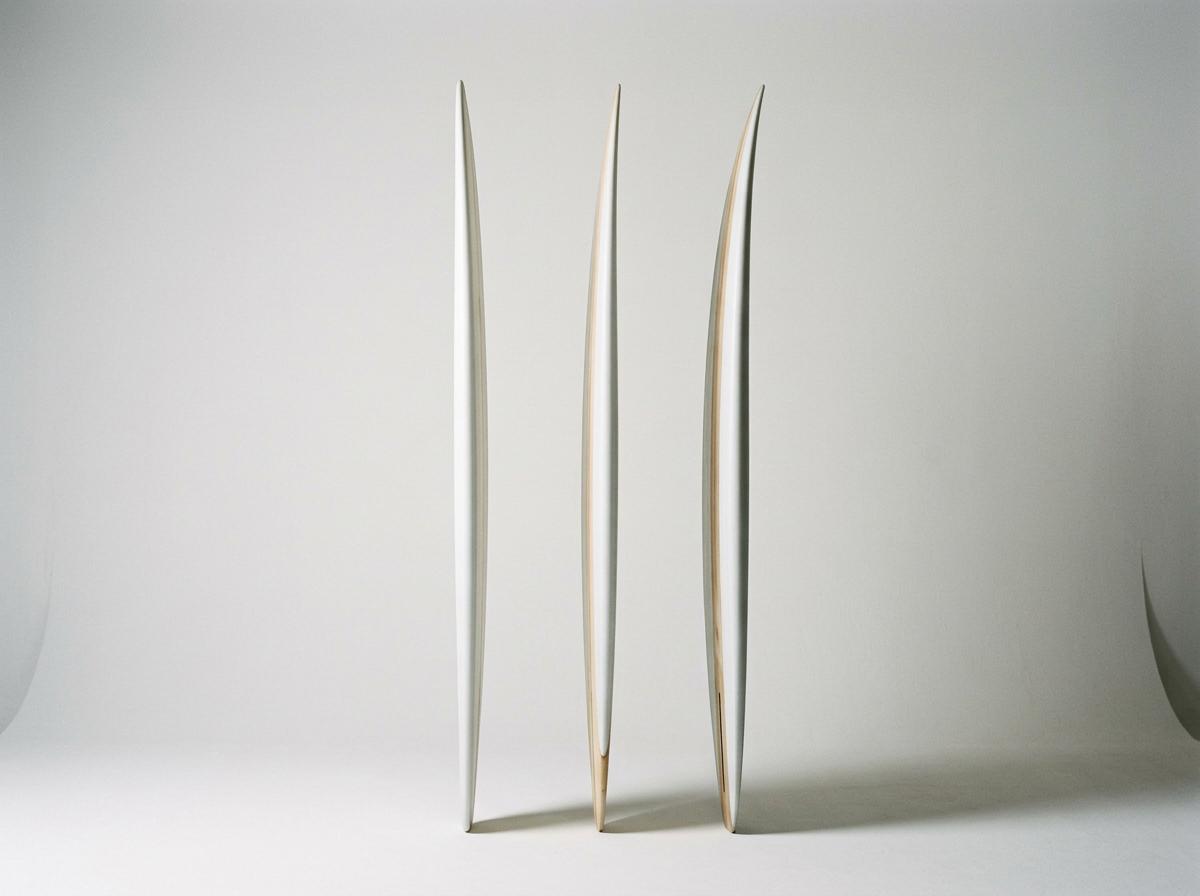
Set a board flat on the floor and crouch beside it. The line lifting away from the ground at each end is rocker. Foam Magazine compares it to the runners on a rocking chair, and points out that boards carry curve in three places rather than one: the body, the nose and the tail.
The reason it exists is simple. Wave faces are curved, so a board with no curve at all only fits a flat piece of water. Foam Magazine puts it directly: bigger waves have steeper faces, so more curve lets you drop in without burying the nose, while small gentle waves reward a board that stays flat.
Natural Curves Surfboards adds the shaper's view. Bottom rocker is the first thing established on a blank, and deck rocker, rail rocker, foil and bottom contours are all built in relation to it. Volume and outline get all the attention on a spec sheet, but the curve underneath them came first.
Entry rocker and exit rocker do different jobs
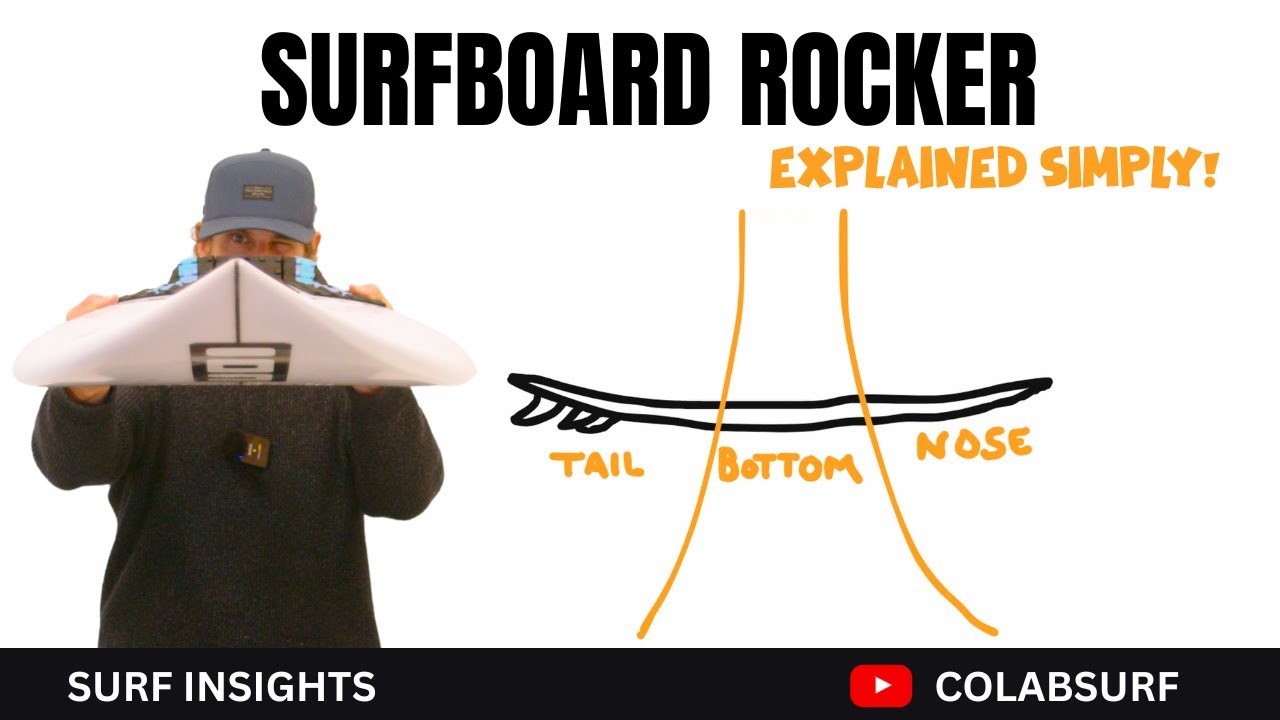
TRAX splits the line in two. Entry rocker is the nose curve. A steeper entry drags more when you paddle, but it fits a steep face and keeps the nose out of trouble on a late takeoff. A flatter entry paddles faster and is harder to control when the wave stands up under you.
Exit rocker is the tail curve, and it is about release. More tail curve makes it easier to lift the nose, free the rail and pivot through a carve. Less tail curve holds speed and gives up some agility. Rusty Preisendorfer describes a combination he likes for bigger waves that are hard to catch but jack up over a shallow bottom: lower entry rocker for paddle speed, more tail rocker for the turns.
That pairing explains why a board can feel both easy to catch waves on and lively underfoot. The two ends of the board are being tuned for different problems, which is also why judging a board by its nose lift alone tells you almost nothing.
The three rocker families shapers work from
Natural Curves Surfboards names three primary bottom rocker families. Speed box rockers stay relatively flat through the middle with accelerated curve at the entry and tail, and show up mostly in shortboards, semi guns and guns. Continuous rockers run one unbroken curve nose to tail and suit hollow, barrelling waves where the board has to track the face. Relaxed rockers reduce the overall curve for glide.
TRAX describes the same territory using two words most surfers meet in shop conversation: continuous against staged, where a staged rocker flattens noticeably through the middle. Either vocabulary points at the same question, which is how much of the board's length is doing planing work while you paddle.
Rusty adds a caution that applies to every family. Rapid breaks in rocker create drag, while smooth lines flow better but can be a little harder to break out of a line. A curve is a system, not a stack of independent numbers.
Why flatter boards feel fast and curvier boards feel loose
The mechanism is contact area. Foam Magazine explains that a flat board keeps more surface on the water, which means better glide, easier paddling out and more waves caught, especially weak ones. The cost is turning: all that surface resists being redirected, and the nose is more likely to catch on a steep drop.
A high rocker board sits with its curved middle section under the surface, and that submerged curve is drag. Degree 33 describes the same trade as glide against turn radius, and notes that steep waves demand curve while mushy waves reward flatness.
Foam Magazine also explains how better surfers get around the penalty: they ride rail to rail rather than flat, which keeps the curved centre out of the water. That is the real reason experienced surfers tend to prefer more rocker and beginners do better with less. It is a skill requirement as much as a preference, and it lines up with what a first surfboard needs to do.
The numbers, and why you rarely see them
Length, width, thickness and volume appear on every product page. Rocker almost never does. Of the sources checked for this guide, only Rusty Surfboards published measurements, giving a 6'0 with 5 inches of nose rocker and 2.3 inches of tail rocker.
Use that as a mental anchor rather than a standard. It tells you the scale involved, so when a shaper says a model has an extra quarter inch of tail lift you know that is a meaningful share of the total. It also tells you nose figures run roughly double tail figures on a performance shortboard.
In practice, comparison beats measurement. Stand two boards on their tails against a wall, look down the rail line, and the difference in curve is obvious in a way no spec sheet delivers. Doing that with a board you already know is the fastest way to interpret an unfamiliar one, and it pairs well with reading tail shapes at the same time.
Matching curve to your autumn waves
September is when this decision changes for most of the northern hemisphere. Summer boards are built around flat sections because summer waves are weak. Once groundswell arrives and faces steepen, the same flatness that saved your summer starts pearling on takeoff.
If your local bank turns punchy in autumn, a board with more entry curve earns its keep, and that is exactly the design brief behind a step up. If your waves stay soft year round, keep the flatter board and put the money into fins instead, where a change of template alters drive without touching the hull.
Curve also interacts with foam. A curvier board paddles slower, so surfers often add a little volume to compensate, which is worth checking against the volume calculator before ordering. Shapers like Pyzel and Channel Islands publish model by model descriptions of how much curve each shape carries, which is usually the most useful thing on the page.
Mistakes that come from ignoring the curve
- Buying a board on volume alone, then wondering why it feels nothing like the last one at the same litres.
- Blaming pearling on your paddling when the entry curve is built for waves half as steep.
- Ordering a pro model curve for waves that never stand up, then never generating speed.
- Judging a board from a photo of the deck, where rocker is invisible.
- Treating nose lift as the whole story and never looking at the tail.
- Ignoring how much of the middle is flat, which is where paddle speed lives.
Sources
| Source | What it contributes |
|---|---|
| Rusty Surfboards, What is Rocker? | Shaper Rusty Preisendorfer gives the only hard numbers on this page: a 6'0 with 5 inches of nose rocker and 2.3 inches of tail rocker. Also states that flat rocker planes and holds longer arcs, that more tail rocker fits hollower waves, that a low entry with more tail rocker helps catch waves that jack up late, and that rapid breaks in rocker create drag. |
| TRAX, Surfboard Rocker: Finding the Balance Between Speed and Control | Defines entry rocker as the nose curve that adds paddling drag but fits steep faces and prevents nosedives, and exit rocker as the tail curve that governs release through turns. Separates continuous rocker from staged rocker that flattens through the middle. |
| Degree 33 Surfboards, Guide to Surfboard Rocker | Splits rocker into longitudinal curve and entry and exit curve, then ties each to paddling, turn radius and wave type. Documents which of its own models use aggressive, moderate or reduced nose and tail rocker. |
| Foam Magazine, Surfboard Rocker Explained | States that boards carry rocker in three areas, body, nose and tail, and that rocker exists so the board fits the contour of a curved wave face. Notes that experienced surfers generally prefer more rocker and beginner to intermediate surfers less, and that riding rail to rail keeps the curved section out of the water. |
| Natural Curves Surfboards, Surfboard Rockers | Distinguishes bottom rocker, deck rocker and rail rocker, and names three primary bottom rocker families used by shapers: speed box, continuous and relaxed. Describes bottom rocker as the first design element a shaper establishes. |
| The Surfing Village, How Surfboard Rocker Affects Performance | Editorial guide covering the same performance trade offs from a rider perspective, used here as a cross check that the definitions above are consistent across independent sources. |
Video guides
Related reading
FAQ
What is rocker on a surfboard?
Rocker is the curve you see when a board sits on the floor and you look at it side on, running from nose to tail. Foam Magazine describes boards as carrying rocker in three areas, the body, the nose and the tail, and explains that the curve exists so the board can fit the contour of a wave face rather than plough straight into it. Natural Curves Surfboards adds that shapers treat bottom rocker as the first design element they establish, with deck rocker, rail rocker and bottom contours built around it.
How much rocker does a surfboard have?
Very few brands publish figures, which is why comparing curve by eye is normal. Rusty Surfboards is one exception and gives a reference 6'0 shortboard at 5 inches of nose rocker and 2.3 inches of tail rocker. Treat those as one shaper's reference point rather than an industry standard, and compare boards by holding them side on next to each other.
Is more rocker or less rocker better?
Neither, because the two ends of the scale buy different things. Flatter rocker keeps more surface in contact with the water, so it paddles faster, glides further and draws longer arcs. More rocker turns tighter, redirects faster and survives steep drops, at the cost of paddling speed. Foam Magazine notes that experienced surfers generally lean toward more rocker while beginner and intermediate surfers do better with less.
What is the difference between entry and exit rocker?
TRAX defines entry rocker as the nose curve, which adds drag while paddling but fits steeper waves and helps prevent nosedives, and exit rocker as the tail curve, which controls how the board releases during a turn. More tail rocker makes it easier to lift the nose, disengage the rail and pivot. Less tail rocker holds speed better but reduces agility.
Does rocker make a surfboard slower?
It can. Foam Magazine explains that a high rocker board sits with less of its length on the surface, so the curved centre section sits underwater and adds drag when you paddle or ride straight. Their point about experienced surfers is that riding rail to rail keeps that curved section clear of the water, which is how good surfers carry speed on curvier boards. Rusty adds a separate warning: abrupt breaks in the rocker line create drag in a way that a smooth curve does not.
What rocker should a beginner surfboard have?
Less. A flatter board has more planing surface, so it paddles into weak waves earlier and feels more stable underfoot, which is exactly what learning needs. The trade off is a greater chance of pearling on a steep takeoff, and steep takeoffs are not where most beginners spend their time. Once your surfing moves to steeper faces and tighter turns, more curve starts paying for itself.
Rocker only means something next to a shape you can ride. The shortboard reviews collect scores gathered across retailers and editorial sources, the longboard section covers the flatter end of the scale, and twin fins show what a relaxed curve does with a loose fin setup.