Surf Booties Guide
Booties are the piece of cold water kit surfers get wrong most often. Buy them too thin and your session ends early. Buy them too thick and you lose the board feel that makes surfing worth the drive. Order the wrong size and they either flush cold water on every duck dive or crush your toes flat. This guide pulls the published thickness bands, sizing rules and toe style definitions from brand and retailer sources into one place, adds current listed prices from three brand product pages, and shows how the season should shape the decision as northern hemisphere water starts dropping through autumn.
Surfex is an aggregator. Every figure here comes from a published brand or retailer page linked in the sources section. Prices were read from those listings on the publication date and change without notice.
| Thickness | Water temperature | Where it fits |
|---|---|---|
| 1 – 2 mm | 70F / 21C and above | Reef and rock protection in warm water, low profile shoe shape |
| 3 mm | 60 – 70F / 15 – 21C | Balance of warmth and board feel, summer and mild coastlines |
| 5 mm | 50 – 60F / 10 – 15C | The one boot quiver for most cold water surfers |
| 6.5 mm | 40 – 50F / 4 – 10C | Cold feet in the 40 to 55F range, hard winters |
| 7 mm+ | 40F / 4C and below | Close to freezing water, hardest to get on |
Temperature bands published by Cleanline Surf.
Start with water temperature, not air temperature
Thickness is the only decision that changes whether you can stay in the water. Cleanline Surf publishes clean bands: 3mm from 60 to 70F, 5mm from 50 to 60F, 6.5mm from 40 to 50F, and 7mm or thicker below that. Anything in the 1mm to 2mm range is reef protection for warm water rather than insulation.
Xcel draws its own line slightly warmer, suggesting surfers start thinking about 3mm below 55F, move to 5mm around 50F and go to 7mm at 45 to 50F or colder. The two overlap enough that the practical answer is simple. If your local water sits in the fifties for most of the season, a 5mm is the boot to own, and Cleanline calls it the one boot quiver outright.
Thickness is not free. Xcel states plainly that thicker boots are warmer but harder to maneuver and less responsive, and Cleanline notes 7mm boots are hard to get on. Buying the thickest boot on the wall is not the safe choice, it is a different compromise. Match your wetsuit thickness logic and pick for the water you actually surf.
Round toe, split toe, hidden split toe
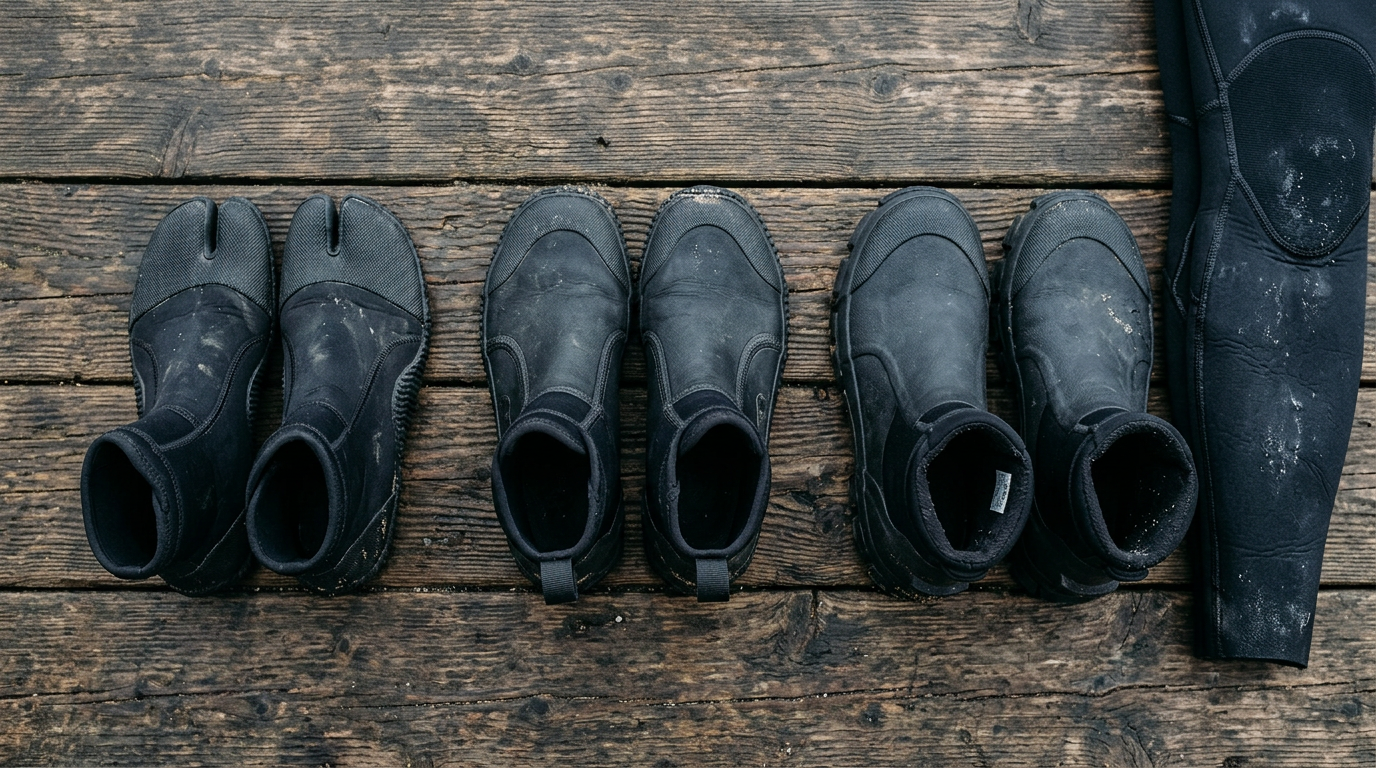
Cleanline defines the three styles by where the split sits. A round toe has none, fits like a sock and is the warmest of the three, which is why it suits new cold water surfers and the coldest days. A split toe separates the big toe externally for mobility and grip, and pays for it in warmth because the material is broken up.
The hidden split toe keeps the separation internal. Cleanline describes it as the feel of a split toe with the warmth of a round toe, locking the foot in place without an external gap. It generally sits at the top of a brand's range, which is why the Rip Curl Flashbomb hidden split toe listing is the most expensive of the three boots priced below.
Sizing booties without trying them on
Cleanline starts from street shoe size. Men buy their street size and size down when caught between two. Women buying unisex boots size down one full size, so an 8 or 8.5 street shoe usually lands on a unisex 7, while women's specific boots run true to street size.
Brand fit shifts that baseline. Cleanline describes Billabong boots as slightly wider than most, Hotline as fitting larger with a wider toe bed, Manera as slimmer and true to size with some half sizes, Patagonia as running narrow, and Quiksilver as slimmer in feel. Read the brand note before the size chart.
Fit errors go both ways. Cleanline warns that boots which are too big flush water and turn heavy, while boots which are too small stress the seams and break down faster. Toes touching the end is normal, toes curled is not. Xcel adds the other failure mode: straps cranked too tight restrict circulation and leave your feet numb.
Soles, straps, seams and linings
Sole thickness is the board feel dial. Xcel frames it as full board contact against traction and notes thicker soles add warmth at the cost of feel. Cleanline gives the two ends of that range in real products, describing thin soled boots as high performance and thicker soled boots as built for protection on rugged coastlines. Rip Curl publishes 0.6mm for the Flashbomb sole, which is about as thin as the category goes.
Straps hold the heel in place so the boot does not shift underfoot, and both sources agree they should be snug rather than tight. Seams separate price tiers: Cleanline puts glued and blind stitched construction in the affordable range and welded seams at the high end. Linings add warmth and durability but add weight, dry slower and cut board feel.
What the current listings cost
Three brand pages verified for this guide show the spread inside a single 5mm thickness. Vissla lists the 7 Seas 5mm round toe at $69.95 in 80 percent limestone and 20 percent nylon neoprene. Xcel lists the Drylock 5mm round toe at $104.95 with a Thermo Dry Inferno interior, Channel Flex exterior, Drylock cuff opening and an ergonomic instep strap. Rip Curl lists the Flashbomb 5mm hidden split toe at $109.95 with E5 flash lining, seam sealing and that 0.6mm sole.
Roughly forty dollars separates the entry option from the premium ones, and the money buys lining technology, cuff sealing and sole engineering rather than more neoprene. Both the Xcel and Rip Curl listings showed no available stock when checked, which is worth knowing in autumn. Cold water stock sells through before the coldest months arrive.
Putting them on so they stay dry
Both sources give the same order. Start with dry feet, roll the wetsuit legs up out of the way, roll the boot cuff down once or twice, stretch the opening with both thumbs inside the back of the boot, point your toes and slide the foot in. Seat the heel fully in the heel pocket before anything else.
Then reverse it: tighten any straps just enough to secure the fit, and roll the wetsuit leg back down so it overlaps the boot cuff. That overlap is what stops flushing. Some boots build the same idea into the product, and Xcel lists a Drylock cuff on its Drylock line for exactly that reason. Rinsing and drying them properly afterwards follows the same routine as washing a wetsuit.
Mistakes that cost you sessions
- Buying by air temperature rather than water temperature.
- Sizing up for comfort, then flushing cold water on every duck dive.
- Cranking straps tight enough to cut circulation and numb your feet.
- Choosing 7mm for a coastline that never drops below the fifties.
- Ignoring brand fit notes and ordering straight off the size chart.
- Waiting until midwinter, when cold water sizes are already sold out.
Sources
| Source | What it contributes |
|---|---|
| Cleanline Surf — Surf Wetsuit Boot Guide | Publishes the temperature bands used in the thickness table, the split toe, hidden split toe and round toe definitions, sizing advice by street shoe size, and fit notes for individual brands. |
| Xcel Wetsuits — How to Buy Wetsuit Boots | Gives Xcel's own thickness guidance of 3mm below 55F, 5mm around 50F and 7mm at 45 to 50F or below, plus advice on strap tension, sole thickness against board feel, and rolling the wetsuit leg over the boot cuff. |
| Xcel Wetsuits — Men's Drylock Round Toe Boot 5mm | Listed at $104.95 USD with a Thermo Dry Inferno interior, Channel Flex exterior, Drylock cuff opening, ergonomic instep strap and a heel pull strap. Listed as notify when available at the time of checking. |
| Rip Curl — Flashbomb 5mm Hidden Split Toe Booties | Listed at $109.95 USD with E5 flash lining, a 0.6mm thin sole, slide on system, ankle and foot strap closure, seam sealing and an anti stink treatment. Listed as out of stock at the time of checking. |
| Vissla — 7 Seas 5mm Round Toe Bootie | Listed at $69.95 USD, style MWB5E7RT, built from 80 percent limestone and 20 percent nylon neoprene with a Bluesign marker on the product page. |
Video guides
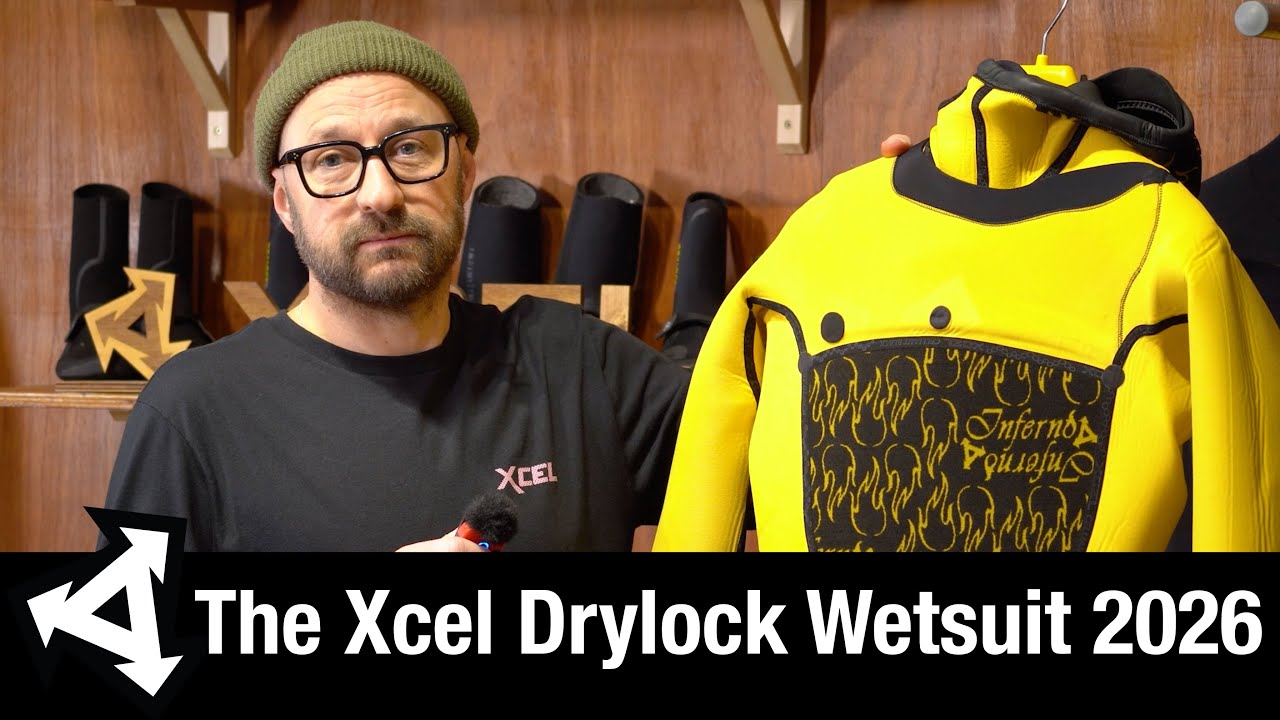
Related reading
FAQ
What thickness surf booties do I need?
Cleanline Surf publishes bands by water temperature: 1mm to 2mm above 70F for reef protection, 3mm from 60 to 70F, 5mm from 50 to 60F, 6.5mm from 40 to 50F, and 7mm or thicker below 40F. Xcel puts its own line slightly differently, suggesting 3mm below 55F, 5mm around 50F and 7mm at 45 to 50F or colder. If you fall between two bands and run cold, both sources point to the thicker option.
How should surf booties fit?
Snug, with your heel fully seated in the heel pocket. Cleanline says it is normal for your toes to touch the end of the boot, but curled toes mean the boot is too small, and a boot that is too small stresses the seams and wears out faster. A loose boot flushes water and turns heavy. Xcel adds that overtightening straps can restrict circulation and leave your feet numb, which defeats the purpose.
Should I buy split toe or round toe booties?
Cleanline defines the trade directly. Round toe boots keep the toes together and are the warmest, which is why they suit beginners and the coldest sessions. Split toe boots have an external split by the big toe for mobility and grip, but the split makes them less warm. Hidden split toe boots keep the split internal, which gives the toe lock in of a split toe with the warmth of a round toe.
What size surf booties should I order?
Start from your street shoe size. Cleanline advises men to buy their street shoe size and size down when between sizes, and women in unisex boots to size down one full size, so a women's 8 or 8.5 street shoe usually lands on a unisex 7. Fit varies by brand: Cleanline describes Billabong as slightly wider than most, Hotline as running larger with a wider toe bed, Manera as slimmer and true to size, and Patagonia as narrow.
How do you stop water flushing into surf boots?
Both Xcel and Cleanline give the same sequence. Roll the wetsuit leg up, put the boots on first with dry feet, seat the heel properly, tighten any straps just enough to secure the fit, then roll the wetsuit leg back down over the boot cuff so the suit overlaps the boot. Some boots also add a sealed cuff for this: Xcel lists a Drylock cuff opening on its Drylock boots specifically to reduce flushing.
Do thicker soles make surf booties worse?
It depends what you want from them. Xcel frames it as a trade between full board contact and traction, and notes that thicker soles add warmth while reducing board feel. Cleanline gives examples on both sides, describing thin soled boots as high performance and thicker soled boots as built for protection and durability on rugged coastlines.
Booties only work as part of a cold water setup. The wetsuit reviews section ranks current suits by scores collected across retailers and editorial sources, and the wetsuit size chart covers fit.