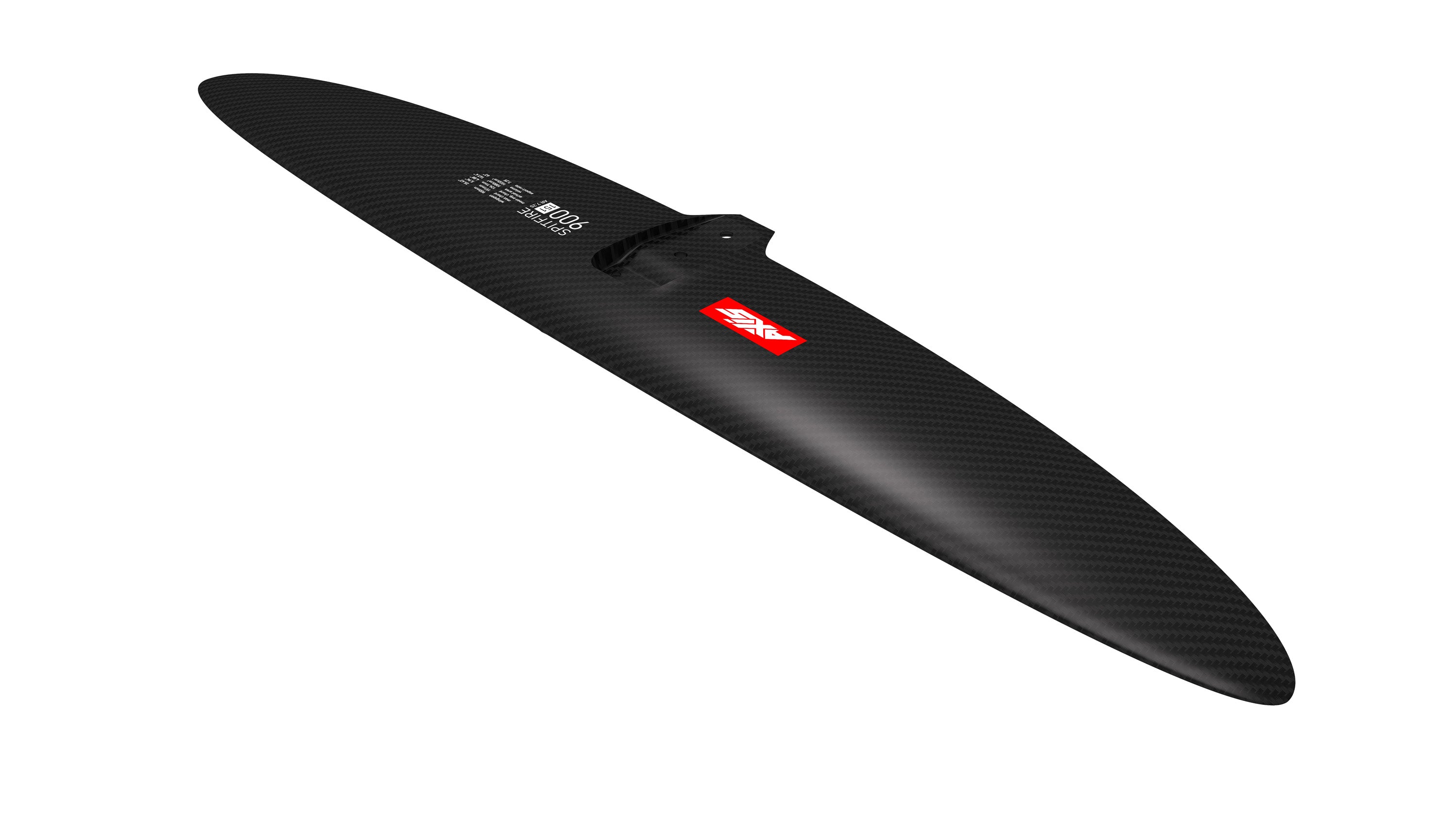
How it surfs
Reduced foil thickness with wider chords is the trick AXIS used here. Thinner sections lift the top-end speed, while the greater chord keeps low-end lift usable, which is why the wing does not feel like a straight compromise between a carver and a glider.
Wingsurfer's back-to-back test against the ART series found the Spitfire needed a bit more speed to get going, but produced more lift once flying and allowed harder pushing through turns. That matches the mid-aspect brief.
Fuselage choice is not optional. The Spitfire only mounts on the Black and Black Advance fuselages, so riders coming from older AXIS setups need to budget for that swap alongside the wing.
Volume & sizing chart
Use the chart below as a starting point. Add half a litre if you are less experienced, subtract half a litre for a looser feel.
| Size | Volume | Rider weight | Best for |
|---|---|---|---|
| 720 / 780 | Smallest surf sizes | Light riders, powered waves | Advanced |
| 840 | Similar area to the ART 999 | Mid weight | Intermediate to advanced |
| 900 | 1,099 cm², AR 7.25 | Most prone and wing riders | Intermediate to advanced |
| 1030 to 1180 | Light wind and downwind | Heavier riders | All levels |
How it compares
| Board | Best at | Wave range | Aggregate score |
|---|---|---|---|
| Axis ART 999 | High-aspect glide and pumping | Prone and wing | 9.2 |
| Axis BSC 890 | Carving across disciplines | Prone, wing, kite | 9.0 |
| Axis ART 1099 | Light wind and long pumps | Wing and downwind | 9.1 |
Verdict
The size most surf foilers should look at first in the Spitfire range. It gives up some low-end lift against the ART wings and pays that back in turning and how hard you can push it once flying. Budget for a Black Advance fuselage if you do not already run one.