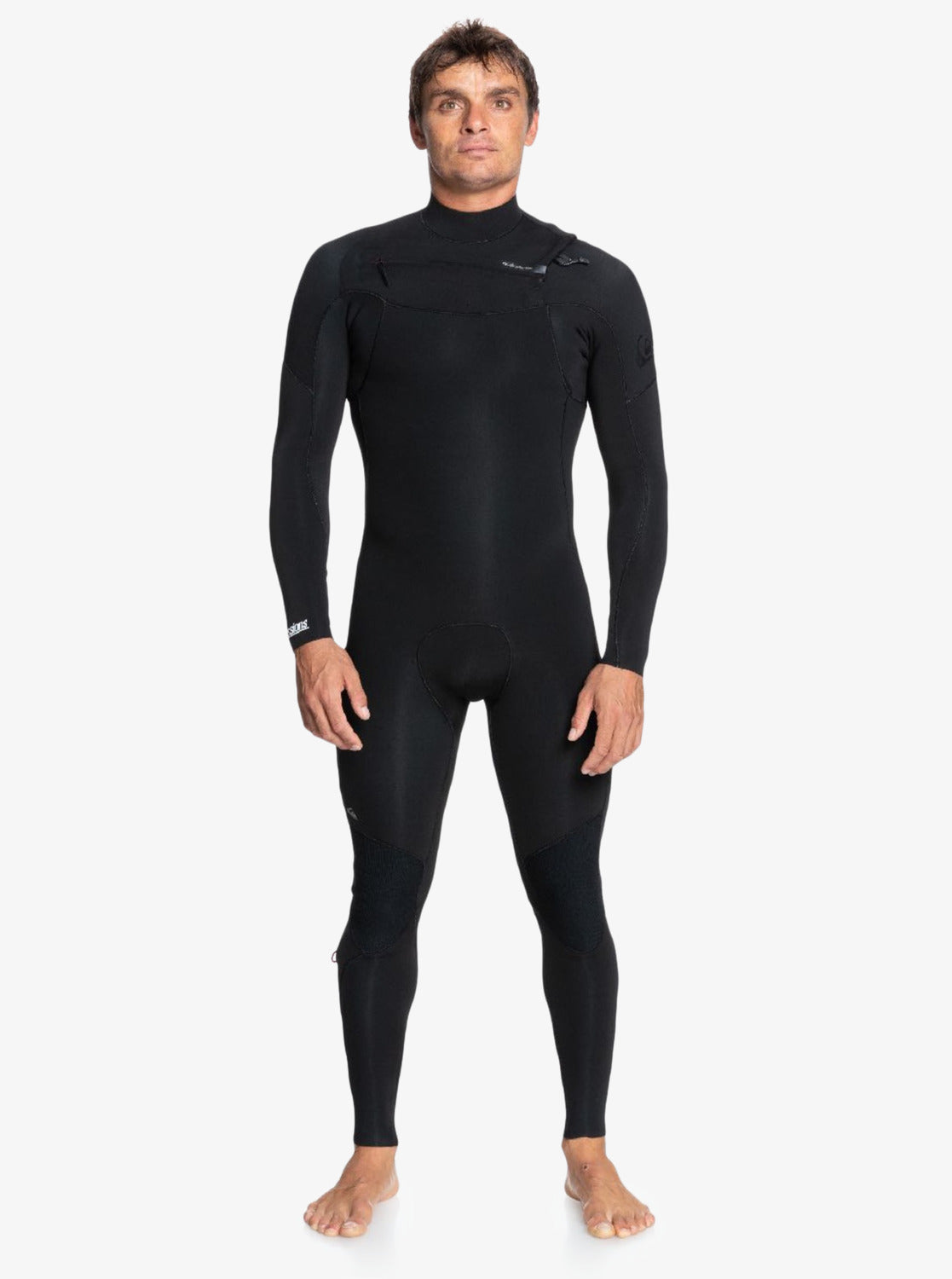
How it surfs
Seam construction is the single line item that separates suits at this price from suits at twice the price. GBS is glued and blind stitched, so the stitches do not pass through the neoprene, but there is no liquid tape sealing the seam line. Expect a slow trickle rather than a flush.
Zoned lining is a real feature rather than marketing. Quiksilver places the thermal velvet where the body loses heat fastest, which is why the suit feels warmer than its foam grade suggests during the first ten minutes.
If your local water sits under 10 °C for months, step up to the Quiksilver Highline or a hooded 4/3. If it hovers in the teens, this is the sensible amount to spend, and the wetsuit thickness guide covers where the cut-offs fall.
Volume & sizing chart
Use the chart below as a starting point. Add half a litre if you are less experienced, subtract half a litre for a looser feel.
| Size | Volume | Rider weight | Best for |
|---|---|---|---|
| 4/3 chest zip | This suit | 10 to 16 °C | All levels |
| 4/3 back zip | Cheaper entry style | 10 to 16 °C | Beginner |
| 4/3 hooded | Colder sessions | Below 10 °C | All levels |
| 3/2 chest zip | Warmer water | 14 to 19 °C | All levels |
How it compares
| Board | Best at | Wave range | Aggregate score |
|---|---|---|---|
| Quiksilver Highline 4/3 | Premium flex and warmth | 9 to 15 °C | 8.7 |
| Xcel Axis 4/3 | Value back-zip steamer | 13 °C and up | 8.7 |
| Billabong Absolute Natural 3/2 | Mid-season chest zip | 13 to 18 °C | 8.8 |
Verdict
A straightforward value 4/3. You get chest-zip entry, GBS seams and a zoned thermal lining for just over USD 200, and you give up the sealed seams and stretchier foam of the Highline. For water in the teens it is enough suit.