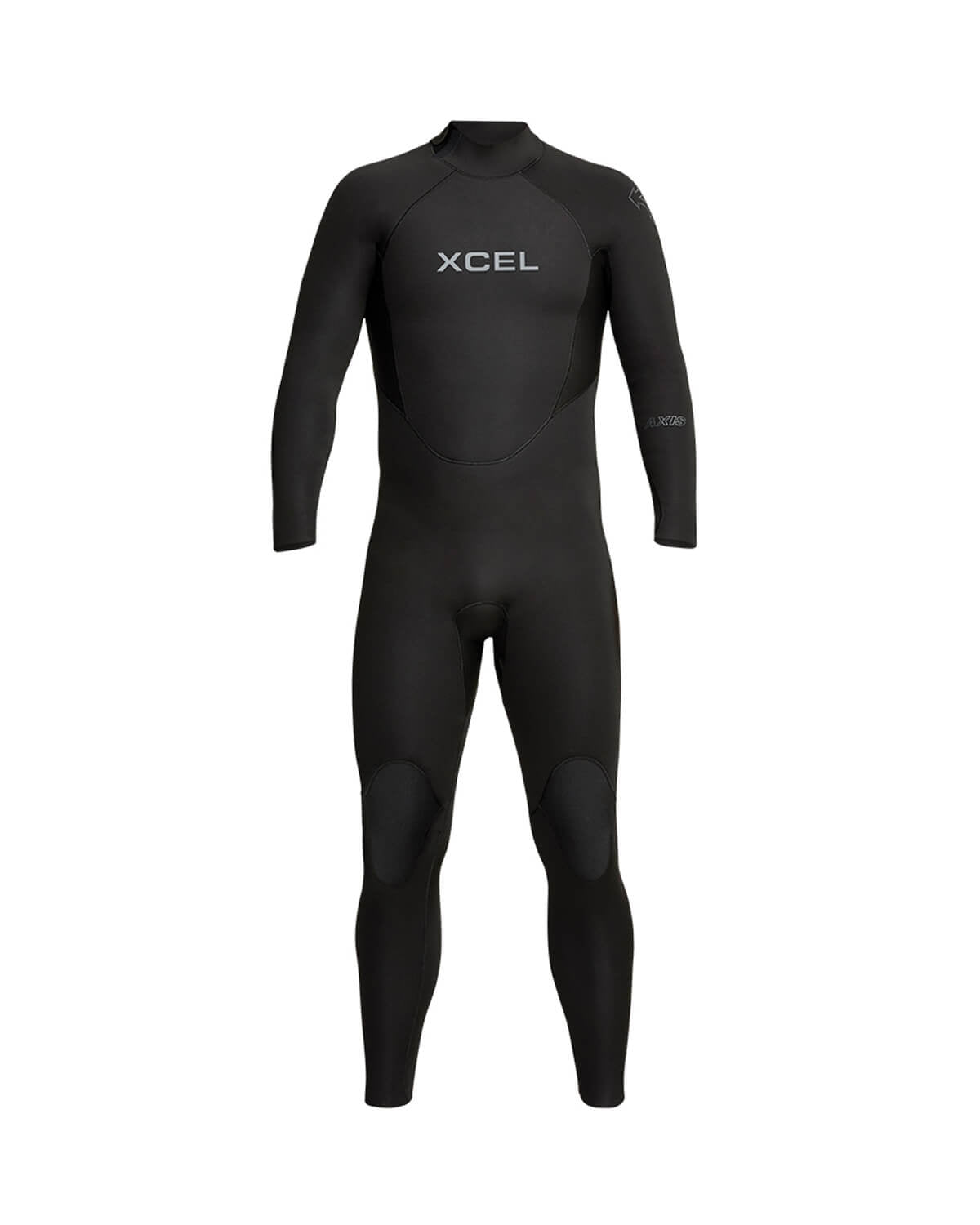
How it surfs
Back zip versus chest zip is the real decision with the Axis. The back zip is dramatically easier to get into, particularly for surfers with limited shoulder mobility, but it puts a long zip line across the part of your back that faces oncoming water on a duckdive.
For most surfers the practical read is: if you are in 13–18 °C water and out for 90-minute sessions, the Axis is enough. Below that, the extra sealing of Xcel's front-zip Infiniti earns its price difference.
The 100% superstretch claim is worth taking seriously at this price — many suits under USD 250 use stretch neoprene only in the shoulders and panel the rest in stiffer, cheaper foam, which is what makes them tiring to paddle.
Volume & sizing chart
Use the chart below as a starting point. Add half a litre if you are less experienced, subtract half a litre for a looser feel.
| Size | Volume | Rider weight | Best for |
|---|---|---|---|
| 4/3 mm | Full steamer | Back-zip entry | 55 °F and up |
| Standard fits | S through XXL | Standard sizing ladder | All abilities |
How it compares
| Board | Best at | Wave range | Aggregate score |
|---|---|---|---|
| Xcel Infiniti 4/3 | Front zip, Radiant Rebound lining | Cold water | 9.0 |
| Billabong Furnace Pro 4/3 | Premium chest-zip warmth | Cold water | 9.0 |
| Vissla High Seas II 3/2 | Zip-free flexibility | Mid season | 8.9 |
Verdict
A well-specified value steamer: 100% superstretch neoprene, infrared core lining and taped blindstitched seams for USD 229.95. The back zip is the trade-off — easy entry, slightly more flush — and it suits 13 °C and up rather than genuine winter cold.