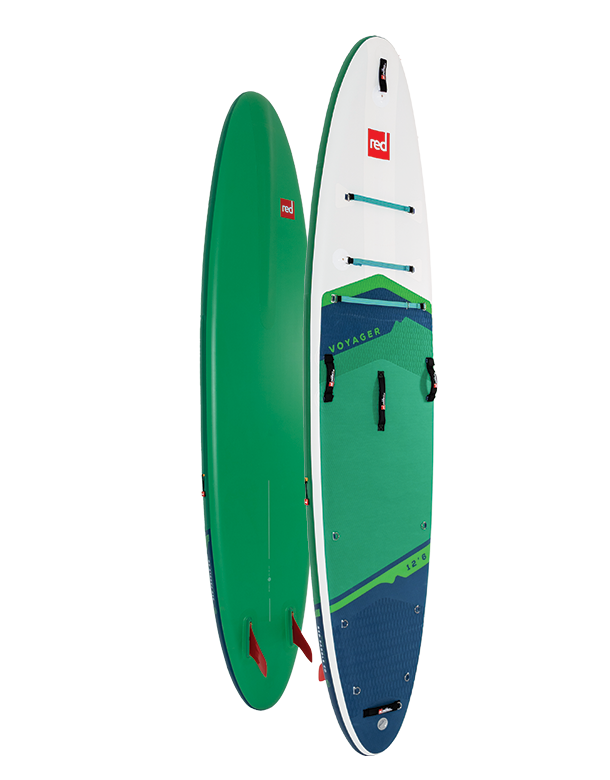
How it surfs
A V-hull is the defining feature. It cuts the surface tension at the nose so the board holds glide between strokes, which is what matters over an hour or more of paddling rather than over a 200 metre sprint.
Twin fins are an unusual choice on a tourer and they cut both ways. Tracking improves noticeably, but SUP Board Guide's 8.6 manoeuvrability score and Inflatable Boarder's note on drag both point at the same trade-off.
If you paddle mostly flatwater loops close to the car, the shorter 11'3" Sport is the more sensible board. The Voyager earns its length when you are loading gear and covering real distance, and the paddle board buying guide covers how to pick between the two.
Volume & sizing chart
Use the chart below as a starting point. Add half a litre if you are less experienced, subtract half a litre for a looser feel.
| Size | Volume | Rider weight | Best for |
|---|---|---|---|
| 12'6" x 32" | Expedition tourer | Bigger paddlers and loaded trips | Intermediate |
| 11'3" Sport | Faster, lighter tourer | Lighter paddlers | Intermediate |
| 10'6" Ride | All-round | Most paddlers | Beginner |
| 13'2" Voyager+ | Longer expedition | Heavier loads | Intermediate |
How it compares
| Board | Best at | Wave range | Aggregate score |
|---|---|---|---|
| Red Paddle Co 11'3" Sport MSL | Faster flatwater touring | Flatwater and coast | 9.6 |
| Red Paddle Co Ride 10'6" MSL | All-round stability | Flatwater and coast | 9.3 |
| Starboard Generation | Touring and race hybrid | Flatwater and open ocean | 9.0 |
Recommended fin setups
- Twin fin (stock) — Improves tracking on long paddles at the cost of turning
Verdict
One of the strongest inflatable tourers on review scores, with two independent reviewers landing at 9.8 and 9.4 out of 10. The V-hull and twin fins buy tracking and glide, and cost you turning. For distance paddling with gear, that is the right trade.