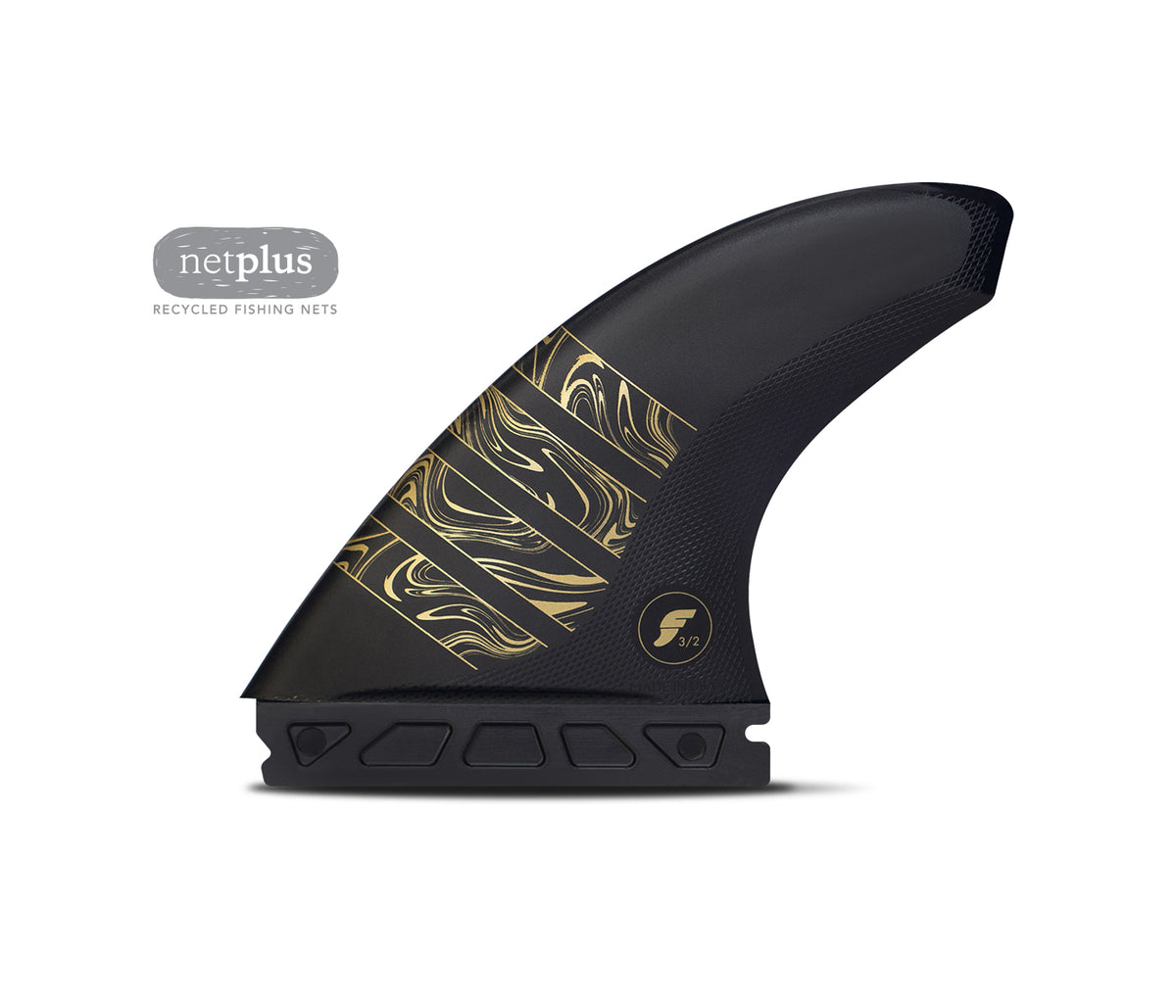
How it surfs
Speed-generating templates suit surfers who already surf on rail and want more return from each turn. If your complaint is that the board bogs coming out of a bottom turn, this is the direction to move in.
The scimitar tip flattens the trailing edge, tightening the curve of the fin. It works with the lift the 3/2 geometry creates rather than against it, so the set does not feel stiff at the end of a turn.
Setup matters as much as the fin. On a wide-tailed board these can feel lifty, so surfers running them in small surf often pair them with a slightly narrower tail than usual. The surfboard fin guide covers how template, rake and area interact.
Volume & sizing chart
Use the chart below as a starting point. Add half a litre if you are less experienced, subtract half a litre for a looser feel.
| Size | Volume | Rider weight | Best for |
|---|---|---|---|
| Medium | Neutral template | Roughly 65 to 80 kg | Intermediate to advanced |
| Large | Neutral template | Roughly 80 kg and up | Intermediate to advanced |
How it compares
| Board | Best at | Wave range | Aggregate score |
|---|---|---|---|
| Futures P6 Alpha | Tight, pivoty turns | Small to head-high | 8.8 |
| Futures R6 Blackstix | Rake and open-face drive | Head-high and up | 8.9 |
| Futures F8 Legacy | All-round neutral template | Anything | 8.8 |
Verdict
A cheap way to add drive without going to a full carbon set. The Vector concave and the extra cant and toe make this a grippy, speed-first thruster, best suited to surfers who lean on rail rather than slide the tail.